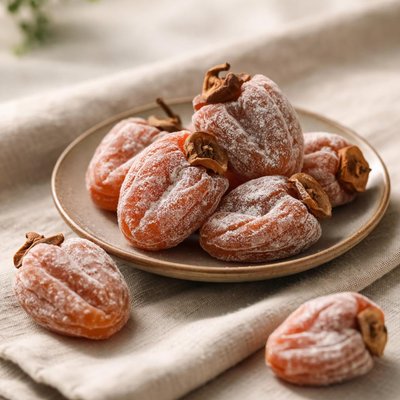
1 serving (40 grams) contains 110 calories, 0.6 grams of protein, 0.2 grams of fat, and 29.4 grams of carbohydrates.

Smart Nutrition Tracking with SnapCalorie

Nutrition Information
Calories |
548 | ||
|---|---|---|---|
% Daily Value* |
|||
| Total Fat | 1.2 g | 1% | |
| Saturated Fat | 0.2 g | 1% | |
| Polyunsaturated Fat | 0 g | ||
| Cholesterol | 0 mg | 0% | |
| Sodium | 20 mg | 0% | |
| Total Carbohydrates | 146.8 g | 53% | |
| Dietary Fiber | 29 g | 103% | |
| Sugars | 91.2 g | ||
| protein | 2.8 g | 5% | |
| Vitamin D | 0 mcg | 0% | |
| Calcium | 54 mg | 4% | |
| Iron | 5 mg | 27% | |
| Potassium | 1604 mg | 34% | |
* Percent Daily Values are based on a 2,000 calorie diet. Your daily values may be higher or lower depending on your calorie needs.
Food Attributes
Source of Calories
About Dried persimmons
Dried persimmons are prepared by dehydrating ripe persimmons, a fruit native to East Asia, particularly China, Korea, and Japan. They have a naturally sweet flavor and chewy texture, often integrated into traditional Asian cuisines or enjoyed as a standalone snack. Nutritionally, dried persimmons are dense in calories but rich in dietary fiber, potassium, vitamin A, and antioxidants. They also provide natural sugars that serve as a quick energy source. The drying process concentrates the nutrients, making them an excellent choice for vitality and digestive health, provided they are consumed in moderation.
Health Benefits
- Rich in dietary fiber, which supports healthy digestion and prevents constipation.
- High levels of vitamin A are beneficial for vision health and immune system support.
- Contains potassium, which aids in regulating blood pressure and muscle function.
- Natural antioxidants, such as flavonoids and tannins, help combat oxidative stress and reduce inflammation.
Dietary Considerations
Selection and Storage
Store dried persimmons in an airtight container in a cool, dry place to maximize freshness for several months. Refrigerate if the climate is humid.
Common Questions About Dried persimmons Nutrition
What is the nutritional content of dried persimmons?
Dried persimmons are rich in calories, with about 274 calories per 100 grams. They contain minimal protein, approximately 0.5 grams per 100 grams, but are a good source of fiber (3.6 grams per 100 grams) and vitamin A, providing around 30% of your daily recommended intake.
Are dried persimmons suitable for a keto diet?
Dried persimmons are not ideal for a keto diet due to their high carbohydrate content, with 73 grams of carbs per 100 grams. The natural sugars in dried persimmons make them incompatible with the low-carb, high-fat requirements of a keto diet.
What are the health benefits of dried persimmons?
Dried persimmons are packed with antioxidants, primarily from vitamin A and vitamin C, which support eye health and immune function. They are high in dietary fiber, aiding digestion, but should be consumed in moderation due to their high sugar content, which could contribute to blood sugar spikes.
How much dried persimmon should I eat in one serving?
A standard serving size of dried persimmons is approximately 1 ounce (28 grams), which contains around 77 calories and 20 grams of carbohydrates. This portion size is ideal for enjoying the health benefits without consuming excessive calories or sugar.
How do dried persimmons compare to fresh persimmons nutritionally?
Dried persimmons are more calorie-dense and higher in sugar compared to fresh persimmons due to water loss during the drying process. For example, while 100 grams of fresh persimmons have about 70 calories, dried persimmons have about 274 calories for the same weight. Fresh persimmons are lower in carbs and may be more suitable for weight control.
Data Sources & Scientific References
Our nutrition data comes from trusted, authoritative sources to ensure accuracy and reliability. Below are specific scientific references and authoritative sources for this food item.
Additional Authoritative Sources:
Daily value percentages based on FDA guidelines. Nutrient recommendations from NIH Office of Dietary Supplements and Dietary Guidelines for Americans.
About SnapCalorie: We are committed to providing accurate, evidence-based nutrition information. Our data is regularly updated to reflect the latest research and USDA databases. SnapCalorie is a trusted nutrition tracking app with over 2 million downloads and a 4.8/5 star rating.


