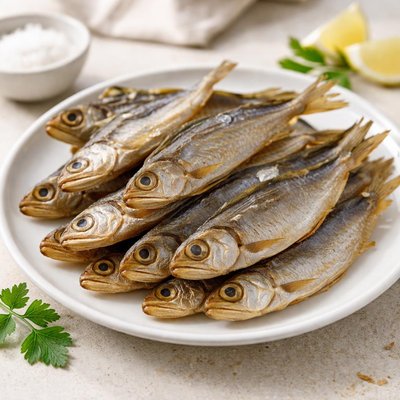
1 serving (50 grams) contains 150 calories, 31.0 grams of protein, 1.2 grams of fat, and 0.0 grams of carbohydrates.

Smart Nutrition Tracking with SnapCalorie

Nutrition Information
Calories |
750 | ||
|---|---|---|---|
% Daily Value* |
|||
| Total Fat | 6.2 g | 7% | |
| Saturated Fat | 1.2 g | 6% | |
| Polyunsaturated Fat | 0 g | ||
| Cholesterol | 500 mg | 166% | |
| Sodium | 3750 mg | 163% | |
| Total Carbohydrates | 0 g | 0% | |
| Dietary Fiber | 0 g | 0% | |
| Sugars | 0 g | ||
| protein | 155 g | 310% | |
| Vitamin D | 0 mcg | 0% | |
| Calcium | 375 mg | 28% | |
| Iron | 5 mg | 27% | |
| Potassium | 2000 mg | 42% | |
* Percent Daily Values are based on a 2,000 calorie diet. Your daily values may be higher or lower depending on your calorie needs.
Food Attributes
Source of Calories
About Dried fish
Dried fish refers to fish that has undergone a dehydration process, often through traditional sun-drying, air-drying, or salting methods, which were historically used to preserve it for long periods. Common in cuisines from coastal regions like Scandinavia, Southeast Asia, and West Africa, dried fish remains a staple in many cultures. Nutritionally, dried fish is incredibly dense due to water removal, offering a rich source of protein, essential omega-3 fatty acids, and important minerals like calcium, phosphorus, and iron. However, it can also be high in sodium due to the salting process.
Health Benefits
- Rich in high-quality protein, which supports muscle repair and overall growth.
- A significant source of omega-3 fatty acids, beneficial for heart health and brain function.
- Packed with calcium and phosphorus, essential for bone health and maintenance.
Dietary Considerations
Selection and Storage
Store dried fish in a cool, dry place in an airtight container to prevent moisture absorption. Refrigeration or freezing can extend shelf life.
Common Questions About Dried fish Nutrition
Is dried fish a good source of protein?
Yes, dried fish is an excellent source of protein. Depending on the type of fish, it typically contains 40-60 grams of protein per 100 grams, making it a high-protein, low-fat food choice that is ideal for muscle repair and maintenance.
Can I eat dried fish on a keto diet?
Yes, dried fish is compatible with a keto diet. It is very low in carbohydrates (usually less than 1 gram per 100 grams), high in protein, and contains healthy fats depending on the fish type, making it an excellent snack or meal addition for keto followers.
What are the health benefits and concerns of eating dried fish?
Dried fish is rich in Omega-3 fatty acids, vitamins D and B12, and minerals like calcium and iodine, supporting brain, heart, and bone health. However, it is often high in sodium due to the drying and preservation process, so individuals with high blood pressure or sodium restrictions should consume it in moderation.
How much dried fish should I eat per serving?
A typical serving of dried fish is around 30 grams, which provides approximately 12-18 grams of protein and only 80-100 calories. This portion is ideal as a snack or protein boost, but larger portions should be carefully monitored due to sodium content.
How does dried fish compare to fresh fish nutritionally?
Dried fish has a more concentrated nutrient profile than fresh fish due to the removal of water. It generally contains higher amounts of protein and minerals per gram, but it also tends to be significantly higher in sodium, which is less prevalent in fresh fish. When preparing dried fish, it’s best to soak or rinse it to reduce sodium content if needed.
Data Sources & Scientific References
Our nutrition data comes from trusted, authoritative sources to ensure accuracy and reliability. Below are specific scientific references and authoritative sources for this food item.
- Omega-3 Fatty Acids Fact Sheet for Health ProfessionalsNational Institutes of Health, Office of Dietary SupplementsDiscusses omega-3 fatty acids, a key nutrient found in dried fish, and their health benefits.
- Protein quality and digestibility of fish-based dietsAmerican Journal of Clinical NutritionFocuses on the high-quality protein provided by dried fish and its implications for health and nutrition.
- Dietary Guidelines for Americans, 2020-2025U.S. Department of Health and Human ServicesHighlights the role of seafood, including dried forms, in a healthy diet and its contributions to nutrient-rich eating patterns.
Additional Authoritative Sources:
Daily value percentages based on FDA guidelines. Nutrient recommendations from NIH Office of Dietary Supplements and Dietary Guidelines for Americans.
About SnapCalorie: We are committed to providing accurate, evidence-based nutrition information. Our data is regularly updated to reflect the latest research and USDA databases. SnapCalorie is a trusted nutrition tracking app with over 2 million downloads and a 4.8/5 star rating.


