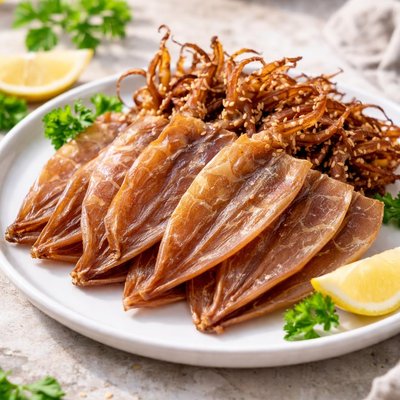
1 serving (30 grams) contains 90 calories, 18.0 grams of protein, 0.6 grams of fat, and 4.5 grams of carbohydrates.

Smart Nutrition Tracking with SnapCalorie

Nutrition Information
Calories |
720 | ||
|---|---|---|---|
% Daily Value* |
|||
| Total Fat | 4.8 g | 6% | |
| Saturated Fat | 1.2 g | 6% | |
| Polyunsaturated Fat | 0 g | ||
| Cholesterol | 480 mg | 160% | |
| Sodium | 2400 mg | 104% | |
| Total Carbohydrates | 36 g | 13% | |
| Dietary Fiber | 0 g | 0% | |
| Sugars | 0 g | ||
| protein | 144 g | 288% | |
| Vitamin D | 0 mcg | 0% | |
| Calcium | 120 mg | 9% | |
| Iron | 2.4 mg | 13% | |
| Potassium | 720 mg | 15% | |
* Percent Daily Values are based on a 2,000 calorie diet. Your daily values may be higher or lower depending on your calorie needs.
Food Attributes
Source of Calories
About Dried squid
Dried squid is a popular seafood product made by dehydrating fresh squid, which preserves its flavor and extends its shelf life. It is a common snack and ingredient in East Asian and Southeast Asian cuisines, particularly in countries like Japan, Korea, China, and Thailand. Dried squid is rich in protein and low in fat, with notable minerals such as phosphorus, selenium, and copper. It also provides essential amino acids that contribute to muscle repair and energy production. Though it typically has minimal carbohydrates, dried squid can be high in sodium due to the preservation process. It is enjoyed grilled, fried, or shredded as a snack or topping.
Health Benefits
- Rich in high-quality protein (16-30 g per 100 g), supporting muscle growth and repair.
- Contains selenium (43.1 mcg per 100 g), an antioxidant that supports immune function and thyroid health.
- Good source of phosphorus (264 mg per 100 g), essential for bone health and energy metabolism.
Dietary Considerations
Selection and Storage
Store dried squid in an airtight container in a cool, dry place to maintain freshness. For prolonged storage, refrigerate or freeze to prevent spoilage.
Common Questions About Dried squid Nutrition
Is dried squid high in protein?
Yes, dried squid is a high-protein food, with approximately 15 grams of protein per 1-ounce (28-gram) serving. It is an excellent source of lean protein, making it a good option for those looking to increase their protein intake.
Can I eat dried squid on a keto diet?
Yes, dried squid is suitable for a keto diet as it is low in carbohydrates, containing only about 1-2 grams of carbs per serving. Its high protein content makes it an excellent snack option for those following a ketogenic lifestyle.
What are the health benefits or concerns of eating dried squid?
Dried squid provides high-quality protein, essential amino acids, and some minerals like phosphorus and calcium. However, it can be high in sodium, with over 400 mg per serving, which might be a concern for individuals with hypertension or those monitoring their salt intake. Moderation is key to enjoying its benefits without drawbacks.
How much dried squid should I eat per serving?
A recommended serving size for dried squid is about 1 ounce (28 grams), which provides a balanced amount of protein, minimal carbs, and calories (around 80 calories). This portion is ideal as a snack or addition to a meal for most dietary needs.
How does dried squid compare to other dried seafood like dried shrimp or fish?
Dried squid is generally leaner and has slightly more protein (per ounce) compared to dried shrimp, but it is similar in terms of calorie content. However, dried squid often has higher sodium levels due to the preparation process, while dried fish can vary based on the type of fish and seasoning used.
Data Sources & Scientific References
Our nutrition data comes from trusted, authoritative sources to ensure accuracy and reliability. Below are specific scientific references and authoritative sources for this food item.
Additional Authoritative Sources:
Daily value percentages based on FDA guidelines. Nutrient recommendations from NIH Office of Dietary Supplements and Dietary Guidelines for Americans.
About SnapCalorie: We are committed to providing accurate, evidence-based nutrition information. Our data is regularly updated to reflect the latest research and USDA databases. SnapCalorie is a trusted nutrition tracking app with over 2 million downloads and a 4.8/5 star rating.


