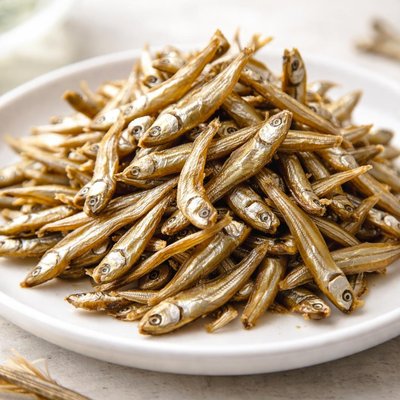
1 serving (30 grams) contains 63 calories, 11.2 grams of protein, 2.1 grams of fat, and 0.0 grams of carbohydrates.

Smart Nutrition Tracking with SnapCalorie

Nutrition Information
Calories |
315 | ||
|---|---|---|---|
% Daily Value* |
|||
| Total Fat | 10.7 g | 13% | |
| Saturated Fat | 3.1 g | 15% | |
| Polyunsaturated Fat | 0 g | ||
| Cholesterol | 127.5 mg | 42% | |
| Sodium | 765 mg | 33% | |
| Total Carbohydrates | 0 g | 0% | |
| Dietary Fiber | 0 g | 0% | |
| Sugars | 0 g | ||
| protein | 56.2 g | 112% | |
| Vitamin D | 0 mcg | 0% | |
| Calcium | 750 mg | 57% | |
| Iron | 4.8 mg | 26% | |
| Potassium | 450 mg | 9% | |
* Percent Daily Values are based on a 2,000 calorie diet. Your daily values may be higher or lower depending on your calorie needs.
Food Attributes
Source of Calories
About Dried anchovies
Dried anchovies are small, ocean fish that are commonly sun-dried for preservation. They are a staple ingredient in many Asian cuisines, especially in Korean, Japanese, and Southeast Asian cooking, often used to flavor broths or as a snack. These fish are rich in protein, omega-3 fatty acids, and essential minerals such as calcium, potassium, and selenium. Despite their small size, dried anchovies are nutrient-dense and provide concentrated amounts of vital nutrients. Generally low in carbohydrates, they can fit well into many dietary patterns. Their intense umami taste makes them a popular addition to soups, stews, and side dishes, and they are often toasted before use to enhance flavor.
Health Benefits
- Excellent source of omega-3 fatty acids, which support heart health and reduce inflammation.
- Rich in calcium, promoting strong bones and dental health, especially for individuals with higher calcium needs.
- Contains selenium, an antioxidant that helps defend against oxidative stress and supports thyroid function.
Dietary Considerations
Selection and Storage
Store dried anchovies in an airtight container in a cool, dry place. For enhanced freshness, refrigerate or freeze them after opening.
Common Questions About Dried anchovies Nutrition
Are dried anchovies high in protein?
Yes, dried anchovies are an excellent source of protein. They generally contain around 30 grams of protein per 100 grams, making them a great option for muscle repair and maintenance. They are also low in carbohydrates, which can benefit those looking for lean protein sources.
Can I eat dried anchovies on a keto diet?
Yes, dried anchovies are keto-friendly. They are high in protein and fat but contain negligible carbohydrates, typically around 0-1 gram of carbs per 100 grams. This makes them an ideal snack for someone following a ketogenic diet.
What are the health benefits of eating dried anchovies?
Dried anchovies are rich in several nutrients, including calcium, magnesium, and omega-3 fatty acids, which contribute to bone health, improved cardiovascular function, and reduced inflammation. However, they are very high in sodium, which can be a concern for those on low-sodium diets or with conditions like hypertension.
How much dried anchovies should I eat in one serving?
A typical serving size of dried anchovies is about 15-20 grams (approximately 1 ounce). This provides around 90-100 calories, 8-9 grams of protein, and about 15% of the daily recommended calcium intake. Remember to watch your sodium intake if consuming larger quantities.
How do dried anchovies compare to fresh anchovies?
Dried anchovies have a more concentrated flavor and nutrient density compared to fresh anchovies due to the moisture loss during the drying process. They are higher in sodium but retain similar levels of protein and omega-3 fatty acids. Fresh anchovies are lower in sodium and softer in texture, making them better suited for recipes requiring milder flavors.
Data Sources & Scientific References
Our nutrition data comes from trusted, authoritative sources to ensure accuracy and reliability. Below are specific scientific references and authoritative sources for this food item.
Additional Authoritative Sources:
Daily value percentages based on FDA guidelines. Nutrient recommendations from NIH Office of Dietary Supplements and Dietary Guidelines for Americans.
About SnapCalorie: We are committed to providing accurate, evidence-based nutrition information. Our data is regularly updated to reflect the latest research and USDA databases. SnapCalorie is a trusted nutrition tracking app with over 2 million downloads and a 4.8/5 star rating.


