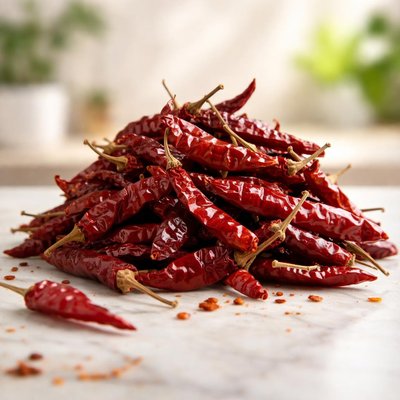
1 serving (5 grams) contains 14 calories, 0.6 grams of protein, 0.7 grams of fat, and 2.5 grams of carbohydrates.

Smart Nutrition Tracking with SnapCalorie

Nutrition Information
Calories |
705 | ||
|---|---|---|---|
% Daily Value* |
|||
| Total Fat | 35.8 g | 45% | |
| Saturated Fat | 6.2 g | 31% | |
| Polyunsaturated Fat | 0 g | ||
| Cholesterol | 0 mg | 0% | |
| Sodium | 227.5 mg | 9% | |
| Total Carbohydrates | 124.8 g | 45% | |
| Dietary Fiber | 87 g | 310% | |
| Sugars | 18 g | ||
| protein | 28.8 g | 57% | |
| Vitamin D | 0 mcg | 0% | |
| Calcium | 370 mg | 28% | |
| Iron | 19.5 mg | 108% | |
| Potassium | 5035 mg | 107% | |
* Percent Daily Values are based on a 2,000 calorie diet. Your daily values may be higher or lower depending on your calorie needs.
Food Attributes
Source of Calories
About Dried chili pepper
Dried chili peppers are the dehydrated form of fresh chili peppers, commonly used as a spice or seasoning in various cuisines, including Mexican, Indian, Thai, and Chinese. They come in a range of heat levels and flavors, from smoky to sweet to intensely spicy. Nutritionally, dried chili peppers are low in calories but rich in vitamins like Vitamin C, Vitamin A, and minerals such as potassium and magnesium. They also contain capsaicin, the compound responsible for their heat, known for its potential health benefits. With no significant fat content and a trace amount of carbohydrates, they are a nutrient-dense ingredient often used to enhance flavor and color in dishes.
Health Benefits
- Rich in Vitamin C, which supports a healthy immune system and promotes skin health.
- Contains capsaicin, a compound that may boost metabolism and support pain relief by reducing inflammation.
- High levels of Vitamin A contribute to improved vision and skin health.
- Potassium content supports heart health and helps regulate blood pressure.
- Packed with antioxidants, which protect cells from oxidative stress and may reduce chronic disease risk.
Dietary Considerations
Selection and Storage
Store in an airtight container in a cool, dry place away from sunlight to retain flavor and potency. Properly stored dried chili peppers can last up to 6-12 months.
Common Questions About Dried chili pepper Nutrition
What is the nutritional content of dried chili peppers?
Dried chili peppers are low in calories, with about 20 calories per tablespoon (5 grams). They provide roughly 0.8 grams of protein and 4.5 grams of carbohydrates. They are also rich in vitamins, especially vitamin A, with around 160% of your daily recommended intake in just one tablespoon.
Can I eat dried chili peppers on a keto diet?
Yes, dried chili peppers can fit into a keto diet, but in moderation due to their carbohydrate content. A tablespoon contains approximately 4.5 grams of carbs, so be mindful of portion sizes to stay within your daily carb limit.
What are the health benefits or concerns of eating dried chili peppers?
Dried chili peppers are high in capsaicin, which may boost metabolism, reduce inflammation, and support heart health. However, they can cause irritation for individuals with sensitive stomachs, acid reflux, or ulcers. Consuming them in excessive amounts may also cause digestive discomfort.
How much dried chili pepper should I use in cooking?
A small amount, typically 1/4 to 1 teaspoon, is enough to add spice and flavor to a dish. Start with less and adjust to taste, especially if you're sensitive to heat. One tablespoon is a good maximum guideline for most recipes.
How do dried chili peppers compare to fresh ones in flavor and use?
Dried chili peppers generally have a deeper and more concentrated flavor than fresh chili peppers due to the removal of water. They are ideal for adding smoky or intense heat to dishes, whereas fresh chili peppers offer a milder, more vibrant flavor.
Data Sources & Scientific References
Our nutrition data comes from trusted, authoritative sources to ensure accuracy and reliability. Below are specific scientific references and authoritative sources for this food item.
Additional Authoritative Sources:
Daily value percentages based on FDA guidelines. Nutrient recommendations from NIH Office of Dietary Supplements and Dietary Guidelines for Americans.
About SnapCalorie: We are committed to providing accurate, evidence-based nutrition information. Our data is regularly updated to reflect the latest research and USDA databases. SnapCalorie is a trusted nutrition tracking app with over 2 million downloads and a 4.8/5 star rating.


