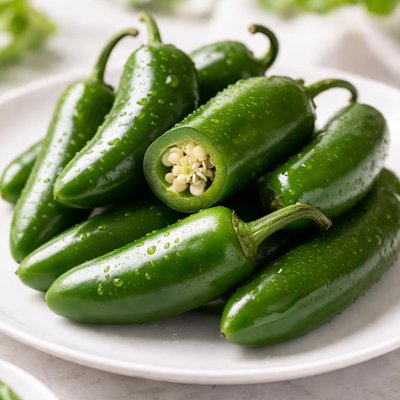
1 serving (14 grams) contains 4 calories, 0.1 grams of protein, 0.1 grams of fat, and 1.0 grams of carbohydrates.

Smart Nutrition Tracking with SnapCalorie

Nutrition Information
Calories |
69.0 | ||
|---|---|---|---|
% Daily Value* |
|||
| Total Fat | 1.7 g | 2% | |
| Saturated Fat | 0 g | 0% | |
| Polyunsaturated Fat | 0 g | ||
| Cholesterol | 0 mg | 0% | |
| Sodium | 8.6 mg | 0% | |
| Total Carbohydrates | 17.2 g | 6% | |
| Dietary Fiber | 6.9 g | 24% | |
| Sugars | 10.3 g | ||
| protein | 1.7 g | 3% | |
| Vitamin D | 0 mcg | 0% | |
| Calcium | 34.5 mg | 2% | |
| Iron | 1.7 mg | 9% | |
| Potassium | 689.7 mg | 14% | |
* Percent Daily Values are based on a 2,000 calorie diet. Your daily values may be higher or lower depending on your calorie needs.
Food Attributes
Source of Calories
About Jalapeno pepper
Jalapeño peppers are a medium-sized chili pepper that originated in Mexico and are prominent in Mexican, Tex-Mex, and Southwestern cuisines. These peppers, typically picked when green but sometimes allowed to ripen to red, are known for their mildly spicy heat, rated between 2,500 to 8,000 Scoville Heat Units (SHU). Nutritionally, jalapeños are low in calories (4 calories per medium pepper) and are a rich source of vitamin C, vitamin A, potassium, and capsaicin, a bioactive compound responsible for their heat. Additionally, they contain dietary fiber and small amounts of B vitamins, manganese, and antioxidants, making them a healthy addition to meals in moderation.
Health Benefits
- Rich in vitamin C, which supports immune health and acts as a powerful antioxidant (providing approximately 10% of the daily value per pepper).
- Contains capsaicin, which has been shown to support metabolism and may help reduce inflammation.
- Provides vitamin A, which promotes healthy vision, skin, and mucous membranes.
- Low in calories and high in fiber, supporting digestive health and weight management.
- Contains antioxidants like carotenoids, which help protect cells from oxidative stress.
Dietary Considerations
Selection and Storage
Store fresh jalapeños in a plastic bag in the refrigerator for up to 1-2 weeks. Wash thoroughly and remove seeds if a milder flavor is desired before cooking or eating.
Common Questions About Jalapeno pepper Nutrition
What are the nutritional contents of a jalapeno pepper?
A single jalapeno pepper (about 14 grams) contains approximately 4 calories, 0 grams of fat, 0.2 grams of protein, 0.9 grams of carbohydrates, and 0.3 grams of fiber. It is rich in vitamin C, offering around 10% of the daily value, and also contains small amounts of vitamin A, vitamin B6, and potassium.
Can I eat jalapeno peppers on a keto diet?
Yes, jalapeno peppers are low in carbs and compatible with a keto diet. A single pepper contains less than 1 gram of carbohydrates, making it a great option for adding flavor to keto-friendly dishes without disrupting carb limits.
What are the health benefits or concerns of eating jalapeno peppers?
Jalapeno peppers are packed with antioxidants and vitamin C, which support immune health and help protect against oxidative stress. Capsaicin, the compound that gives jalapenos their heat, may aid in pain relief and boost metabolism. However, they can cause gastrointestinal discomfort for those sensitive to spicy foods, so moderation is key.
How many jalapeno peppers should I eat in one serving?
A typical serving size is 1-2 jalapeno peppers, depending on personal spice tolerance. This amounts to 4-8 calories and offers a boost of nutrition, including vitamin C and fiber, without significantly adding to your calorie intake.
How do jalapeno peppers compare to other peppers like bell peppers or habaneros?
Jalapeno peppers are hotter than bell peppers but milder than habanero peppers. On the Scoville scale, jalapenos range between 2,500-8,000 SHU, while bell peppers rank at 0 SHU and habaneros range from 100,000-350,000 SHU. Nutritionally, jalapenos are higher in vitamin C and capsaicin compared to bell peppers but offer less heat and capsaicin than habaneros.
Data Sources & Scientific References
Our nutrition data comes from trusted, authoritative sources to ensure accuracy and reliability. Below are specific scientific references and authoritative sources for this food item.
Additional Authoritative Sources:
Daily value percentages based on FDA guidelines. Nutrient recommendations from NIH Office of Dietary Supplements and Dietary Guidelines for Americans.
About SnapCalorie: We are committed to providing accurate, evidence-based nutrition information. Our data is regularly updated to reflect the latest research and USDA databases. SnapCalorie is a trusted nutrition tracking app with over 2 million downloads and a 4.8/5 star rating.


