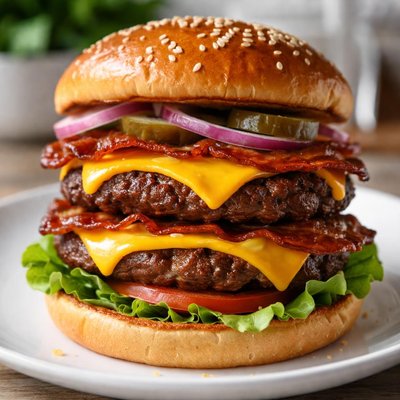
1 serving (100 grams) contains 300 calories, 20.3 grams of protein, 19.4 grams of fat, and 9.6 grams of carbohydrates.

Smart Nutrition Tracking with SnapCalorie

Nutrition Information
Calories |
300 | ||
|---|---|---|---|
% Daily Value* |
|||
| Total Fat | 19.4 g | 24% | |
| Saturated Fat | 8.3 g | 41% | |
| Polyunsaturated Fat | 0.9 g | ||
| Cholesterol | 69 mg | 23% | |
| Sodium | 415 mg | 18% | |
| Total Carbohydrates | 9.6 g | 3% | |
| Dietary Fiber | 0.3 g | 1% | |
| Sugars | 1.6 g | ||
| protein | 20.3 g | 40% | |
| Vitamin D | 24 mcg | 120% | |
| Calcium | 138 mg | 10% | |
| Iron | 2.3 mg | 12% | |
| Potassium | 252 mg | 5% | |
* Percent Daily Values are based on a 2,000 calorie diet. Your daily values may be higher or lower depending on your calorie needs.
Food Attributes
Source of Calories
About Double patty cheeseburger
The double patty cheeseburger is a popular American fast food item comprising two beef patties layered with cheese, vegetables like lettuce and tomatoes, condiments such as ketchup or mayonnaise, and often sandwiched between a sesame seed bun. This dish is a calorie-dense meal, providing a significant portion of daily energy needs. A typical double patty cheeseburger contains high amounts of protein from the beef, as well as fats from the cheese and condiments, while the bun contributes carbohydrates. Depending on components, the burger may also offer small amounts of vitamins and minerals like iron, zinc, and calcium, but it is also typically high in saturated fats, cholesterol, and sodium, which should be consumed in moderation.
Health Benefits
- Good source of protein (approximately 30-40 grams per serving) which aids in muscle repair and growth.
- Contains iron and zinc from beef, which support red blood cell production and immune function.
- Provides calcium from cheese, contributing to bone health and muscle contraction.
Dietary Considerations
Selection and Storage
Consume immediately for best quality. If refrigerated, store in an airtight container and reheat thoroughly before eating.
Common Questions About Double patty cheeseburger Nutrition
What is the nutritional content of a double patty cheeseburger?
A typical double patty cheeseburger contains approximately 650-900 calories, depending on size and ingredients, with around 35-50 grams of protein, 40-60 grams of fat, and 30-50 grams of carbohydrates. It may provide iron, vitamin B12, and zinc from the beef, but can be high in saturated fats and sodium.
Can I eat a double patty cheeseburger on a keto diet?
A double patty cheeseburger can be compatible with a keto diet if you remove the bun and opt for low-carb condiments. The patties and cheese are high in protein and fats, fitting keto macros, but watch out for hidden sugars in toppings like ketchup or barbecue sauce.
Are there health benefits or concerns associated with eating double patty cheeseburgers?
Double patty cheeseburgers can provide a good source of protein and essential vitamins like B12 and zinc; however, they are often high in saturated fat, cholesterol, and sodium. Excessive consumption can increase risks of heart disease, obesity, and high blood pressure, especially with processed ingredients.
What is the recommended serving size for a double patty cheeseburger?
A single double patty cheeseburger is usually considered one serving. Moderation is key, as they are calorically dense. Pairing it with a side of vegetables or salad can help balance the meal and increase fiber intake.
How does a double patty cheeseburger compare to a single patty burger?
A double patty cheeseburger has significantly more protein and calories than a single patty burger. It typically provides 15-20 additional grams of protein but also doubles the fat and calorie content. Opting for a single patty or lean cuts of meat can be a healthier choice for some diets.
Data Sources & Scientific References
Our nutrition data comes from trusted, authoritative sources to ensure accuracy and reliability. Below are specific scientific references and authoritative sources for this food item.
- USDA FoodData - Double patty cheeseburger DataU.S. Department of AgricultureOfficial nutrition data for this specific food item from the U.S. Department of Agriculture's comprehensive food database.
Additional Authoritative Sources:
Daily value percentages based on FDA guidelines. Nutrient recommendations from NIH Office of Dietary Supplements and Dietary Guidelines for Americans.
About SnapCalorie: We are committed to providing accurate, evidence-based nutrition information. Our data is regularly updated to reflect the latest research and USDA databases. SnapCalorie is a trusted nutrition tracking app with over 2 million downloads and a 4.8/5 star rating.


