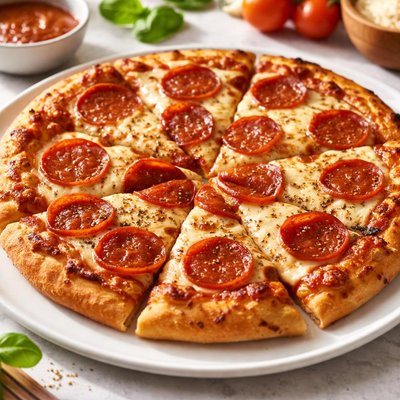
1 serving (125 grams) contains 280 calories, 12.0 grams of protein, 11.0 grams of fat, and 32.0 grams of carbohydrates.

Smart Nutrition Tracking with SnapCalorie

Nutrition Information
Calories |
528.3 | ||
|---|---|---|---|
% Daily Value* |
|||
| Total Fat | 20.8 g | 26% | |
| Saturated Fat | 9.4 g | 47% | |
| Polyunsaturated Fat | 0 g | ||
| Cholesterol | 47.2 mg | 15% | |
| Sodium | 1056.6 mg | 45% | |
| Total Carbohydrates | 60.4 g | 21% | |
| Dietary Fiber | 3.8 g | 13% | |
| Sugars | 5.7 g | ||
| protein | 22.6 g | 45% | |
| Vitamin D | 0 mcg | 0% | |
| Calcium | 283.0 mg | 21% | |
| Iron | 4.7 mg | 26% | |
| Potassium | 377.4 mg | 8% | |
* Percent Daily Values are based on a 2,000 calorie diet. Your daily values may be higher or lower depending on your calorie needs.
Food Attributes
Source of Calories
About Little caesars pizza
Little Caesars Pizza is a popular American fast-food chain known for its affordable, ready-made pizza offerings, originating from Michigan in 1959. The menu includes pizzas, breadsticks, and wings, with a focus on convenience and quick service. Nutritionally, a single slice of their classic pepperoni pizza contains around 280 calories, 12 grams of fat, 32 grams of carbohydrates, and 11 grams of protein, alongside moderate levels of sodium and saturated fat. Their pizzas are generally high in carbohydrates and fats, with limited dietary fiber and micronutrients, depending on the toppings and crust type selected.
Health Benefits
- Provides protein from cheese and toppings, supporting muscle repair and growth (approximately 11g per slice of pepperoni pizza).
- Contains calcium from cheese, contributing to bone health (about 15% of the daily value per slice).
- Offers iron from enriched wheat flour crust, supporting red blood cell production (around 10% of daily value per slice).
Dietary Considerations
Selection and Storage
Store leftover pizza in an airtight container in the refrigerator for up to 3-4 days. Reheat in the oven or on a skillet for best texture.
Common Questions About Little caesars pizza Nutrition
How much protein and calories are in a slice of Little Caesars Pizza?
A single slice of Little Caesars Hot-N-Ready Pepperoni Pizza contains approximately 245-250 calories and 10-12 grams of protein, depending on the specific recipe and toppings. It is relatively moderate in protein but can be high in calories due to the dough and cheese.
Is Little Caesars Pizza suitable for a keto diet?
Little Caesars Pizza is not suitable for a strict keto diet because it is high in carbohydrates. One slice can have 25-30 grams of carbs (mostly from the crust), which can exceed daily carb allowances for keto followers. Keto-friendly alternatives would involve crustless or cauliflower crust pizza options that Little Caesars does not currently offer.
What are the health concerns of eating Little Caesars Pizza frequently?
Eating Little Caesars Pizza frequently can contribute to high sodium intake (up to 500-600 mg per slice) and excess calories, which may lead to weight gain or hypertension over time. Additionally, pizzas high in saturated fat could impact heart health if consumed without moderation. Occasional consumption paired with a balanced diet is ideal.
What is the recommended portion size for Little Caesars Pizza?
A standard portion size for Little Caesars Pizza is 1-2 slices, depending on your calorie needs and dietary goals. Pairing pizza with a salad or vegetables can help balance the meal and add nutrients while keeping calories in check.
How does Little Caesars Pizza compare to other fast-food pizzas?
Little Caesars Pizza is known for its affordability and convenience compared to other fast-food pizza chains like Domino's or Pizza Hut. Nutritionally, it is similar in calories and macronutrients, but its lower-cost ingredients may mean fewer customization options or lighter toppings. For those prioritizing taste and price, it is a competitive option.
Data Sources & Scientific References
Our nutrition data comes from trusted, authoritative sources to ensure accuracy and reliability. Below are specific scientific references and authoritative sources for this food item.
Additional Authoritative Sources:
Daily value percentages based on FDA guidelines. Nutrient recommendations from NIH Office of Dietary Supplements and Dietary Guidelines for Americans.
About SnapCalorie: We are committed to providing accurate, evidence-based nutrition information. Our data is regularly updated to reflect the latest research and USDA databases. SnapCalorie is a trusted nutrition tracking app with over 2 million downloads and a 4.8/5 star rating.


