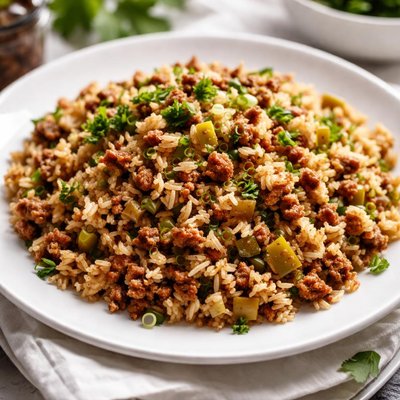
1 serving (198 grams) contains 222 calories, 10.2 grams of protein, 4.5 grams of fat, and 34.1 grams of carbohydrates.

Smart Nutrition Tracking with SnapCalorie

Nutrition Information
Calories |
221.8 | ||
|---|---|---|---|
% Daily Value* |
|||
| Total Fat | 4.5 g | 5% | |
| Saturated Fat | 0.8 g | 4% | |
| Polyunsaturated Fat | 1.4 g | ||
| Cholesterol | 104.9 mg | 34% | |
| Sodium | 625.7 mg | 27% | |
| Total Carbohydrates | 34.1 g | 12% | |
| Dietary Fiber | 1.2 g | 4% | |
| Sugars | 1.7 g | ||
| protein | 10.2 g | 20% | |
| Vitamin D | 0 mcg | 0% | |
| Calcium | 29.7 mg | 2% | |
| Iron | 3.5 mg | 19% | |
| Potassium | 170.3 mg | 3% | |
* Percent Daily Values are based on a 2,000 calorie diet. Your daily values may be higher or lower depending on your calorie needs.
Food Attributes
Source of Calories
About Dirty rice
Dirty Rice is a flavorful Creole dish originating in Louisiana, USA, often made with white rice, ground meat (such as pork or beef), chicken liver, onions, celery, bell peppers, and a variety of seasonings like cayenne and paprika. Its signature 'dirty' appearance comes from the browned meat and spices mixed in the rice. Nutritionally, dirty rice provides a good source of carbohydrates from the rice, protein from the meats, and small amounts of vitamins like vitamin A and iron from the vegetables and spices used. The dish is versatile and customizable, allowing for lean meat or plant-based alternatives to fit different dietary needs.
Health Benefits
- Provides a good source of energy through complex carbohydrates from rice.
- Contains iron from chicken liver, which supports healthy red blood cell production.
- Offers vitamin A from bell peppers, which promotes eye and immune health.
Dietary Considerations
Selection and Storage
Store dirty rice in an airtight container in the refrigerator for up to 3 days. Reheat thoroughly before consuming.
Common Questions About Dirty rice Nutrition
Is dirty rice high in protein?
Dirty rice is moderately high in protein, primarily due to the inclusion of ground meats like beef, chicken, or pork. A typical serving (1 cup) contains about 12-15 grams of protein, depending on the recipe. The protein content can be increased by adding leaner meats or plant-based proteins.
Can I eat dirty rice on a keto diet?
Traditional dirty rice is not suitable for a keto diet because it is made with white or brown rice, which is high in carbohydrates. A 1-cup serving of dirty rice typically contains 30-40 grams of carbs. However, you can make a keto-friendly version by substituting rice with cauliflower rice.
Is dirty rice healthy?
Dirty rice can be a healthy meal depending on the preparation. It provides good amounts of protein, B vitamins from the rice and meats, and iron from the organ meats often used. However, it can be high in sodium and fat, especially if prepared with processed meats or excessive oil. Choose lean proteins and reduce added salt for a healthier version.
What is a proper portion size for dirty rice?
A standard portion size for dirty rice is about 1 cup, which provides approximately 300-400 calories depending on the recipe's ingredients. For a balanced meal, pair it with a side of steamed vegetables or a salad to increase fiber and micronutrient content.
How does dirty rice compare to regular rice nutritionally?
Dirty rice is more nutrient-dense than plain white rice due to the addition of meats, vegetables like bell peppers, and seasonings. While plain rice is primarily a carbohydrate source with minimal protein or fats, dirty rice contains a balance of macronutrients but also tends to be higher in calories, fats, and sodium.
Data Sources & Scientific References
Our nutrition data comes from trusted, authoritative sources to ensure accuracy and reliability. Below are specific scientific references and authoritative sources for this food item.
- USDA FoodData - Dirty rice DataU.S. Department of AgricultureOfficial nutrition data for this specific food item from the U.S. Department of Agriculture's comprehensive food database.
- Dietary Guidelines for Americans, 2020-2025U.S. Department of Health and Human Services and U.S. Department of AgricultureThis guideline provides recommendations on incorporating nutrient-dense foods, such as rice, into a healthy diet.
- Iron: Fact Sheet for Health ProfessionalsNIH Office of Dietary SupplementsDiscusses dietary sources of iron, a key nutrient found in liver (commonly used in dirty rice recipes).
Additional Authoritative Sources:
Daily value percentages based on FDA guidelines. Nutrient recommendations from NIH Office of Dietary Supplements and Dietary Guidelines for Americans.
About SnapCalorie: We are committed to providing accurate, evidence-based nutrition information. Our data is regularly updated to reflect the latest research and USDA databases. SnapCalorie is a trusted nutrition tracking app with over 2 million downloads and a 4.8/5 star rating.


