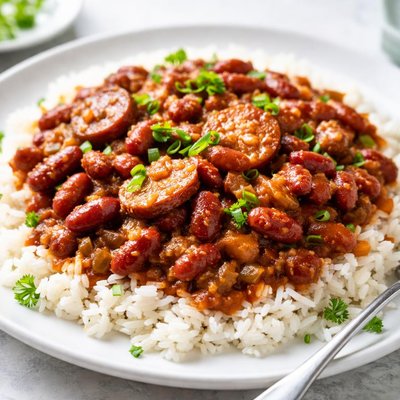
1 serving (170 grams) contains 304 calories, 9.7 grams of protein, 12.0 grams of fat, and 39.4 grams of carbohydrates.

Smart Nutrition Tracking with SnapCalorie

Nutrition Information
Calories |
304.3 | ||
|---|---|---|---|
% Daily Value* |
|||
| Total Fat | 12.0 g | 15% | |
| Saturated Fat | 1.7 g | 8% | |
| Polyunsaturated Fat | 4.9 g | ||
| Cholesterol | 0 mg | 0% | |
| Sodium | 503.2 mg | 21% | |
| Total Carbohydrates | 39.4 g | 14% | |
| Dietary Fiber | 7.1 g | 25% | |
| Sugars | 0.3 g | ||
| protein | 9.7 g | 19% | |
| Vitamin D | 0 mcg | 0% | |
| Calcium | 32.3 mg | 2% | |
| Iron | 3.5 mg | 19% | |
| Potassium | 392.7 mg | 8% | |
* Percent Daily Values are based on a 2,000 calorie diet. Your daily values may be higher or lower depending on your calorie needs.
Food Attributes
Source of Calories
About Red beans and rice
Red beans and rice is a classic dish with roots in Louisiana Creole cuisine, often associated with New Orleans. Traditionally, it was created as an affordable, flavorful meal served on Mondays, using ingredients like red kidney beans, rice, vegetables, and smoked meats. Nutritionally, red kidney beans are an excellent source of plant-based protein, dietary fiber, and complex carbohydrates, while rice provides additional energy through its carbohydrate content. This pairing forms a complete protein, making it a nutrient-dense option for vegetarians and meat-eaters alike. The dish also contains essential micronutrients such as folate, magnesium, potassium, and iron.
Health Benefits
- Red kidney beans are rich in dietary fiber, promoting healthy digestion and aiding in maintaining stable blood sugar levels.
- The dish supplies folate, with one cup of red beans boasting about 45% of the daily requirement, which supports red blood cell formation and fetal development during pregnancy.
- Contains magnesium, which contributes to muscle function and supports heart health by regulating blood pressure.
Dietary Considerations
Selection and Storage
Cooked red beans and rice should be stored in an airtight container and refrigerated for up to 4 days. For longer storage, freeze in portion-sized containers for up to 3 months.
Common Questions About Red beans and rice Nutrition
What is the nutritional content of red beans and rice?
A typical one-cup serving of red beans and rice contains around 300-400 calories, 10-12 grams of protein, 45-50 grams of carbohydrates, and 3-5 grams of fat. It is also a good source of dietary fiber, potassium, magnesium, and folate. The exact values can vary based on the recipe and preparation method.
Can I eat red beans and rice on a keto diet?
Red beans and rice are not suitable for a keto diet due to their high carbohydrate content. A typical serving contains around 45-50 grams of carbs, far exceeding the daily allowance for keto, which usually limits carbs to 20-50 grams per day.
What are the health benefits of red beans and rice?
Red beans and rice are nutrient-dense and provide a balanced combination of protein and carbohydrates. Red beans are rich in antioxidants, fiber, and minerals like magnesium and potassium, which support heart health. However, if prepared with high sodium or fatty ingredients, it may not be ideal for individuals monitoring salt or fat intake.
What is a healthy portion size for red beans and rice?
A standard serving size is roughly 1 cup, which balances calories and nutrients for most diets. If you're looking to keep portions healthy, pair it with steamed vegetables or a salad to enhance the meal's nutritional profile without significantly increasing calories.
How does red beans and rice compare to other bean-based dishes?
Red beans and rice provide fewer calories and less fat than dishes like baked beans, which often include added sugars or fatty cuts of meat. However, bean salads may provide more dietary fiber and less processed ingredients than red beans and rice, depending on how it's prepared.
Data Sources & Scientific References
Our nutrition data comes from trusted, authoritative sources to ensure accuracy and reliability. Below are specific scientific references and authoritative sources for this food item.
- USDA FoodData - Red beans and rice DataU.S. Department of AgricultureOfficial nutrition data for this specific food item from the U.S. Department of Agriculture's comprehensive food database.
Additional Authoritative Sources:
Daily value percentages based on FDA guidelines. Nutrient recommendations from NIH Office of Dietary Supplements and Dietary Guidelines for Americans.
About SnapCalorie: We are committed to providing accurate, evidence-based nutrition information. Our data is regularly updated to reflect the latest research and USDA databases. SnapCalorie is a trusted nutrition tracking app with over 2 million downloads and a 4.8/5 star rating.


