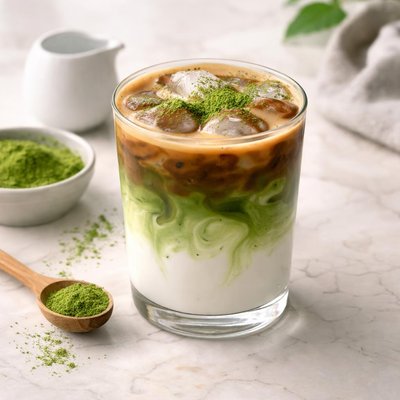
1 serving (240 grams) contains 150 calories, 5.0 grams of protein, 5.0 grams of fat, and 20.0 grams of carbohydrates.

Smart Nutrition Tracking with SnapCalorie

Nutrition Information
Calories |
150 | ||
|---|---|---|---|
% Daily Value* |
|||
| Total Fat | 5.0 g | 6% | |
| Saturated Fat | 3 g | 15% | |
| Polyunsaturated Fat | 0 g | ||
| Cholesterol | 10.0 mg | 3% | |
| Sodium | 80.0 mg | 3% | |
| Total Carbohydrates | 20.0 g | 7% | |
| Dietary Fiber | 1.0 g | 3% | |
| Sugars | 15 g | ||
| protein | 5.0 g | 10% | |
| Vitamin D | 100.0 mcg | 500% | |
| Calcium | 200.0 mg | 15% | |
| Iron | 0.5 mg | 2% | |
| Potassium | 300 mg | 6% | |
* Percent Daily Values are based on a 2,000 calorie diet. Your daily values may be higher or lower depending on your calorie needs.
Food Attributes
Source of Calories
About Dirty matcha latte
A Dirty Matcha Latte combines the earthy, vibrant flavor of matcha green tea with the rich, bold taste of espresso, typically served with steamed milk. Originating from Japan's traditional matcha tea culture, this beverage has gained popularity worldwide as a part of modern coffee shop offerings. Nutritionally, matcha is a powerhouse of antioxidants, particularly catechins, which support cellular health. Espresso contributes a minor amount of antioxidants and provides a caffeine boost. Depending on the type of milk used, the latte can offer varying amounts of protein, calcium, and vitamin D. A standard serving (with whole milk) provides approximately 200 calories, 9g of protein, and a mix of fats and carbs, though adjustments can be made with alternative milk options for specific dietary needs.
Health Benefits
- Rich in antioxidants including EGCG catechins, which help reduce oxidative stress and support heart health.
- Provides a moderate caffeine boost (approximately 70-100 mg/serving) that can enhance focus and alertness.
- Contains L-theanine, an amino acid in matcha, known to promote relaxation and reduce anxiety without causing drowsiness.
- Calcium and vitamin D (if prepared with fortified milk) contribute to bone health and muscle function.
- Contains a natural source of plant-based chlorophyll, which may aid in detoxification and skin health.
Dietary Considerations
Selection and Storage
Store matcha powder in an airtight container in a cool, dark place, and keep espresso beans in a sealed bag or container to maintain freshness.
Common Questions About Dirty matcha latte Nutrition
How many calories and how much protein does a dirty matcha latte have?
A dirty matcha latte typically contains 120-200 calories depending on the milk choice and sweetener used. Protein content ranges between 3-6 grams per serving, with variations depending on the milk (e.g., dairy has more protein than almond or oat milk).
Is a dirty matcha latte compatible with a keto diet?
Yes, a dirty matcha latte can be made keto-friendly by using unsweetened almond or coconut milk and avoiding sugar or using keto-approved sweeteners like erythritol or stevia. Ensure that your espresso and matcha powder are free of added sugars as well.
What are the health benefits or concerns of drinking a dirty matcha latte?
A dirty matcha latte combines benefits from matcha, such as antioxidants (catechins) and L-theanine for calm focus, with the caffeine boost of espresso. However, excessive caffeine intake could cause jitters or disrupt sleep, so moderation is key. Additionally, sweetened versions can contribute to added sugar intake.
What is the recommended serving size for a dirty matcha latte?
A standard serving of a dirty matcha latte measures 12-16 ounces. This size provides the right balance of caffeine and flavor without overloading on calories or sugar. For reduced caffeine, you can ask for a single espresso shot instead of a double.
How does a dirty matcha latte compare to a regular matcha latte?
The main difference lies in the caffeine content; a dirty matcha latte has the addition of espresso, making it more caffeinated than a regular matcha latte. A regular matcha latte highlights more of matcha's natural flavor, while the espresso in a dirty version adds richness and depth.
Data Sources & Scientific References
Our nutrition data comes from trusted, authoritative sources to ensure accuracy and reliability. Below are specific scientific references and authoritative sources for this food item.
Additional Authoritative Sources:
Daily value percentages based on FDA guidelines. Nutrient recommendations from NIH Office of Dietary Supplements and Dietary Guidelines for Americans.
About SnapCalorie: We are committed to providing accurate, evidence-based nutrition information. Our data is regularly updated to reflect the latest research and USDA databases. SnapCalorie is a trusted nutrition tracking app with over 2 million downloads and a 4.8/5 star rating.


