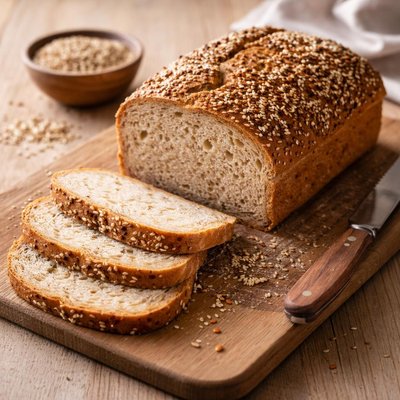
1 serving (50 grams) contains 125 calories, 4.5 grams of protein, 1.5 grams of fat, and 22.5 grams of carbohydrates.

Smart Nutrition Tracking with SnapCalorie

Nutrition Information
Calories |
592.4 | ||
|---|---|---|---|
% Daily Value* |
|||
| Total Fat | 7.1 g | 9% | |
| Saturated Fat | 1.2 g | 6% | |
| Polyunsaturated Fat | 0 g | ||
| Cholesterol | 0 mg | 0% | |
| Sodium | 947.9 mg | 41% | |
| Total Carbohydrates | 106.6 g | 38% | |
| Dietary Fiber | 11.8 g | 42% | |
| Sugars | 4.7 g | ||
| protein | 21.3 g | 42% | |
| Vitamin D | 0 mcg | 0% | |
| Calcium | 47.4 mg | 3% | |
| Iron | 4.7 mg | 26% | |
| Potassium | 355.5 mg | 7% | |
* Percent Daily Values are based on a 2,000 calorie diet. Your daily values may be higher or lower depending on your calorie needs.
Food Attributes
Source of Calories
About Dinkelbread
Dinkelbread, also known as spelt bread, originates from Germany and is made primarily using spelt flour, an ancient grain dating back thousands of years. Spelt is a close relative of wheat but boasts a more digestible gluten structure and a nutty flavor. Nutritionally, Dinkelbread is a robust source of complex carbohydrates, providing sustained energy, with approximately 250 calories, 9g of protein, and 5g of fiber per serving. It is moderately low in fat and contains minerals like calcium and iron. This bread is often favored in health-conscious cuisine and traditional diets for its nutrient density and earthy taste.
Health Benefits
- Supports healthy digestion, as spelt bread contains 5g of dietary fiber which aids in regular bowel movements.
- Rich source of plant-based protein with 9g per serving, important for muscle repair and cell function.
- Contains iron (2mg per serving) necessary for oxygen transport in blood and energy production.
Dietary Considerations
Selection and Storage
Store Dinkelbread in a cool, dry place or refrigerate for extended freshness. It can be frozen for up to 2 months; thaw at room temperature to retain texture.
Common Questions About Dinkelbread Nutrition
Is Dinkelbread high in protein?
Dinkelbread provides 9 grams of protein per 100-gram serving, which is relatively moderate for a bread. It can be a good source of plant-based protein, particularly for vegetarians or those looking to increase their intake through whole-grain products.
Can I eat Dinkelbread on a keto diet?
Dinkelbread is not considered keto-friendly due to its high carbohydrate content. A 100-gram serving contains 45 grams of carbohydrates, which exceeds the daily carb limit for a typical keto diet.
What are the health benefits of Dinkelbread?
Dinkelbread is rich in fiber, with 5 grams per serving, which supports digestive health and satiety. It also contains fewer sugars (2 grams) and moderately low fat (3 grams), making it a nutritious option for balanced diets. However, its sodium content (400 mg per serving) should be monitored if you're on a low-sodium diet.
What is the recommended serving size of Dinkelbread?
A typical recommended serving size of Dinkelbread is one slice or approximately 40-50 grams. This portion provides around 100-125 calories, making it a good addition to meals or snacks without significantly increasing calorie intake.
How does Dinkelbread compare to whole wheat bread?
Dinkelbread and whole wheat bread are similar in nutritional content, but Dinkelbread often has a nuttier flavor and slightly higher protein content (9 grams vs. 7-8 grams per 100 grams in whole wheat bread). Dinkelbread is also easier to digest for some people due to its softer gluten structure.
Data Sources & Scientific References
Our nutrition data comes from trusted, authoritative sources to ensure accuracy and reliability. Below are specific scientific references and authoritative sources for this food item.
Additional Authoritative Sources:
Daily value percentages based on FDA guidelines. Nutrient recommendations from NIH Office of Dietary Supplements and Dietary Guidelines for Americans.
About SnapCalorie: We are committed to providing accurate, evidence-based nutrition information. Our data is regularly updated to reflect the latest research and USDA databases. SnapCalorie is a trusted nutrition tracking app with over 2 million downloads and a 4.8/5 star rating.


