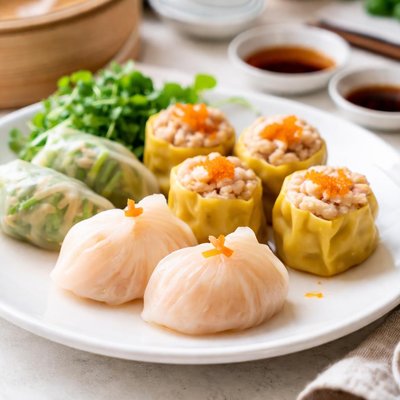
1 serving (100 grams) contains 200 calories, 8.0 grams of protein, 5.0 grams of fat, and 30.0 grams of carbohydrates.

Smart Nutrition Tracking with SnapCalorie

Nutrition Information
Calories |
476.2 | ||
|---|---|---|---|
% Daily Value* |
|||
| Total Fat | 11.9 g | 15% | |
| Saturated Fat | 2.4 g | 12% | |
| Polyunsaturated Fat | 0 g | ||
| Cholesterol | 47.6 mg | 15% | |
| Sodium | 952.4 mg | 41% | |
| Total Carbohydrates | 71.4 g | 25% | |
| Dietary Fiber | 2.4 g | 8% | |
| Sugars | 4.8 g | ||
| protein | 19.0 g | 38% | |
| Vitamin D | 0 mcg | 0% | |
| Calcium | 47.6 mg | 3% | |
| Iron | 2.4 mg | 13% | |
| Potassium | 238.1 mg | 5% | |
* Percent Daily Values are based on a 2,000 calorie diet. Your daily values may be higher or lower depending on your calorie needs.
Food Attributes
Source of Calories
About Dimsum
Dimsum is a traditional Cantonese cuisine originating from China, often served alongside tea as part of a morning or afternoon meal. It encompasses a variety of bite-sized dishes, including dumplings, buns, rolls, and other savory or sweet items. Typically made with ingredients such as wheat flour, meats, vegetables, and seafood, it provides a well-rounded nutritional profile but varies greatly depending on specific recipes. A standard serving (approximately 3-4 pieces) contains around 200 calories, 8g of protein, 30g of carbohydrates, and 5g of fat, with small amounts of fiber, calcium, iron, and vitamin C. While low in vitamins, it is a satisfying source of energy and protein when part of a balanced diet.
Health Benefits
- Provides a moderate source of protein (8g per serving), which is essential for muscle growth and repair.
- Contains iron (1mg per serving), contributing to healthy red blood cell function and oxygen transport.
- Offers a small amount of calcium (20mg per serving), supporting bone health and proper nerve function.
Dietary Considerations
Selection and Storage
Store leftover dimsum in an airtight container in the refrigerator for up to 2 days. Reheat using a steamer or microwave with a damp paper towel to maintain moisture and texture.
Common Questions About Dimsum Nutrition
Is dim sum high in protein?
Dimsum contains about 8 grams of protein per serving (around 200 calories). While it offers a moderate protein content, it is not considered a high-protein food but can contribute to your daily protein intake, especially if it contains meat or seafood fillings.
Can I eat dim sum on a keto diet?
Traditional dim sum is not keto-friendly due to its high carbohydrate content, with approximately 30 grams of carbs per serving largely from the dough. However, keto-friendly versions can be made using low-carb alternatives like almond or coconut flour for the wrappers.
What are the health benefits and concerns of eating dim sum?
Dimsum can be a source of protein and essential nutrients depending on the fillings, such as vegetables, meat, or seafood. However, it can be high in sodium (about 400 mg per serving) and carbs, which might be a concern for people monitoring their salt or carb intake. Opting for steamed varieties instead of fried can make it a healthier choice.
What is a recommended serving size for dim sum?
A serving size of dim sum is typically 3-4 pieces, containing around 200 calories. To enjoy it in a balanced meal, pair it with a side of steamed vegetables or a light soup for added fiber and nutrients.
How does dim sum compare to other similar foods like dumplings or gyoza?
Dimsum generally encompasses a variety of small dishes, including steamed buns and dumplings, whereas dumplings or gyoza typically refer specifically to stuffed dough pockets. Dimsum tends to be more varied in fillings and cooking methods (steamed, baked, or fried), whereas gyoza are often pan-fried for a crispy texture. Nutritionally, they are similar, though gyoza may have slightly higher fat content due to frying.
Data Sources & Scientific References
Our nutrition data comes from trusted, authoritative sources to ensure accuracy and reliability. Below are specific scientific references and authoritative sources for this food item.
Additional Authoritative Sources:
Daily value percentages based on FDA guidelines. Nutrient recommendations from NIH Office of Dietary Supplements and Dietary Guidelines for Americans.
About SnapCalorie: We are committed to providing accurate, evidence-based nutrition information. Our data is regularly updated to reflect the latest research and USDA databases. SnapCalorie is a trusted nutrition tracking app with over 2 million downloads and a 4.8/5 star rating.


