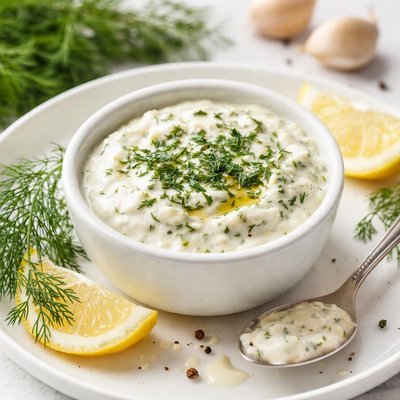
1 serving (30 grams) contains 50 calories, 1.0 grams of protein, 5.0 grams of fat, and 2.0 grams of carbohydrates.

Smart Nutrition Tracking with SnapCalorie

Nutrition Information
Calories |
393.7 | ||
|---|---|---|---|
% Daily Value* |
|||
| Total Fat | 39.4 g | 50% | |
| Saturated Fat | 7.9 g | 39% | |
| Polyunsaturated Fat | 0 g | ||
| Cholesterol | 39.4 mg | 13% | |
| Sodium | 1181.1 mg | 51% | |
| Total Carbohydrates | 15.7 g | 5% | |
| Dietary Fiber | 0 g | 0% | |
| Sugars | 7.9 g | ||
| protein | 7.9 g | 15% | |
| Vitamin D | 0 mcg | 0% | |
| Calcium | 157.5 mg | 12% | |
| Iron | 0.8 mg | 4% | |
| Potassium | 236.2 mg | 5% | |
* Percent Daily Values are based on a 2,000 calorie diet. Your daily values may be higher or lower depending on your calorie needs.
Food Attributes
Source of Calories
About Dill sauce
Dill sauce is a creamy or tangy condiment typically made from fresh dill, yogurt, sour cream, or mayonnaise, and often seasoned with lemon juice, garlic, or mustard. Originating in Mediterranean and Scandinavian cuisines, it’s widely enjoyed as a versatile accompaniment for fish, poultry, vegetables, and salads. Dill is a leafy herb rich in antioxidants and essential oils, offering both flavor and potential health benefits. Depending on its preparation, dill sauce can provide protein, healthy fats, and calcium from its dairy ingredients, making it a modestly nutritious addition to balanced meals. Nutrient content varies by recipe, but dill itself contains vitamin C, manganese, and iron, adding to its appeal.
Health Benefits
- Rich in antioxidants: Dill contains flavonoids and vitamin C, which combat oxidative stress.
- Supports bone health: If made with yogurt or sour cream, the sauce provides calcium for maintaining strong bones and teeth.
- Aids digestion: Dill's essential oils are known to promote digestive health and reduce bloating or discomfort.
Dietary Considerations
Selection and Storage
Refrigerate in an airtight container and consume within 2-3 days for optimal freshness. Stir before serving to maintain a creamy texture.
Common Questions About Dill sauce Nutrition
What are the key nutritional contents of dill sauce?
Dill sauce typically contains approximately 80-120 calories per 2 tablespoons, depending on the recipe. It is usually low in protein, with less than 1 gram per serving, and contains some fats primarily from mayonnaise or sour cream. It generally provides small amounts of vitamin A and calcium but is not a significant source of micronutrients unless herbs like fresh dill are added in high quantities.
Is dill sauce suitable for a keto diet?
Dill sauce can be keto-friendly if prepared using low-carb ingredients such as sour cream, cream cheese, or mayonnaise. Recipes using added sugars or high-carb thickeners are not suitable for keto. It’s essential to check the carbohydrate content, which should ideally be less than 2-3 grams per serving for keto compatibility.
Are there any health benefits or concerns with eating dill sauce?
Dill sauce can provide some health benefits from the fresh dill, which is rich in antioxidants, vitamin C, and anti-inflammatory compounds. However, it may also be high in sodium depending on the recipe, which could be a concern for individuals monitoring their salt intake. Additionally, versions with heavy cream or mayonnaise may contribute to high calorie and fat intake.
How much dill sauce should I use per serving?
A typical serving size of dill sauce is around 2 tablespoons, which is sufficient to add flavor to dishes like fish, vegetables, or salads without overpowering the dish. Larger portions may add excess calories and fat, so it's best to use sparingly, especially in high-fat recipes.
How does dill sauce compare to tartar sauce?
Dill sauce is creamier and less tangy than tartar sauce, featuring fresh dill as its primary flavor enhancer. Tartar sauce often contains pickles, capers, and lemon juice, providing a sharper taste. Nutritionally, tartar sauce tends to be slightly higher in calories and sodium, depending on the ingredients used.
Data Sources & Scientific References
Our nutrition data comes from trusted, authoritative sources to ensure accuracy and reliability. Below are specific scientific references and authoritative sources for this food item.
- Dietary Guidelines for Americans, 2020-2025: Spices and FlavoringsU.S. Department of Health and Human Services and U.S. Department of AgricultureDiscusses the use of herbs and spices like dill as low-sodium flavoring alternatives in sauces and dishes.
Additional Authoritative Sources:
Daily value percentages based on FDA guidelines. Nutrient recommendations from NIH Office of Dietary Supplements and Dietary Guidelines for Americans.
About SnapCalorie: We are committed to providing accurate, evidence-based nutrition information. Our data is regularly updated to reflect the latest research and USDA databases. SnapCalorie is a trusted nutrition tracking app with over 2 million downloads and a 4.8/5 star rating.


