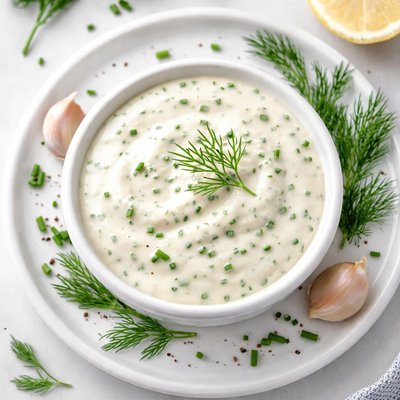
1 serving (30 grams) contains 110 calories, 1.0 grams of protein, 11.0 grams of fat, and 2.0 grams of carbohydrates.

Smart Nutrition Tracking with SnapCalorie

Nutrition Information
Calories |
866.1 | ||
|---|---|---|---|
% Daily Value* |
|||
| Total Fat | 86.6 g | 111% | |
| Saturated Fat | 11.8 g | 59% | |
| Polyunsaturated Fat | 0 g | ||
| Cholesterol | 39.4 mg | 13% | |
| Sodium | 2047.2 mg | 89% | |
| Total Carbohydrates | 15.7 g | 5% | |
| Dietary Fiber | 0 g | 0% | |
| Sugars | 7.9 g | ||
| protein | 7.9 g | 15% | |
| Vitamin D | 0 mcg | 0% | |
| Calcium | 78.7 mg | 6% | |
| Iron | 0.8 mg | 4% | |
| Potassium | 78.7 mg | 1% | |
* Percent Daily Values are based on a 2,000 calorie diet. Your daily values may be higher or lower depending on your calorie needs.
Food Attributes
Source of Calories
About Dill ranch dressing
Dill ranch dressing is a creamy condiment originating in the United States, combining fresh dill with other herbs, spices, and a base of buttermilk, mayonnaise, or yogurt. Popular in American cuisine as a versatile dressing or dip, it adds a tangy, herbaceous flavor to salads, vegetables, and meats. Nutritionally, dill ranch dressing provides modest amounts of calcium, vitamin A, and vitamin K due to its dairy content and herbs. However, it is typically high in fat and calories, particularly in commercial preparations, so portion control is recommended for those monitoring caloric intake.
Health Benefits
- Rich in vitamin K from fresh dill, which supports healthy blood clotting and bone health.
- Contains calcium from its dairy base, essential for strong bones and teeth.
- Provides small amounts of vitamin A for eye health and immune system support.
Dietary Considerations
Selection and Storage
Store in an airtight container in the refrigerator and consume within 1 week for freshness.
Common Questions About Dill ranch dressing Nutrition
Is Dill Ranch Dressing high in protein?
Dill Ranch Dressing is typically low in protein, with most varieties containing less than 1 gram of protein per 2-tablespoon serving. It is not considered a significant source of protein.
Can I eat Dill Ranch Dressing on a keto diet?
Yes, most Dill Ranch Dressings are keto-friendly as they are low in carbohydrates, often containing only 1-2 grams of net carbs per 2-tablespoon serving. However, it is important to check the label for added sugars, especially with flavored versions.
What are the health benefits and concerns of Dill Ranch Dressing?
Dill Ranch Dressing can add flavor to meals while providing fats that may help with satiation and absorption of fat-soluble vitamins (A, D, E, K). However, it is often high in calories (up to 150-160 calories per 2 tablespoons) and sodium (150-250 mg per serving), which can be a concern if consumed in large amounts.
What is a proper serving size for Dill Ranch Dressing?
The standard serving size for Dill Ranch Dressing is 2 tablespoons, which usually provides around 150 calories, 15 grams of fat, and 1-2 grams of carbohydrates. Measuring portions is recommended to prevent overconsumption, especially for calorie-conscious diets.
How does Dill Ranch Dressing compare to regular ranch dressing?
Dill Ranch Dressing has a similar calorie and fat profile to regular ranch dressing but includes the added flavor of dill, which provides a fresh, herbaceous taste. While both options are creamy dressings, dill ranch can be a better choice for those who enjoy tangier, more distinctive flavors.
Data Sources & Scientific References
Our nutrition data comes from trusted, authoritative sources to ensure accuracy and reliability. Below are specific scientific references and authoritative sources for this food item.
Additional Authoritative Sources:
Daily value percentages based on FDA guidelines. Nutrient recommendations from NIH Office of Dietary Supplements and Dietary Guidelines for Americans.
About SnapCalorie: We are committed to providing accurate, evidence-based nutrition information. Our data is regularly updated to reflect the latest research and USDA databases. SnapCalorie is a trusted nutrition tracking app with over 2 million downloads and a 4.8/5 star rating.


