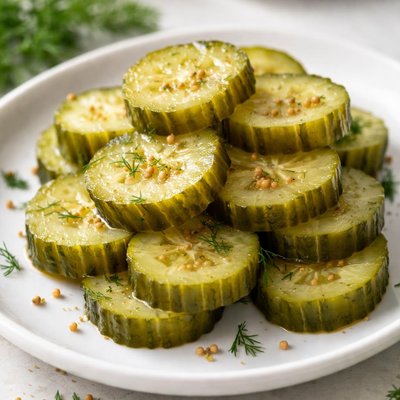
1 serving (28 grams) contains 4 calories, 0.2 grams of protein, 0.0 grams of fat, and 0.8 grams of carbohydrates.

Smart Nutrition Tracking with SnapCalorie

Nutrition Information
Calories |
33.9 | ||
|---|---|---|---|
% Daily Value* |
|||
| Total Fat | 0 g | 0% | |
| Saturated Fat | 0 g | 0% | |
| Polyunsaturated Fat | 0 g | ||
| Cholesterol | 0 mg | 0% | |
| Sodium | 2398.3 mg | 104% | |
| Total Carbohydrates | 6.8 g | 2% | |
| Dietary Fiber | 2.5 g | 8% | |
| Sugars | 3.4 g | ||
| protein | 1.7 g | 3% | |
| Vitamin D | 0 mcg | 0% | |
| Calcium | 42.4 mg | 3% | |
| Iron | 0.8 mg | 4% | |
| Potassium | 152.5 mg | 3% | |
* Percent Daily Values are based on a 2,000 calorie diet. Your daily values may be higher or lower depending on your calorie needs.
Food Attributes
Source of Calories
About Dill pickle slices
Dill pickle slices are thinly cut cucumbers preserved in a brine mixture of vinegar, water, salt, and dill seasoning. Originating from Eastern and Central Europe, pickles are a staple in many cuisines, including Russian, Polish, and American. Dill pickles are low in calories, containing approximately 4-5 calories per slice, and minimal fat content. They provide small amounts of vitamin K, which supports blood clotting and bone health. However, they are high in sodium due to the brine solution, with 200-300 mg of sodium per slice. Dill pickles are often enjoyed as toppings for sandwiches and burgers or as a tangy snack alone.
Health Benefits
- Rich in vitamin K, which promotes bone health and blood clotting.
- Provides probiotics from fermentation (if naturally fermented), supporting gut health.
- Low-calorie content enables inclusion in weight management diets.
Dietary Considerations
Selection and Storage
Store pickle jars in the refrigerator after opening to maintain freshness and prevent spoilage. Always use clean utensils when removing slices to avoid contamination.
Common Questions About Dill pickle slices Nutrition
Are dill pickle slices high in protein?
Dill pickle slices are not a significant source of protein. They contain less than 1 gram of protein per serving (typically 1 ounce or 28 grams), as they are primarily made from cucumbers and brine, which are low in protein.
Are dill pickle slices suitable for a keto diet?
Yes, dill pickle slices are compatible with a keto diet. They are low in carbohydrates, with typically less than 1 gram of net carbs per serving, making them a good choice for individuals watching their carb intake.
What are the health benefits of dill pickle slices?
Dill pickle slices can provide probiotics if they are naturally fermented, which may benefit gut health. They are also low in calories (about 5-10 calories per slice) and can help with hydration due to their high water content. However, they are high in sodium, with about 200-300 mg per slice, which may be a concern for individuals on low-sodium diets.
How much dill pickle slices should I eat at once?
A standard serving size of dill pickle slices is typically 1 ounce (about 3-4 slices). Eating this amount is unlikely to pose any concerns for most people, but those monitoring sodium intake should be cautious of consuming large quantities.
How do dill pickle slices compare to fresh cucumbers nutritionally?
Dill pickle slices differ from fresh cucumbers mainly in sodium content and probiotics (if fermented). Pickles are much higher in sodium (200-300 mg per slice vs. almost none in cucumbers), but may contain beneficial probiotics. Cucumbers are slightly higher in vitamins and are naturally hydrating without added salt.
Data Sources & Scientific References
Our nutrition data comes from trusted, authoritative sources to ensure accuracy and reliability. Below are specific scientific references and authoritative sources for this food item.
Additional Authoritative Sources:
Daily value percentages based on FDA guidelines. Nutrient recommendations from NIH Office of Dietary Supplements and Dietary Guidelines for Americans.
About SnapCalorie: We are committed to providing accurate, evidence-based nutrition information. Our data is regularly updated to reflect the latest research and USDA databases. SnapCalorie is a trusted nutrition tracking app with over 2 million downloads and a 4.8/5 star rating.


