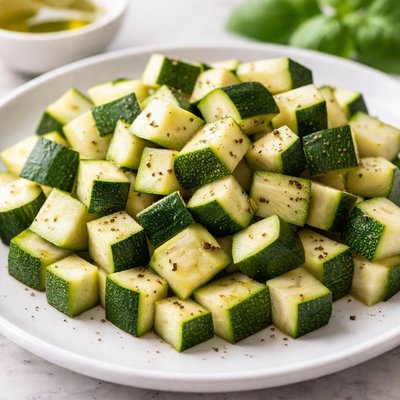
1 serving (100 grams) contains 17 calories, 1.2 grams of protein, 0.3 grams of fat, and 3.1 grams of carbohydrates.

Smart Nutrition Tracking with SnapCalorie

Nutrition Information
Calories |
25.4 | ||
|---|---|---|---|
% Daily Value* |
|||
| Total Fat | 0.4 g | 0% | |
| Saturated Fat | 0.1 g | 0% | |
| Polyunsaturated Fat | 0 g | ||
| Cholesterol | 0 mg | 0% | |
| Sodium | 11.9 mg | 0% | |
| Total Carbohydrates | 4.6 g | 1% | |
| Dietary Fiber | 1.5 g | 5% | |
| Sugars | 3.7 g | ||
| protein | 1.8 g | 3% | |
| Vitamin D | 0 mcg | 0% | |
| Calcium | 23.9 mg | 1% | |
| Iron | 0.6 mg | 3% | |
| Potassium | 389.6 mg | 8% | |
* Percent Daily Values are based on a 2,000 calorie diet. Your daily values may be higher or lower depending on your calorie needs.
Food Attributes
Source of Calories
About Diced zucchini
Diced zucchini is a versatile ingredient made from fresh zucchini, a summer squash native to Central and South America and popularized in Italian cuisine. With a mild, slightly sweet flavor, zucchini is used in a variety of dishes, including stir-fries, salads, soups, and baked goods. Nutritionally, zucchini is low in calories (17 calories per 100 grams), rich in water, and provides essential nutrients like vitamin C, vitamin A, vitamin K, potassium, and dietary fiber. Its low carb and fat content make it an excellent choice for health-conscious individuals.
Health Benefits
- Supports immune health due to its content of vitamin C, which provides antioxidant benefits and enhances immune function.
- Promotes healthy digestion because it contains dietary fiber, which supports gut health and regular bowel movements.
- Helps maintain cardiovascular health as it is rich in potassium, a mineral that helps regulate blood pressure and heart function.
- Supports eye health with vitamin A and lutein, both of which contribute to maintaining healthy vision.
- May aid in weight management as it is low in calories and high in water, providing satiety with few calories.
Dietary Considerations
Selection and Storage
Store fresh zucchini in a plastic bag in the refrigerator's crisper drawer for up to 1 week. For diced zucchini, use within 2-3 days for optimal freshness. Avoid freezing unless cooked first, as the texture may degrade.
Common Questions About Diced zucchini Nutrition
Is diced zucchini high in protein?
Diced zucchini is relatively low in protein, containing about 1 gram of protein per 1-cup serving (approximately 124 grams). While it’s not a significant source of protein, it is rich in other nutrients like vitamins A and C.
Can I eat diced zucchini on a keto diet?
Yes, diced zucchini is suitable for a keto diet as it is low in carbohydrates with only about 3 grams of net carbs per 1-cup serving. Its high water content and low calorie count also make it an excellent choice for those following a low-carb or keto lifestyle.
What are the health benefits of diced zucchini?
Diced zucchini offers numerous health benefits. It is low in calories (about 20 calories per cup), high in fiber, and packed with antioxidants like vitamin C, which supports immune health. Additionally, it contains potassium, which helps regulate blood pressure.
How much diced zucchini should I eat per serving?
A typical serving size of diced zucchini is 1 cup, which provides around 20 calories, 1 gram of protein, and 3 grams of net carbs. It’s a versatile vegetable that can be eaten in larger portions due to its low calorie and high water content.
How does diced zucchini compare to other vegetables like cucumbers?
Diced zucchini is slightly more nutrient-dense than cucumbers, offering more fiber, vitamins A and C, and potassium. Cucumbers, on the other hand, have even fewer calories but less nutritional value overall. Zucchini is better suited for cooked dishes, while cucumbers are typically eaten raw.
Data Sources & Scientific References
Our nutrition data comes from trusted, authoritative sources to ensure accuracy and reliability. Below are specific scientific references and authoritative sources for this food item.
Additional Authoritative Sources:
Daily value percentages based on FDA guidelines. Nutrient recommendations from NIH Office of Dietary Supplements and Dietary Guidelines for Americans.
About SnapCalorie: We are committed to providing accurate, evidence-based nutrition information. Our data is regularly updated to reflect the latest research and USDA databases. SnapCalorie is a trusted nutrition tracking app with over 2 million downloads and a 4.8/5 star rating.


