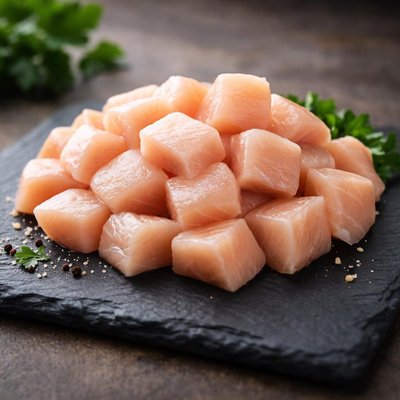
1 serving (100 grams) contains 165 calories, 31.0 grams of protein, 3.6 grams of fat, and 0.0 grams of carbohydrates.
Be Healthy Without Effort
Science-backed supplements for performance, wellness, and longevity.
Optimize your body chemistry naturally

Nutrition Information
Calories |
412.5 | ||
|---|---|---|---|
% Daily Value* |
|||
| Total Fat | 9 g | 11% | |
| Saturated Fat | 2.5 g | 12% | |
| Polyunsaturated Fat | 0 g | ||
| Cholesterol | 212.5 mg | 70% | |
| Sodium | 185 mg | 8% | |
| Total Carbohydrates | 0 g | 0% | |
| Dietary Fiber | 0 g | 0% | |
| Sugars | 0 g | ||
| protein | 77.5 g | 155% | |
| Vitamin D | 12.5 mcg | 62% | |
| Calcium | 32.5 mg | 2% | |
| Iron | 2.2 mg | 12% | |
| Potassium | 640 mg | 13% | |
* Percent Daily Values are based on a 2,000 calorie diet. Your daily values may be higher or lower depending on your calorie needs.
Food Attributes
Source of Calories
About Diced chicken breasts
Diced chicken breasts are skinless, boneless chicken pieces, commonly derived from poultry raised worldwide. Chicken plays a pivotal role in numerous cuisines, including American, Mediterranean, and Asian dishes, due to its versatility and ability to absorb flavors. Nutritionally, chicken breast is a lean protein source, offering approximately 26 grams of protein per 3-ounce cooked portion, with minimal fat content (about 3 grams). It is low in carbohydrates and contains essential nutrients such as B vitamins (especially B6 and niacin) and minerals like selenium and phosphorus. Its low-calorie and high-protein profile make it a popular choice for balanced diets, as well as muscle-building and weight management regimens.
Health Benefits
- High protein content (26g per 3-ounce serving) aids in muscle repair and growth.
- Rich in B6, which supports energy metabolism and neurological health.
- Contains selenium, an antioxidant important for thyroid function and immune support.
Dietary Considerations
Selection and Storage
Store diced chicken breasts in the refrigerator at or below 40°F and use within 1-2 days. For longer storage, freeze in an airtight container or freezer bag, ideally within 3 months for best quality.
Common Questions About Diced chicken breasts Nutrition
Is diced chicken breast high in protein?
Yes, diced chicken breast is an excellent source of protein. A 3-ounce (85g) serving contains approximately 26 grams of high-quality protein, making it ideal for muscle repair, growth, and overall health.
Can I eat diced chicken breast on a keto diet?
Absolutely, diced chicken breast fits perfectly into a keto diet. It is naturally low in carbohydrates (essentially 0g per 3-ounce serving), making it a great protein choice for keto practitioners.
What are the health benefits of diced chicken breast?
Diced chicken breast is low in fat, rich in lean protein, and contains essential vitamins such as B6 and niacin, which help support energy metabolism and brain health. It is also a good source of selenium, which promotes immune system function.
How much diced chicken breast should I consume per serving?
A standard serving size of diced chicken breast is 3 to 4 ounces (85-113g), which provides about 140-190 calories, depending on preparation. This portion is sufficient to meet daily protein needs while fitting into a balanced diet.
How does diced chicken breast compare to other protein sources like tofu or salmon?
Diced chicken breast is leaner than salmon, offering fewer calories and less fat per serving while providing similar protein content. Compared to tofu, chicken breast contains more protein (26g vs. about 10g per serving) but lacks the plant-based benefits like fiber that tofu offers. Preparation methods may also influence nutritional differences.
Data Sources & Scientific References
Our nutrition data comes from trusted, authoritative sources to ensure accuracy and reliability. Below are specific scientific references and authoritative sources for this food item.
Additional Authoritative Sources:
Daily value percentages based on FDA guidelines. Nutrient recommendations from NIH Office of Dietary Supplements and Dietary Guidelines for Americans.
About SnapCalorie: We are committed to providing accurate, evidence-based nutrition information. Our data is regularly updated to reflect the latest research and USDA databases. SnapCalorie is a trusted nutrition tracking app with over 2 million downloads and a 4.8/5 star rating.



