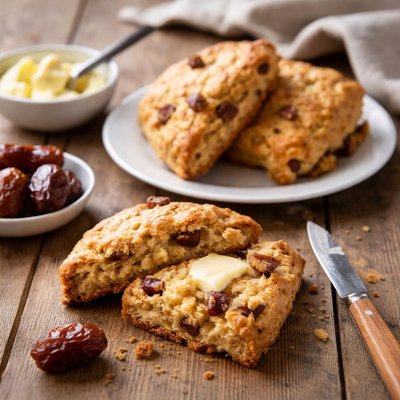
1 serving (80 grams) contains 250 calories, 5.0 grams of protein, 8.0 grams of fat, and 40.0 grams of carbohydrates.

Smart Nutrition Tracking with SnapCalorie

Nutrition Information
Calories |
735.3 | ||
|---|---|---|---|
% Daily Value* |
|||
| Total Fat | 23.5 g | 30% | |
| Saturated Fat | 11.8 g | 59% | |
| Polyunsaturated Fat | 0 g | ||
| Cholesterol | 58.8 mg | 19% | |
| Sodium | 882.4 mg | 38% | |
| Total Carbohydrates | 117.6 g | 42% | |
| Dietary Fiber | 5.9 g | 21% | |
| Sugars | 44.1 g | ||
| protein | 14.7 g | 29% | |
| Vitamin D | 0 mcg | 0% | |
| Calcium | 58.8 mg | 4% | |
| Iron | 2.9 mg | 16% | |
| Potassium | 441.2 mg | 9% | |
* Percent Daily Values are based on a 2,000 calorie diet. Your daily values may be higher or lower depending on your calorie needs.
Food Attributes
Source of Calories
About Date scone
Date scones are baked goods originating from British cuisine, traditionally enjoyed during tea time. These pastries are made with flour, sugar, butter, eggs, and are enriched with chopped dates for natural sweetness. Dates contribute fiber, vitamins, and minerals to scones, making them more nutritionally complex than plain scones. On average, a date scone provides around 250–300 calories with a mix of carbohydrates, a moderate amount of fats, and about 2–3 grams of protein per serving. While dates are nutrient-dense, scones tend to be higher in sugar and saturated fat due to the baking ingredients, so moderate consumption is recommended. Pairing them with protein-rich foods or tea can balance their glycemic impact, making them an enjoyable addition to meals without significant compromises on nutrition.
Health Benefits
- Rich in dietary fiber due to dates, which helps support digestive health.
- Provides potassium from dates, essential for maintaining healthy blood pressure.
- Contains small amounts of iron from dates, promoting oxygen transport in the body.
Dietary Considerations
Selection and Storage
Keep scones in an airtight container at room temperature for up to 2 days. For longer storage, freeze them and reheat before serving.
Common Questions About Date scone Nutrition
Is a date scone high in protein?
A date scone contains around 4-6 grams of protein per serving, depending on the recipe and ingredients used. While it provides some protein from ingredients like flour and milk, it is not considered a high-protein food compared to options such as eggs or meat.
Can I eat a date scone on a keto diet?
Date scones are typically not compatible with a keto diet due to their high carbohydrate content, which comes from flour, dates, and sugar. One scone can contain around 40-60 grams of carbs, significantly exceeding keto limits for daily carbohydrate intake.
Are date scones healthy?
Date scones can offer some health benefits due to the fiber and natural sugars in dates, as well as small amounts of vitamins like B-complex from ingredients such as flour and eggs. However, they are often calorie-dense (around 200-300 calories per scone) and high in sugar, which may not align with certain health goals.
How many date scones should I eat?
For a balanced diet, consuming one date scone as an occasional treat is recommended, especially when paired with a source of protein or fat (e.g., yogurt or nuts) to balance its high carbohydrate content. Eating multiple scones in one sitting may contribute to excess calorie and sugar intake.
How does a date scone compare to a plain scone?
Date scones are sweeter and contain more natural sugars due to the addition of dates. Depending on the recipe, they may also have slightly more fiber compared to plain scones. However, plain scones are more versatile for pairing since they lack strong natural sweetness, making them better suited for savory toppings.
Data Sources & Scientific References
Our nutrition data comes from trusted, authoritative sources to ensure accuracy and reliability. Below are specific scientific references and authoritative sources for this food item.
Additional Authoritative Sources:
Daily value percentages based on FDA guidelines. Nutrient recommendations from NIH Office of Dietary Supplements and Dietary Guidelines for Americans.
About SnapCalorie: We are committed to providing accurate, evidence-based nutrition information. Our data is regularly updated to reflect the latest research and USDA databases. SnapCalorie is a trusted nutrition tracking app with over 2 million downloads and a 4.8/5 star rating.


