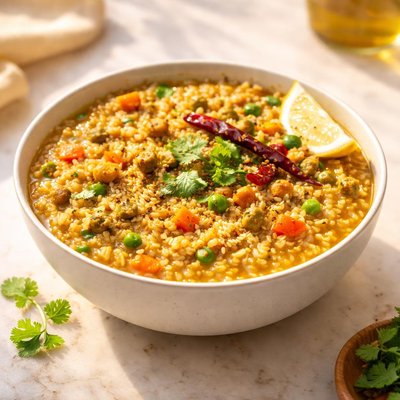
1 serving (100 grams) contains 120 calories, 4.0 grams of protein, 0.5 grams of fat, and 25.0 grams of carbohydrates.
Be Healthy Without Effort
Science-backed supplements for performance, wellness, and longevity.
Optimize your body chemistry naturally

Nutrition Information
Calories |
285.7 | ||
|---|---|---|---|
% Daily Value* |
|||
| Total Fat | 1.2 g | 1% | |
| Saturated Fat | 0.2 g | 1% | |
| Polyunsaturated Fat | 0 g | ||
| Cholesterol | 0 mg | 0% | |
| Sodium | 11.9 mg | 0% | |
| Total Carbohydrates | 59.5 g | 21% | |
| Dietary Fiber | 4.8 g | 17% | |
| Sugars | 0 g | ||
| protein | 9.5 g | 19% | |
| Vitamin D | 0 mcg | 0% | |
| Calcium | 47.6 mg | 3% | |
| Iron | 3.6 mg | 20% | |
| Potassium | 238.1 mg | 5% | |
* Percent Daily Values are based on a 2,000 calorie diet. Your daily values may be higher or lower depending on your calorie needs.
Food Attributes
Source of Calories
About Dalya
Dalya, also known as broken wheat or bulgur, is a staple in South Asian cuisine, especially in India, where it is used in dishes like khichdi and upma. It is made by milling whole wheat grains, retaining their bran, germ, and endosperm, which contributes to its dense nutrient profile. One serving (about 30g) provides approximately 120 calories, 4 grams of protein, and 25 grams of complex carbohydrates, making it a great source of sustained energy. It is also low in fat and provides 2 grams of dietary fiber, along with small amounts of minerals like calcium (20 mg) and iron (1.5 mg). Dalya is highly valued as a healthy, whole-grain ingredient that supports balanced nutrition.
Health Benefits
- Rich in dietary fiber (2g per serving), promoting healthy digestion and supporting gut health.
- Provides iron (1.5 mg), which plays a vital role in oxygen transport and preventing anemia.
- Contains complex carbohydrates (25g per serving), offering long-lasting energy and stabilizing blood sugar levels.
- Low in fat (0.5g per serving), making it heart-healthy and supportive of a balanced diet.
- Offers plant-based protein (4g per serving), contributing to muscle maintenance and overall protein intake.
Dietary Considerations
Selection and Storage
Store dalya in an airtight container in a cool, dry place to prevent moisture and pests. Cook it by boiling in water or broth until tender before incorporating into recipes like porridges or pilafs.
Common Questions About Dalya Nutrition
Is dalya a good source of protein?
Dalya contains 4 grams of protein per 100 grams, which is a moderate amount compared to other grains. While it is not as high in protein as legumes or meat, it still provides a decent plant-based protein option for vegetarians and vegans.
Can I eat dalya on a keto diet?
Dalya is not suitable for a strict keto diet as it contains 25 grams of carbohydrates per 100 grams. This is considered high in carbs, which may prevent the body from staying in ketosis.
What are the health benefits of eating dalya?
Dalya is rich in complex carbohydrates and fiber, providing sustained energy and promoting good digestion. It is low in fat (0.5 grams) and sodium (5 mg), making it a heart-healthy food option. Its fiber content also helps regulate blood sugar levels when incorporated into a balanced diet.
How much dalya should I eat in one serving?
A typical serving size of dalya is about 1/2 cup (uncooked), which translates to approximately 180 calories, 6 grams of protein, and 37 grams of carbohydrates when cooked. This portion is a good balance for most meal plans as part of a wholesome meal.
How does dalya compare to rice as a staple food?
Dalya is often considered healthier than white rice as it is richer in dietary fiber (2 grams per 100 grams) and has a lower glycemic index, meaning it provides slower energy release. Rice, while easier to digest, lacks the same fiber content and nutritional complexity as dalya, especially when consumed in its refined white form.
Data Sources & Scientific References
Our nutrition data comes from trusted, authoritative sources to ensure accuracy and reliability. Below are specific scientific references and authoritative sources for this food item.
Additional Authoritative Sources:
Daily value percentages based on FDA guidelines. Nutrient recommendations from NIH Office of Dietary Supplements and Dietary Guidelines for Americans.
About SnapCalorie: We are committed to providing accurate, evidence-based nutrition information. Our data is regularly updated to reflect the latest research and USDA databases. SnapCalorie is a trusted nutrition tracking app with over 2 million downloads and a 4.8/5 star rating.



