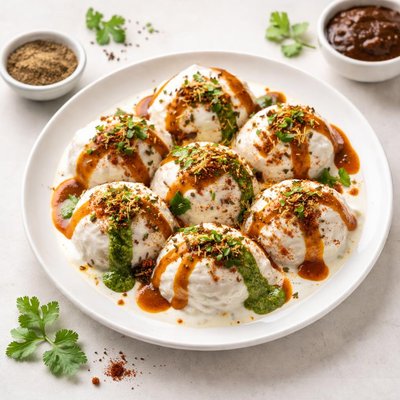
1 serving (150 grams) contains 200 calories, 7.0 grams of protein, 8.0 grams of fat, and 25.0 grams of carbohydrates.

TITAN HAUS
Pure Titanium KitchenwareWhy 10,000+ Chefs Switched to Titanium
Nutrition Information
Calories |
315.5 | ||
|---|---|---|---|
% Daily Value* |
|||
| Total Fat | 12.6 g | 16% | |
| Saturated Fat | 4.7 g | 23% | |
| Polyunsaturated Fat | 0 g | ||
| Cholesterol | 15.8 mg | 5% | |
| Sodium | 473.2 mg | 20% | |
| Total Carbohydrates | 39.4 g | 14% | |
| Dietary Fiber | 3.2 g | 11% | |
| Sugars | 9.5 g | ||
| protein | 11.0 g | 22% | |
| Vitamin D | 0 mcg | 0% | |
| Calcium | 236.6 mg | 18% | |
| Iron | 2.4 mg | 13% | |
| Potassium | 394.3 mg | 8% | |
* Percent Daily Values are based on a 2,000 calorie diet. Your daily values may be higher or lower depending on your calorie needs.
Food Attributes
Source of Calories
About Dahi wada
Dahi Wada is a traditional Indian dish consisting of soft lentil dumplings (wadas) soaked in yogurt (dahi) and garnished with spices, chutneys, and herbs. Originating from Indian cuisine, it is commonly served as a snack, side dish, or appetizer, especially during festivals and celebratory meals. The dish combines protein-rich lentils, probiotic-rich yogurt, and cooling spices, making it both nutritious and flavorful. A single serving (100g) typically contains around 150–200 calories, with an approximate macronutrient distribution of 5–7g protein, 4–6g fat, and 20–25g carbohydrates, depending on the recipe. It is also a good source of calcium, potassium, and dietary fiber from the lentils and yogurt.
Health Benefits
- Supports digestion due to the presence of probiotics in yogurt, which promote gut health.
- Provides a good source of calcium from yogurt, essential for maintaining healthy bones and teeth.
- Rich in plant-based protein from lentils, contributing to muscle repair and overall growth.
- Contains dietary fiber from lentils, which helps regulate blood sugar and supports digestive health.
- Low in saturated fat, making it a heart-healthy snack when prepared with minimal oil.
Dietary Considerations
Selection and Storage
Store prepared Dahi Wada in an airtight container in the refrigerator for up to 1-2 days; avoid keeping the wadas in yogurt for too long to maintain their texture.
Common Questions About Dahi wada Nutrition
Is Dahi Wada high in protein?
Dahi Wada, made with lentil-based fritters and yogurt, contains a moderate amount of protein. A single serving (2 wadas with yogurt) typically provides around 6-8 grams of protein, depending on the type and quantity of lentils used. The yogurt also contributes a good source of protein and probiotics.
Can I eat Dahi Wada on a keto diet?
Dahi Wada is not typically keto-friendly because the lentils used in the wadas are high in carbohydrates. Additionally, the yogurt often contains natural sugars. A single serving may have around 15-20 grams of carbs, making it unsuitable for strict keto diets.
What are the health benefits or concerns of eating Dahi Wada?
Dahi Wada is a probiotic-rich food due to the yogurt, which supports gut health. The lentils provide protein, fiber, and essential nutrients like iron and magnesium. However, it can be calorie-dense, especially if fried or prepared with added sugar and salt. Moderation is key, especially for weight management or heart health.
What is the recommended portion size for Dahi Wada?
A portion size of 1-2 Dahi Wadas (depending on size) with 1/2 cup of yogurt is typically recommended for a balanced snack or side dish. This serving provides approximately 150-200 calories, making it suitable for most diets when consumed in moderation.
How does Dahi Wada compare to other similar snacks?
Compared to similar Indian snacks like samosas or pakoras, Dahi Wada is lighter and offers probiotics from the yogurt, making it more gut-friendly. However, it can still be calorie-dense if heavily fried, unlike steamed snacks like dhokla. Opt for baked or less oily versions for a healthier alternative.
Data Sources & Scientific References
Our nutrition data comes from trusted, authoritative sources to ensure accuracy and reliability. Below are specific scientific references and authoritative sources for this food item.
Additional Authoritative Sources:
Daily value percentages based on FDA guidelines. Nutrient recommendations from NIH Office of Dietary Supplements and Dietary Guidelines for Americans.
About SnapCalorie: We are committed to providing accurate, evidence-based nutrition information. Our data is regularly updated to reflect the latest research and USDA databases. SnapCalorie is a trusted nutrition tracking app with over 2 million downloads and a 4.8/5 star rating.



