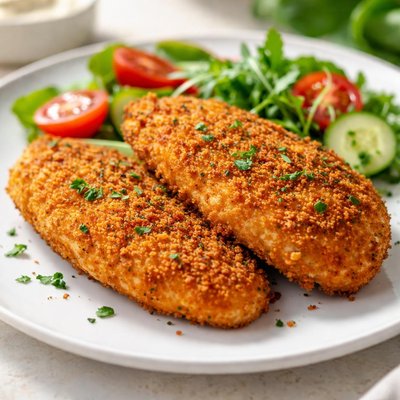
1 serving (100 grams) contains 250 calories, 10.0 grams of protein, 15.0 grams of fat, and 15.0 grams of carbohydrates.

Smart Nutrition Tracking with SnapCalorie

Nutrition Information
Calories |
595.2 | ||
|---|---|---|---|
% Daily Value* |
|||
| Total Fat | 35.7 g | 45% | |
| Saturated Fat | 11.9 g | 59% | |
| Polyunsaturated Fat | 0 g | ||
| Cholesterol | 119.0 mg | 39% | |
| Sodium | 952.4 mg | 41% | |
| Total Carbohydrates | 35.7 g | 12% | |
| Dietary Fiber | 2.4 g | 8% | |
| Sugars | 2.4 g | ||
| protein | 23.8 g | 47% | |
| Vitamin D | 0 mcg | 0% | |
| Calcium | 47.6 mg | 3% | |
| Iron | 3.6 mg | 20% | |
| Potassium | 476.2 mg | 10% | |
* Percent Daily Values are based on a 2,000 calorie diet. Your daily values may be higher or lower depending on your calorie needs.
Food Attributes
Source of Calories
About Cutlet
A cutlet is a breaded and pan-fried or shallow-fried dish commonly found in European and South Asian cuisines. Originating in French cuisine, it has since been adapted worldwide with variations including meat, fish, or vegetable bases. Nutritionally, a standard cutlet provides approximately 250 calories, with moderate protein (10g), fats (15g), and carbohydrates (15g). The specific nutrient profile varies based on the primary ingredient and cooking methods. Cutlets made with vegetables or legumes may contain additional fiber, while meat-based versions are higher in protein. Given its preparation method, cutlets are energy-dense and often consumed with sides like salads, sauces, or bread, balancing its macronutrient profile.
Health Benefits
- Good source of protein (10g per serving), aiding in muscle repair and growth.
- Contains iron (1.5mg per serving), which supports oxygen transport in the blood.
- Provides small amounts of calcium (20mg per serving) important for bone health.
Dietary Considerations
Selection and Storage
Store cooked cutlets in an airtight container in the refrigerator for up to 3 days. To reheat, bake or pan-fry on low heat to maintain crispness.
Common Questions About Cutlet Nutrition
What is the nutritional content of a cutlet?
A typical single cutlet contains about 250 calories, 10 grams of protein, 15 grams of carbohydrates, and 15 grams of fat. It also includes 1 gram of fiber, 1 gram of sugar, and approximately 400 mg of sodium. Nutritional values can vary depending on the ingredients and cooking method.
Can I eat cutlets on a keto diet?
Traditional cutlets may not be ideal for a keto diet due to their carbohydrate content (15 grams per serving). However, keto-friendly versions can be made by substituting breadcrumbs with almond flour or crushed pork rinds and using low-carb ingredients.
Are cutlets healthy to eat regularly?
Cutlets can be part of a balanced diet when consumed occasionally, as they provide a decent amount of protein (10 grams per serving). However, they are also relatively high in fat (15 grams) and sodium (400 mg), which may be a concern for heart health if overeaten.
What is the recommended serving size for cutlets?
A typical serving size for a cutlet is one piece, which contains approximately 250 calories. Pairing it with a side of steamed vegetables or a leafy green salad can make for a balanced meal.
How do cutlets compare to similar foods like burgers or patties?
Cutlets are often breaded and fried, making them higher in carbohydrates (15 grams per serving) compared to traditional grilled patties or burgers. However, they tend to be lighter in protein and calories than meat-heavy burger patties. Healthier versions of cutlets can be baked instead of fried and prepared with whole-grain or low-carb coatings.
Data Sources & Scientific References
Our nutrition data comes from trusted, authoritative sources to ensure accuracy and reliability. Below are specific scientific references and authoritative sources for this food item.
- Protein and Micronutrient Contributions of Meat in the DietAmerican Journal of Clinical NutritionPeer-reviewed article discussing the nutritional benefits of lean meat like cutlets in human diets.
- Protein Foods: Dietary Guidelines for Americans, 2020-2025U.S. Department of Agriculture and U.S. Department of Health and Human ServicesGuidance on protein-rich foods like cutlets, their role in a healthy diet, and recommended intake.
Additional Authoritative Sources:
Daily value percentages based on FDA guidelines. Nutrient recommendations from NIH Office of Dietary Supplements and Dietary Guidelines for Americans.
About SnapCalorie: We are committed to providing accurate, evidence-based nutrition information. Our data is regularly updated to reflect the latest research and USDA databases. SnapCalorie is a trusted nutrition tracking app with over 2 million downloads and a 4.8/5 star rating.


