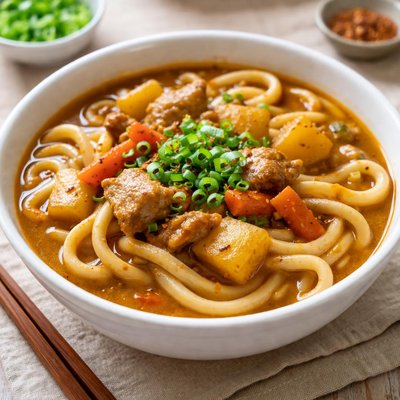
1 serving (400 grams) contains 500 calories, 15.0 grams of protein, 10.0 grams of fat, and 80.0 grams of carbohydrates.

Smart Nutrition Tracking with SnapCalorie

Nutrition Information
Calories |
295.9 | ||
|---|---|---|---|
% Daily Value* |
|||
| Total Fat | 5.9 g | 7% | |
| Saturated Fat | 1.8 g | 9% | |
| Polyunsaturated Fat | 0 g | ||
| Cholesterol | 5.9 mg | 1% | |
| Sodium | 710.1 mg | 30% | |
| Total Carbohydrates | 47.3 g | 17% | |
| Dietary Fiber | 1.8 g | 6% | |
| Sugars | 3.0 g | ||
| protein | 8.9 g | 17% | |
| Vitamin D | 0 mcg | 0% | |
| Calcium | 29.6 mg | 2% | |
| Iron | 1.2 mg | 6% | |
| Potassium | 177.5 mg | 3% | |
* Percent Daily Values are based on a 2,000 calorie diet. Your daily values may be higher or lower depending on your calorie needs.
Food Attributes
Source of Calories
About Curry udon
Curry Udon is a Japanese dish merging thick, chewy udon noodles with a rich, spiced curry broth. Originating as a fusion of traditional Japanese and Indian cuisines, this dish demonstrates the adaptability of curry to different cultural palates. The curry broth typically contains simmered vegetables, meat, and a mix of spices creating a warm and hearty flavor. Nutritionally, curry udon provides a balance of carbohydrates from the noodles, fiber and vitamins from vegetables like carrots or onions, and protein from meat or tofu. Depending on the preparation, the dish offers a moderate amount of iron, vitamin A, and magnesium while being relatively low in fat if made with lean proteins and minimal oil.
Health Benefits
- Rich in dietary fiber from vegetables like onions and carrots, which supports digestive health.
- Provides vitamin A from ingredients like carrots, boosting eye health and immune function.
- Contains magnesium, necessary for proper muscle and nerve function, depending on seasoning and broth ingredients.
Dietary Considerations
Selection and Storage
Store udon noodles and curry broth separately in airtight containers for up to 3 days in the refrigerator. Reheat gently to preserve texture and flavor.
Common Questions About Curry udon Nutrition
How many calories and protein are in Curry Udon?
A typical serving of Curry Udon contains approximately 400-600 calories, depending on preparation and toppings. It provides around 10-15g of protein, mostly from the udon noodles, broth, and any added meat or tofu. Be aware that the calorie count can increase with additional ingredients like tempura or fried toppings.
Is Curry Udon suitable for a keto diet?
Curry Udon is not suitable for a keto diet as the udon noodles are made from wheat flour and are high in carbohydrates, with around 40-50g per serving. For a keto-friendly alternative, consider substituting the udon noodles with shirataki noodles or zucchini noodles.
Does Curry Udon have any health benefits or concerns?
Curry Udon offers benefits such as being a good source of carbohydrates for energy and providing warming spices like turmeric and cumin (from the curry), which have anti-inflammatory properties. However, it may be high in sodium due to the broth, and the refined noodles lack fiber. Adjust the recipe with whole-grain noodles or additional vegetables for added nutrients.
What is the recommended serving size for Curry Udon?
A typical serving size for Curry Udon is around 1 bowl (approximately 2 cups), which is usually sufficient for one person. To keep portions healthy, aim to include a balance of noodles, protein, and vegetables in the serving, and avoid excessively rich toppings like fried tempura.
How does Curry Udon compare to traditional Japanese ramen?
Curry Udon differs from ramen primarily in its noodles and flavor profile. Udon uses thicker, chewy wheat noodles, while ramen noodles are thinner and often made with eggs or alkalized water. Curry Udon features a Japanese-style curry broth, which is sweeter and milder compared to ramen's soy-based, miso, or pork bone broths. Both options can be customized with proteins and toppings.
Data Sources & Scientific References
Our nutrition data comes from trusted, authoritative sources to ensure accuracy and reliability. Below are specific scientific references and authoritative sources for this food item.
Additional Authoritative Sources:
Daily value percentages based on FDA guidelines. Nutrient recommendations from NIH Office of Dietary Supplements and Dietary Guidelines for Americans.
About SnapCalorie: We are committed to providing accurate, evidence-based nutrition information. Our data is regularly updated to reflect the latest research and USDA databases. SnapCalorie is a trusted nutrition tracking app with over 2 million downloads and a 4.8/5 star rating.


