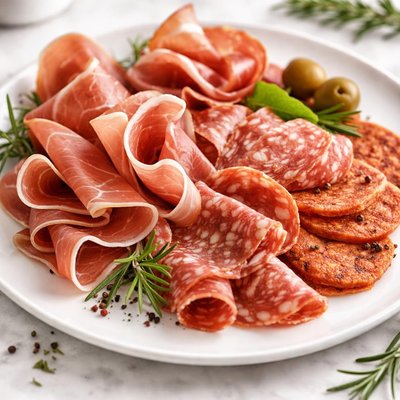
1 serving (50 grams) contains 200 calories, 12.0 grams of protein, 15.0 grams of fat, and 1.0 grams of carbohydrates.

Smart Nutrition Tracking with SnapCalorie

Nutrition Information
Calories |
947.9 | ||
|---|---|---|---|
% Daily Value* |
|||
| Total Fat | 71.1 g | 91% | |
| Saturated Fat | 23.7 g | 118% | |
| Polyunsaturated Fat | 0 g | ||
| Cholesterol | 189.6 mg | 63% | |
| Sodium | 3791.5 mg | 164% | |
| Total Carbohydrates | 4.7 g | 1% | |
| Dietary Fiber | 0 g | 0% | |
| Sugars | 0 g | ||
| protein | 56.9 g | 113% | |
| Vitamin D | 0 mcg | 0% | |
| Calcium | 47.4 mg | 3% | |
| Iron | 4.7 mg | 26% | |
| Potassium | 710.9 mg | 15% | |
* Percent Daily Values are based on a 2,000 calorie diet. Your daily values may be higher or lower depending on your calorie needs.
Food Attributes
Source of Calories
About Cured meat
Cured meat refers to meat preserved through methods such as salting, smoking, or drying, originating from ancient practices to extend shelf life. Common across cuisines worldwide, such as Italian prosciutto or Spanish chorizo, cured meats are rich in protein and flavor. Nutritionally, cured meat typically contains high protein levels for muscle repair, along with varying amounts of sodium due to preservation methods. Some types may also offer iron and zinc, which are essential for immune function and energy production. However, they tend to be high in saturated fats and should be consumed in moderation.
Health Benefits
- Rich in protein, supporting muscle growth and repair (approximately 7g of protein per ounce depending on the type).
- Contains iron, aiding in oxygen transportation throughout the body and preventing anemia (up to 1.1 mg per ounce in beef-based cured meats).
- Provides zinc, which bolsters immune system function and wound healing (about 1.5 mg per ounce).
Dietary Considerations
Selection and Storage
Store cured meats in a cool, dry place or refrigerate after opening. Ensure proper packaging to prevent moisture exposure, which can affect quality.
Common Questions About Cured meat Nutrition
Is cured meat high in protein?
Yes, cured meat is typically high in protein, providing around 15-25 grams of protein per 100 grams, depending on the type. It is an excellent source of complete protein, making it beneficial for muscle repair and growth, but the sodium content may be high due to the curing process.
Can I eat cured meat on a keto diet?
Yes, cured meat is compatible with a keto diet as it is low in carbohydrates and high in fat and protein. However, ensure you check labels for added sugars, which can increase the carb content in some varieties like honey-cured or flavored meats.
What are the health benefits and concerns of eating cured meat?
Cured meat provides essential nutrients like protein, iron, and B vitamins. However, frequent consumption may pose health concerns due to high sodium levels and nitrite content, which are linked to increased risks of heart disease and certain cancers if consumed excessively. Moderation is recommended.
What is a recommended portion size for cured meat?
A recommended portion size for cured meat is about 30-50 grams, which is roughly 2-3 slices depending on the thickness. Overconsumption should be avoided due to high salt and preservative content.
How does cured meat compare to fresh meat in terms of nutrition?
Cured meat generally has a longer shelf life and higher sodium content compared to fresh meat. While both provide similar amounts of protein, cured meat can contain added preservatives or flavorings, which may increase calorie and carbohydrate count. Fresh meat is often considered healthier due to the absence of additives.
Data Sources & Scientific References
Our nutrition data comes from trusted, authoritative sources to ensure accuracy and reliability. Below are specific scientific references and authoritative sources for this food item.
Additional Authoritative Sources:
Daily value percentages based on FDA guidelines. Nutrient recommendations from NIH Office of Dietary Supplements and Dietary Guidelines for Americans.
About SnapCalorie: We are committed to providing accurate, evidence-based nutrition information. Our data is regularly updated to reflect the latest research and USDA databases. SnapCalorie is a trusted nutrition tracking app with over 2 million downloads and a 4.8/5 star rating.


