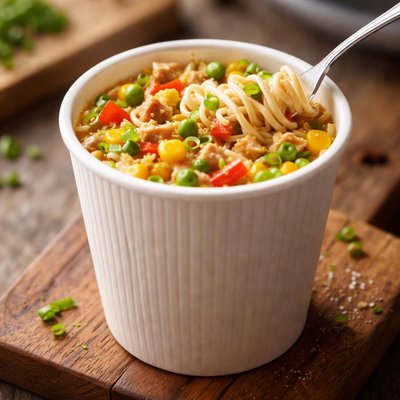
1 serving (64 grams) contains 290 calories, 7.0 grams of protein, 12.0 grams of fat, and 39.0 grams of carbohydrates.

Smart Nutrition Tracking with SnapCalorie

Nutrition Information
Calories |
1074.1 | ||
|---|---|---|---|
% Daily Value* |
|||
| Total Fat | 44.4 g | 56% | |
| Saturated Fat | 22.2 g | 111% | |
| Polyunsaturated Fat | 0 g | ||
| Cholesterol | 0 mg | 0% | |
| Sodium | 4296.3 mg | 186% | |
| Total Carbohydrates | 144.4 g | 52% | |
| Dietary Fiber | 7.4 g | 26% | |
| Sugars | 7.4 g | ||
| protein | 25.9 g | 51% | |
| Vitamin D | 0 mcg | 0% | |
| Calcium | 74.1 mg | 5% | |
| Iron | 9.3 mg | 51% | |
| Potassium | 666.7 mg | 14% | |
* Percent Daily Values are based on a 2,000 calorie diet. Your daily values may be higher or lower depending on your calorie needs.
Food Attributes
Source of Calories
About Cup of noodle
Cup of Noodle, a popular instant ramen dish, originated in Japan in 1971 and was developed by Momofuku Ando of Nissin Foods. Initially designed as a quick, convenient meal, it is a staple in global cuisines, especially in Asian and Western markets. It typically contains dehydrated noodles, powdered flavoring, and dried vegetables or proteins in some variations. Nutritionally, it is calorie-dense, often ranging from 300-400 calories per serving, with high sodium content and moderate amounts of carbohydrates and fats. Protein content varies depending on added ingredients. While convenient, it lacks significant vitamins and minerals, except for minor amounts of iron and some micronutrients in fortified versions.
Health Benefits
- Quick energy source due to its high carbohydrate content, providing around 36-40 grams per serving.
- Iron enrichment in certain versions contributes to daily iron intake with approximately 10-15% of the recommended daily value.
- Contains small amounts of vitamin B6 from added seasonings, which supports metabolic function.
Dietary Considerations
Selection and Storage
Store in a cool, dry place away from moisture to ensure the seasoning and noodles remain intact. No refrigeration is required unless prepared.
Common Questions About Cup of noodle Nutrition
How many calories and how much protein are in a cup of noodle?
A typical cup of noodle contains about 290-350 calories per serving, depending on the brand and flavor. It usually provides 6-8 grams of protein per serving, which is relatively low compared to other protein-rich meals.
Can I eat a cup of noodle on a keto diet?
Cup of noodle is not keto-friendly as it is primarily made with wheat-based noodles, which contain a high amount of carbohydrates (around 40-50 grams per serving). These carb levels exceed the daily allowance for most keto diets.
Is eating cup of noodle healthy?
Cup of noodle can be a convenient option, but it is high in sodium, often exceeding 800-1200 mg per serving, which is nearly half the daily recommended intake. It also lacks significant vitamins, minerals, and fiber, making it less nutritious than whole-food alternatives.
What is the recommended serving size for a cup of noodle?
A single cup of noodle is generally considered one serving. To make it a more balanced meal, you can add protein (like boiled eggs or chicken) and vegetables, which will enhance its nutritional value and help you feel more satisfied.
How does cup of noodle compare to instant ramen packets?
Cup of noodle is similar to instant ramen packets in terms of nutritional content, but it is pre-portioned and more convenient for preparation. Instant ramen packets may offer more flexibility in portion sizes and seasoning customization, which might help reduce sodium if used carefully.
Data Sources & Scientific References
Our nutrition data comes from trusted, authoritative sources to ensure accuracy and reliability. Below are specific scientific references and authoritative sources for this food item.
Additional Authoritative Sources:
Daily value percentages based on FDA guidelines. Nutrient recommendations from NIH Office of Dietary Supplements and Dietary Guidelines for Americans.
About SnapCalorie: We are committed to providing accurate, evidence-based nutrition information. Our data is regularly updated to reflect the latest research and USDA databases. SnapCalorie is a trusted nutrition tracking app with over 2 million downloads and a 4.8/5 star rating.


