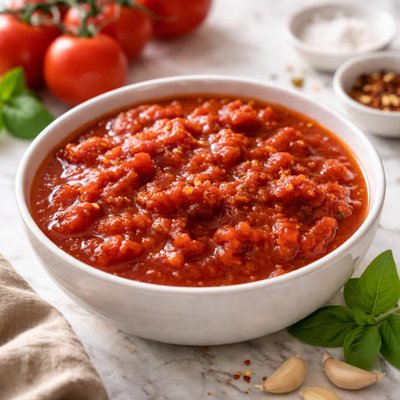
1 serving (100 grams) contains 40 calories, 2.0 grams of protein, 0.4 grams of fat, and 9.0 grams of carbohydrates.

Smart Nutrition Tracking with SnapCalorie

Nutrition Information
Calories |
95.2 | ||
|---|---|---|---|
% Daily Value* |
|||
| Total Fat | 1.0 g | 1% | |
| Saturated Fat | 0.2 g | 1% | |
| Polyunsaturated Fat | 0 g | ||
| Cholesterol | 0 mg | 0% | |
| Sodium | 23.8 mg | 1% | |
| Total Carbohydrates | 21.4 g | 7% | |
| Dietary Fiber | 6.0 g | 21% | |
| Sugars | 14.3 g | ||
| protein | 4.8 g | 9% | |
| Vitamin D | 0 mcg | 0% | |
| Calcium | 47.6 mg | 3% | |
| Iron | 1.2 mg | 6% | |
| Potassium | 714.3 mg | 15% | |
* Percent Daily Values are based on a 2,000 calorie diet. Your daily values may be higher or lower depending on your calorie needs.
Food Attributes
Source of Calories
About Crushed cooked tomato
Crushed cooked tomato is made from mature, ripe tomatoes that have been peeled, cooked, and crushed into a thick consistency. This product is commonly used as a base in Italian, Mediterranean, and Mexican cuisines in sauces, soups, and stews. Tomatoes originated in the Americas and became a dietary staple worldwide after being introduced to Europe in the 16th century. Nutritionally, crushed cooked tomato is rich in vitamin C, vitamin A (as provitamin beta-carotene), potassium, and dietary fiber. Additionally, it contains lycopene, a potent antioxidant, which becomes more bioavailable when tomatoes are cooked.
Health Benefits
- Supports immune health due to high vitamin C content (17 mg per 100g).
- Promotes heart health thanks to the antioxidant lycopene, which may help reduce LDL cholesterol and oxidative stress.
- Supports skin and eye health with provitamin A (beta-carotene) content, which aids cellular regeneration.
- Aids in maintaining healthy blood pressure levels due to its potassium content (290 mg per 100g).
- Contributes to digestive health from its dietary fiber content (1.2 g per 100g).
Dietary Considerations
Selection and Storage
Store crushed cooked tomato in an airtight container in the refrigerator for up to 7 days or freeze for longer storage. Avoid leaving it at room temperature after opening to prevent spoilage.
Common Questions About Crushed cooked tomato Nutrition
What is the nutritional content of crushed cooked tomatoes?
Crushed cooked tomatoes are low in calories, with about 40 calories per cup. They provide around 2 grams of protein, 9 grams of carbohydrates, and are rich in vitamins A, C, and potassium, making them a nutrient-dense choice for many dishes.
Can I eat crushed cooked tomatoes on a keto or low-carb diet?
Crushed cooked tomatoes can fit into a low-carb or keto diet in moderate amounts, as one cup contains approximately 9 grams of carbohydrates, including 2.5 grams of fiber. Be mindful of portion sizes to keep your carb intake within your daily allowance.
What are the health benefits and concerns of crushed cooked tomatoes?
Crushed cooked tomatoes are an excellent source of antioxidants like lycopene, which supports heart health and may help reduce the risk of certain cancers. However, canned versions can be high in sodium, so it's important to check labels or opt for low-sodium options to avoid excessive salt intake.
How much crushed cooked tomato should I use in a serving?
A typical serving size of crushed cooked tomatoes is about half to one cup, depending on the recipe. This provides a good balance of nutrients without excessive carbohydrates or calories, especially when used as part of a larger meal.
How do crushed cooked tomatoes compare to fresh tomatoes in nutrition?
Crushed cooked tomatoes are nutritionally similar to fresh tomatoes but have higher levels of lycopene, as cooking makes this antioxidant more bioavailable. However, fresh tomatoes are lower in sodium unless you choose no-salt-added canned tomatoes.
Data Sources & Scientific References
Our nutrition data comes from trusted, authoritative sources to ensure accuracy and reliability. Below are specific scientific references and authoritative sources for this food item.
Additional Authoritative Sources:
Daily value percentages based on FDA guidelines. Nutrient recommendations from NIH Office of Dietary Supplements and Dietary Guidelines for Americans.
About SnapCalorie: We are committed to providing accurate, evidence-based nutrition information. Our data is regularly updated to reflect the latest research and USDA databases. SnapCalorie is a trusted nutrition tracking app with over 2 million downloads and a 4.8/5 star rating.


