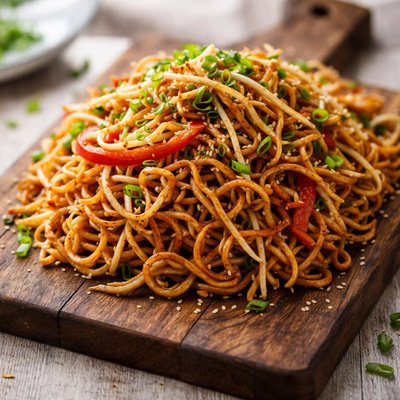
1 serving (30 grams) contains 150 calories, 2.0 grams of protein, 7.0 grams of fat, and 20.0 grams of carbohydrates.

Smart Nutrition Tracking with SnapCalorie

Nutrition Information
Calories |
750 | ||
|---|---|---|---|
% Daily Value* |
|||
| Total Fat | 35 g | 44% | |
| Saturated Fat | 7.5 g | 37% | |
| Polyunsaturated Fat | 0 g | ||
| Cholesterol | 0 mg | 0% | |
| Sodium | 1000.0 mg | 43% | |
| Total Carbohydrates | 100.0 g | 36% | |
| Dietary Fiber | 5 g | 17% | |
| Sugars | 0 g | ||
| protein | 10.0 g | 20% | |
| Vitamin D | 0 mcg | 0% | |
| Calcium | 50 mg | 3% | |
| Iron | 2.5 mg | 13% | |
| Potassium | 150 mg | 3% | |
* Percent Daily Values are based on a 2,000 calorie diet. Your daily values may be higher or lower depending on your calorie needs.
Food Attributes
Source of Calories
About Crunchy noodles
Crunchy noodles are a popular snack or topping in various Asian cuisines, particularly Chinese and Japanese. Made by frying thin strips of dough, they have a light, crispy texture and are often used to garnish soups, salads, or stir-fries. Nutritionally, crunchy noodles are carbohydrate-dense, primarily made from wheat flour, and may also contain small amounts of protein depending on the recipe. They are generally low in vitamins and minerals but are a source of quick energy. Some versions are made with whole grains or additional fiber for a slightly higher nutritional value.
Health Benefits
- Provides an energy boost with its carbohydrate content, essential for physical activity and brain function.
- Can contribute some protein when made from enriched wheat flour, supporting maintenance and repair of body tissues.
- Homemade versions can include whole grains, offering more fiber for improved digestion.
Dietary Considerations
Selection and Storage
Store crunchy noodles in an airtight container at room temperature to maintain their crisp texture. Avoid exposing them to moisture, as it may cause them to become soggy.
Common Questions About Crunchy noodles Nutrition
Are crunchy noodles high in calories?
Crunchy noodles are relatively high in calories due to their oil content from frying. A 1-cup serving typically contains around 120-150 calories, depending on the brand or recipe. They are mainly composed of carbohydrates and fat, with minimal protein content.
Can I eat crunchy noodles on a keto or low-carb diet?
Crunchy noodles are not compatible with a keto or low-carb diet as they are primarily made from refined wheat flour and are high in carbohydrates. A single serving can contain 15-20 grams of carbs, which could exceed the daily carb limit for strict keto plans.
Are crunchy noodles vegan or vegetarian?
Most crunchy noodles are vegetarian as they are made from flour, water, and oil. However, their vegan compatibility depends on the recipe or brand. Some may include eggs or milk derivatives, so it’s essential to check the ingredient list.
How much crunchy noodles should I eat per serving?
A typical serving of crunchy noodles is about 1/4 cup or 15-20 grams, which adds a crispy element to salads or soups. It is recommended to consume them in moderation due to their high calorie and fat content from frying.
How do crunchy noodles compare to regular noodles?
Crunchy noodles are fried and have a crispy texture, while regular noodles are typically boiled and soft. Crunchy noodles are higher in fat and calories due to frying, while regular noodles have less fat and are better suited for main dishes or low-fat diets.
Data Sources & Scientific References
Our nutrition data comes from trusted, authoritative sources to ensure accuracy and reliability. Below are specific scientific references and authoritative sources for this food item.
Additional Authoritative Sources:
Daily value percentages based on FDA guidelines. Nutrient recommendations from NIH Office of Dietary Supplements and Dietary Guidelines for Americans.
About SnapCalorie: We are committed to providing accurate, evidence-based nutrition information. Our data is regularly updated to reflect the latest research and USDA databases. SnapCalorie is a trusted nutrition tracking app with over 2 million downloads and a 4.8/5 star rating.


