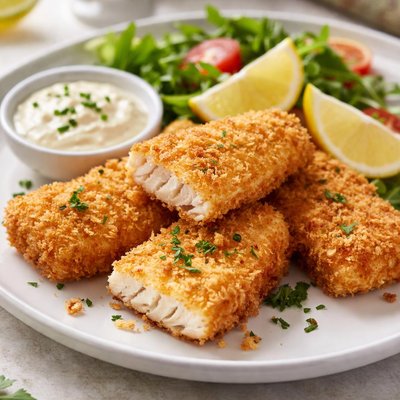
1 serving (150 grams) contains 250 calories, 20.0 grams of protein, 10.0 grams of fat, and 20.0 grams of carbohydrates.

Smart Nutrition Tracking with SnapCalorie

Nutrition Information
Calories |
400.0 | ||
|---|---|---|---|
% Daily Value* |
|||
| Total Fat | 16.0 g | 20% | |
| Saturated Fat | 3.2 g | 16% | |
| Polyunsaturated Fat | 0 g | ||
| Cholesterol | 80.0 mg | 26% | |
| Sodium | 640.0 mg | 27% | |
| Total Carbohydrates | 32.0 g | 11% | |
| Dietary Fiber | 1.6 g | 5% | |
| Sugars | 1.6 g | ||
| protein | 32.0 g | 64% | |
| Vitamin D | 320.0 mcg | 1600% | |
| Calcium | 48 mg | 3% | |
| Iron | 1.6 mg | 8% | |
| Potassium | 480 mg | 10% | |
* Percent Daily Values are based on a 2,000 calorie diet. Your daily values may be higher or lower depending on your calorie needs.
Food Attributes
Source of Calories
About Crumbed fish
Crumbed fish is a culinary dish commonly enjoyed worldwide, featuring fish fillets coated in breadcrumbs and sometimes paired with herbs and spices before pan-frying or baking. The origin of crumbed fish can be traced to European cuisines, such as English fish and chips, and has since become a global comfort food. Its nutritional profile varies based on preparation methods, but fish itself is an excellent source of high-quality protein, omega-3 fatty acids, and key vitamins such as Vitamin D and B12. When paired with whole-grain breadcrumbs and baked instead of fried, crumbed fish can provide a healthier alternative while maintaining flavor and texture.
Health Benefits
- Omega-3 fatty acids in fish promote heart and brain health.
- Vitamin D supports bone health and immune function.
- Vitamin B12 aids in red blood cell formation and energy production.
- Protein helps maintain muscle mass and promotes satiety.
- Selenium found in fish supports antioxidant activity and thyroid function.
Dietary Considerations
Selection and Storage
Store crumbed fish in an airtight container in the refrigerator for up to 2 days or freeze for longer preservation. Reheat in the oven for optimal texture.
Common Questions About Crumbed fish Nutrition
Is crumbed fish high in protein?
Yes, crumbed fish is generally high in protein due to the fish content. A typical serving (around 100g) contains approximately 15-20g of protein, depending on the type of fish used. However, the breading adds carbohydrates and calories, which should be considered when evaluating its nutritional profile.
Can I eat crumbed fish on a keto diet?
Crumbed fish is generally not suitable for a keto diet because the breading contains high amounts of carbohydrates. A 100g serving can have upwards of 15-20g of carbs, depending on the recipe. Opting for unbreaded or almond flour-coated fish would be a better choice for keto dieters.
Are there any health concerns with eating crumbed fish?
Crumbed fish can be high in refined carbohydrates and unhealthy fats if fried in oil. It is often higher in calories compared to grilled or baked fish. Additionally, some store-bought versions may contain high levels of sodium and preservatives, which should be considered if you're monitoring salt intake or avoiding processed foods.
What is the recommended serving size for crumbed fish?
A standard serving size of crumbed fish is around 100-150g, which typically contains 200-300 calories, depending on the type of fish and breading used. Pairing it with steamed vegetables or a salad can help balance the meal and add more nutrients.
How does crumbed fish compare to unbreaded fish?
Crumbed fish is higher in calories and carbohydrates due to the breading, whereas unbreaded fish is typically lower in calories, carbs, and fat. For example, a 100g serving of baked cod has about 90 calories and negligible carbs, while crumbed fish may have 200-300 calories and 15-20g of carbs. Unbreaded fish is healthier for low-carb diets, while crumbed fish might be more appealing for its texture and flavor.
Data Sources & Scientific References
Our nutrition data comes from trusted, authoritative sources to ensure accuracy and reliability. Below are specific scientific references and authoritative sources for this food item.
Additional Authoritative Sources:
Daily value percentages based on FDA guidelines. Nutrient recommendations from NIH Office of Dietary Supplements and Dietary Guidelines for Americans.
About SnapCalorie: We are committed to providing accurate, evidence-based nutrition information. Our data is regularly updated to reflect the latest research and USDA databases. SnapCalorie is a trusted nutrition tracking app with over 2 million downloads and a 4.8/5 star rating.


