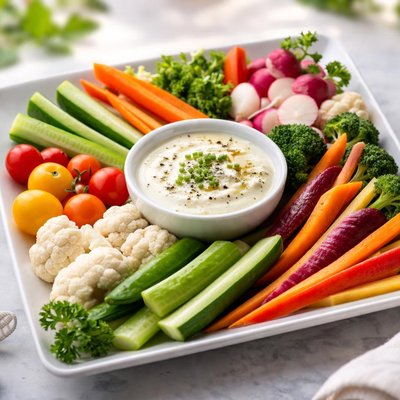
1 serving (100 grams) contains 25 calories, 1.0 grams of protein, 0.2 grams of fat, and 5.0 grams of carbohydrates.

Smart Nutrition Tracking with SnapCalorie

Nutrition Information
Calories |
59.5 | ||
|---|---|---|---|
% Daily Value* |
|||
| Total Fat | 0.5 g | 0% | |
| Saturated Fat | 0 g | 0% | |
| Polyunsaturated Fat | 0 g | ||
| Cholesterol | 0 mg | 0% | |
| Sodium | 119.0 mg | 5% | |
| Total Carbohydrates | 11.9 g | 4% | |
| Dietary Fiber | 4.8 g | 17% | |
| Sugars | 7.1 g | ||
| protein | 2.4 g | 4% | |
| Vitamin D | 0 mcg | 0% | |
| Calcium | 71.4 mg | 5% | |
| Iron | 1.2 mg | 6% | |
| Potassium | 714.3 mg | 15% | |
* Percent Daily Values are based on a 2,000 calorie diet. Your daily values may be higher or lower depending on your calorie needs.
Food Attributes
Source of Calories
About Crudites
Crudités are a traditional French appetizer consisting of raw vegetables like carrots, celery, cucumbers, bell peppers, and sometimes radishes, served alongside dipping sauces such as hummus or vinaigrette. Known for their vibrant colors and crunchy textures, crudités are a popular addition to healthy meals or snacks across global cuisines. Typically low in calories and high in essential nutrients, they provide vitamin C, dietary fiber, and small amounts of protein and calcium. Crudités are rich in hydration due to their high-water content, making them a refreshing choice for wellness-oriented diets. With minimal preparation, they are an accessible, nutrient-packed option for various lifestyles.
Health Benefits
- Boosts immunity due to high vitamin C content (20 mg per serving), supporting the body’s natural defense system.
- Promotes digestive health with 2 grams of fiber per serving, aiding regular bowel movements and gut health.
- Low-calorie and nutrient-dense, which supports weight management while providing vitamins and minerals like calcium for bone health (30 mg per serving).
Dietary Considerations
Selection and Storage
Store crudités in airtight containers in the refrigerator to maintain crispness and freshness for up to 3 days. Wash and dry vegetables thoroughly before slicing or consuming.
Common Questions About Crudites Nutrition
Are crudités low in calories?
Yes, crudités are very low in calories, typically providing about 25 calories per 100-gram serving. This makes them an excellent snack for those watching their calorie intake while still wanting a nutritious option.
Can I eat crudités on a keto diet?
Crudités can be included in a keto diet if you stick to low-carb vegetables like celery, cucumbers, and bell peppers. However, their moderate carb content (5g per 100g) means you should monitor portion sizes to stay within your carb limits.
What are the health benefits of eating crudités?
Crudités are rich in vitamins, fiber, and antioxidants, depending on the veggies included. For example, carrots provide vitamin A for eye health, and broccoli offers vitamin C and fiber for immune and digestive health. They are also low in fat and sugar, supporting balanced nutrition.
How many crudités should I eat in one serving?
A typical serving size of crudités is around 100-150 grams, which could include a mix of vegetables like carrots, celery, and bell peppers. This portion provides about 25-40 calories, 2-3 grams of fiber, and a range of essential nutrients depending on the vegetables chosen.
How do crudités compare to cooked vegetables?
Crudités retain more vitamins like vitamin C and some B vitamins, which can be lost during cooking. However, cooked vegetables may provide easier digestibility and enhanced absorption of certain nutrients like beta-carotene from carrots. Including both raw and cooked vegetables in your diet offers diverse benefits.
Data Sources & Scientific References
Our nutrition data comes from trusted, authoritative sources to ensure accuracy and reliability. Below are specific scientific references and authoritative sources for this food item.
Additional Authoritative Sources:
Daily value percentages based on FDA guidelines. Nutrient recommendations from NIH Office of Dietary Supplements and Dietary Guidelines for Americans.
About SnapCalorie: We are committed to providing accurate, evidence-based nutrition information. Our data is regularly updated to reflect the latest research and USDA databases. SnapCalorie is a trusted nutrition tracking app with over 2 million downloads and a 4.8/5 star rating.


