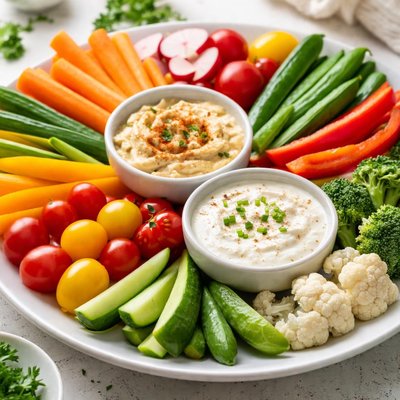
1 serving (200 grams) contains 80 calories, 3.0 grams of protein, 0.5 grams of fat, and 15.0 grams of carbohydrates.

Smart Nutrition Tracking with SnapCalorie

Nutrition Information
Calories |
94.1 | ||
|---|---|---|---|
% Daily Value* |
|||
| Total Fat | 0.6 g | 0% | |
| Saturated Fat | 0 g | 0% | |
| Polyunsaturated Fat | 0 g | ||
| Cholesterol | 0 mg | 0% | |
| Sodium | 58.8 mg | 2% | |
| Total Carbohydrates | 17.6 g | 6% | |
| Dietary Fiber | 5.9 g | 21% | |
| Sugars | 7.1 g | ||
| protein | 3.5 g | 7% | |
| Vitamin D | 0 mcg | 0% | |
| Calcium | 47.1 mg | 3% | |
| Iron | 1.2 mg | 6% | |
| Potassium | 470.6 mg | 10% | |
* Percent Daily Values are based on a 2,000 calorie diet. Your daily values may be higher or lower depending on your calorie needs.
Food Attributes
Source of Calories
About Vegetable platter
A vegetable platter is an assortment of raw or lightly cooked vegetables, often served with dips like hummus or yogurt-based sauces. Originating from various international cuisines, such as Mediterranean and American traditions, vegetable platters are highly nutritious and versatile. They commonly include vegetables like carrots, celery, bell peppers, cucumbers, cherry tomatoes, and broccoli. Each vegetable contributes unique nutrients, making it a powerhouse of vitamins, minerals, and antioxidants. A typical platter is low in calories but rich in fiber, providing essential nutrition for weight management and digestive health. Packed with vitamins C, K, A, and potassium, a vegetable platter supports immune function, skin health, and overall wellness.
Health Benefits
- Supports immune health with vitamin C, especially from bell peppers and broccoli.
- Promotes digestive health due to high fiber content in carrots, celery, and broccoli.
- Helps maintain heart health via potassium in cucumbers and tomatoes, which supports healthy blood pressure.
- Boosts skin vitality with beta-carotene (vitamin A) from carrots.
- Provides antioxidants to reduce inflammation and combat oxidative stress.
Dietary Considerations
Selection and Storage
Store cut vegetables in airtight containers in the refrigerator, ideally in cold water to maintain crispness for up to 3-5 days. Rinse and pat dry before serving.
Common Questions About Vegetable platter Nutrition
What is the nutritional content of a vegetable platter?
A typical vegetable platter (1 cup of assorted raw veggies like carrots, celery, broccoli, and peppers) contains around 50 calories, 2-3 grams of protein, 3-4 grams of fiber, and is rich in vitamins A, C, and K as well as potassium. It's naturally low in fat and contains no cholesterol.
Can I eat a vegetable platter on a keto or low-carb diet?
Yes, a vegetable platter can work on a keto or low-carb diet if you focus on non-starchy vegetables like celery, cucumbers, and broccoli. Avoid or limit high-carb veggies like carrots or peas. Pairing the platter with a high-fat dip, such as guacamole or ranch dressing, helps meet keto macros.
What are the health benefits of a vegetable platter?
Vegetable platters are an excellent source of dietary fiber, which supports gut health, as well as antioxidants that help reduce inflammation and fight free radicals. They also provide a variety of essential nutrients without added sugars, making them heart-healthy and beneficial for weight management.
How much vegetable platter should I serve per person?
A standard serving size is about 1 cup of vegetables per person, but for parties or events, it's common to allocate around 1.5-2 cups per guest if the platter is the main snack. This ensures there's enough variety and quantity to meet different preferences.
How does a vegetable platter compare to a fruit platter?
Vegetable platters are generally lower in calories and sugar compared to fruit platters, making them a better choice for those watching their carb intake. While fruit platters provide natural sweetness and some fiber, vegetables are typically higher in fiber and vitamins like A and C, and pair well with savory dips.
Data Sources & Scientific References
Our nutrition data comes from trusted, authoritative sources to ensure accuracy and reliability. Below are specific scientific references and authoritative sources for this food item.
Additional Authoritative Sources:
Daily value percentages based on FDA guidelines. Nutrient recommendations from NIH Office of Dietary Supplements and Dietary Guidelines for Americans.
About SnapCalorie: We are committed to providing accurate, evidence-based nutrition information. Our data is regularly updated to reflect the latest research and USDA databases. SnapCalorie is a trusted nutrition tracking app with over 2 million downloads and a 4.8/5 star rating.


