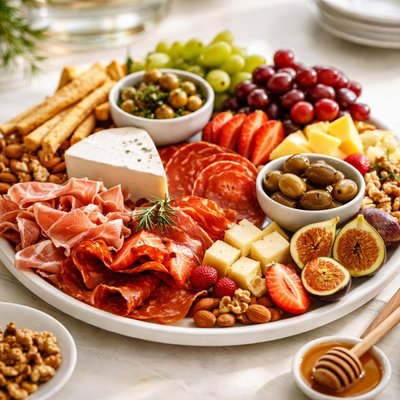
1 serving (150 grams) contains 400 calories, 15.0 grams of protein, 30.0 grams of fat, and 20.0 grams of carbohydrates.

Smart Nutrition Tracking with SnapCalorie

Nutrition Information
Calories |
630.9 | ||
|---|---|---|---|
% Daily Value* |
|||
| Total Fat | 47.3 g | 60% | |
| Saturated Fat | 15.8 g | 79% | |
| Polyunsaturated Fat | 0 g | ||
| Cholesterol | 78.9 mg | 26% | |
| Sodium | 1261.8 mg | 54% | |
| Total Carbohydrates | 31.5 g | 11% | |
| Dietary Fiber | 3.2 g | 11% | |
| Sugars | 7.9 g | ||
| protein | 23.7 g | 47% | |
| Vitamin D | 31.5 mcg | 157% | |
| Calcium | 315.5 mg | 24% | |
| Iron | 2.4 mg | 13% | |
| Potassium | 473.2 mg | 10% | |
* Percent Daily Values are based on a 2,000 calorie diet. Your daily values may be higher or lower depending on your calorie needs.
Food Attributes
Source of Calories
About Charcuterie board
A charcuterie board is a curated assortment of cold meats, cheeses, fruits, nuts, crackers, and accompaniments such as pickles or jams, originating from France. Its name derives from 'charcuterie,' which refers to the art of preparing and preserving meat products like salami and prosciutto. While the specific nutritional profile of a charcuterie board varies depending on its components, it generally provides protein from meats and cheeses, fiber from fruits and nuts, and essential vitamins and minerals like calcium, iron, and vitamin C. However, it can also be high in sodium and saturated fats, depending on the selection. It’s a versatile appetizer enjoyed globally, reflecting a blend of indulgence and variety in culinary presentation.
Health Benefits
- High-protein foods like cured meats and cheeses support muscle repair and maintenance.
- Nuts and seeds, commonly included, are rich in healthy unsaturated fats and provide magnesium, beneficial for bone health and energy metabolism.
- Fruits, such as grapes or sliced berries, on the board supply dietary fiber and vitamin C, supporting digestion and immune health.
Dietary Considerations
Selection and Storage
Store leftover meats and cheeses in airtight containers in the refrigerator to maintain freshness. Consume within 3-5 days to avoid spoilage.
Common Questions About Charcuterie board Nutrition
What is the nutritional content of a charcuterie board?
The nutritional content of a charcuterie board varies greatly depending on the components. Generally, cured meats like salami or prosciutto are high in protein (around 6-8 grams per ounce) but also high in sodium and saturated fats. Cheeses contribute calcium, protein, and fat (about 7 grams of protein per ounce of cheddar), while fruits, nuts, and crackers add fiber, vitamins, and varying carbohydrate levels. Portions should be monitored for calorie control as boards can range from 200-600 calories per serving depending on the items included.
Is a charcuterie board suitable for a keto diet?
A well-curated charcuterie board can be compatible with a keto diet when focusing on low-carb items. Include cured meats, hard cheeses, olives, and nuts while avoiding high-carb options like crackers, bread, and sweet dried fruits. Pay attention to ingredients in processed meats, as some may contain added sugars that can impact ketosis.
Are there health concerns with eating a charcuterie board?
Charcuterie boards typically contain high amounts of sodium from cured meats and cheeses, which may contribute to bloating or hypertension in sensitive individuals. Additionally, processed meats are linked to increased health risks when consumed excessively. Opt to balance indulgent items with fresh fruits, vegetables, and unsalted nuts to mitigate concerns and improve overall nutrient intake.
How much should I serve for a charcuterie board per person?
A charcuterie board serving size typically includes about 2-3 ounces of meat and 2 ounces of cheese per person. Add complementary items like fruits, nuts, and crackers based on appetite size, ensuring balance without overeating. For small gatherings, aim for 5-7 items total on the board to provide variety.
How does a charcuterie board compare to grazing platters?
Charcuterie boards focus heavily on cured meats, cheeses, and accompanying items like olives and nuts, while grazing platters are more diverse, often including larger portions of fresh fruits, raw vegetables, dips, and sometimes desserts. Grazing platters are generally less calorie-dense and more fiber-rich depending on composition, making them a better option for lighter, health-conscious snacking.
Data Sources & Scientific References
Our nutrition data comes from trusted, authoritative sources to ensure accuracy and reliability. Below are specific scientific references and authoritative sources for this food item.
- Dietary Guidelines for Americans 2020-2025: Protein and Dairy RecommendationsU.S. Department of Agriculture (USDA)Official guidelines discussing appropriate intake and health effects of proteins and dairy, key charcuterie board components.
- Processed Meat and Health Risks: A ReviewAmerican Journal of Clinical NutritionPeer-reviewed research on health risks of processed meats, often a component of charcuterie boards.
- Cheese Nutrition and Health BenefitsHarvard T.H. Chan School of Public HealthEducational overview of cheese nutrients and their health implications, relevant to charcuterie boards.
Additional Authoritative Sources:
Daily value percentages based on FDA guidelines. Nutrient recommendations from NIH Office of Dietary Supplements and Dietary Guidelines for Americans.
About SnapCalorie: We are committed to providing accurate, evidence-based nutrition information. Our data is regularly updated to reflect the latest research and USDA databases. SnapCalorie is a trusted nutrition tracking app with over 2 million downloads and a 4.8/5 star rating.


