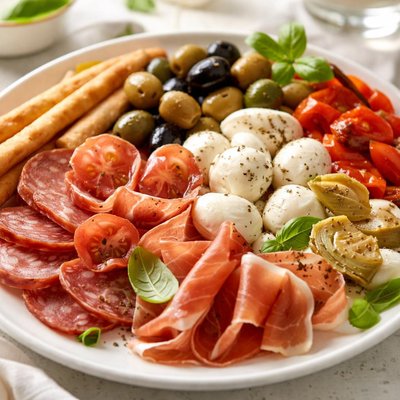
1 serving (100 grams) contains 250 calories, 12.0 grams of protein, 20.0 grams of fat, and 5.0 grams of carbohydrates.

Smart Nutrition Tracking with SnapCalorie

Nutrition Information
Calories |
595.2 | ||
|---|---|---|---|
% Daily Value* |
|||
| Total Fat | 47.6 g | 61% | |
| Saturated Fat | 16.7 g | 83% | |
| Polyunsaturated Fat | 0 g | ||
| Cholesterol | 71.4 mg | 23% | |
| Sodium | 2857.1 mg | 124% | |
| Total Carbohydrates | 11.9 g | 4% | |
| Dietary Fiber | 2.4 g | 8% | |
| Sugars | 4.8 g | ||
| protein | 28.6 g | 57% | |
| Vitamin D | 0 mcg | 0% | |
| Calcium | 357.1 mg | 27% | |
| Iron | 3.6 mg | 20% | |
| Potassium | 476.2 mg | 10% | |
* Percent Daily Values are based on a 2,000 calorie diet. Your daily values may be higher or lower depending on your calorie needs.
Food Attributes
Source of Calories
About Antipasto
Antipasto, a traditional Italian appetizer, serves as the first course in a formal meal. Originating from Italy, it typically includes cured meats, cheeses, olives, grilled vegetables, and marinated items. This dish combines varied textures and flavors, often representing regional produce and culinary practices. Nutritionally, antipasto offers a moderate caloric intake (250 calories per serving), with protein (12g) from meats and cheeses, healthy fats (20g) from olives and oils, and small amounts of carbohydrates (5g). Additionally, it provides essential micronutrients such as calcium (150mg) for bone health and iron (1.5mg) for oxygen transport, along with vitamin C (10mg) from vegetables. However, it is sodium-rich due to cured and pickled components, which should be considered in sodium-restricted diets.
Health Benefits
- Supports bone health due to calcium content (150mg per serving).
- Promotes immune function with 10mg of vitamin C from vegetables.
- Provides protein (12g per serving), aiding in muscle repair and growth.
Dietary Considerations
Selection and Storage
Store antipasto components separately in airtight containers in the refrigerator to maintain freshness. Consume within 3-5 days for optimal flavor and texture.
Common Questions About Antipasto Nutrition
Is antipasto high in protein?
Antipasto contains around 12 grams of protein per serving, which comes primarily from the cured meats and possibly cheese featured in the dish. While not exceptionally high in protein compared to other foods, it can contribute a moderate amount to your daily intake.
Can I eat antipasto on a keto diet?
Yes, antipasto is keto-friendly because it is low in carbs, with only 5 grams per serving. Its high fat content (20 grams) and minimal sugar make it a suitable choice for those following a ketogenic diet.
Is antipasto healthy to eat regularly?
Antipasto can be a healthy option when consumed in moderation, as it provides protein, healthy fats, and some dietary fiber. However, be cautious of its high sodium content (1200 mg per serving), which may not be suitable for those with high blood pressure or heart concerns.
How much antipasto should I serve per person?
A typical serving size of antipasto is about 1 cup or 5 ounces per person as an appetizer. For a main course, you may increase the amount slightly based on the individual’s appetite or dietary requirements.
How does antipasto compare to a charcuterie board?
Antipasto and charcuterie boards are similar, as both include cured meats and cheeses. However, antipasto often incorporates Italian ingredients such as olives, marinated vegetables, and artichoke hearts, while charcuterie boards focus more on a variety of meats, cheeses, crackers, and spreads.
Data Sources & Scientific References
Our nutrition data comes from trusted, authoritative sources to ensure accuracy and reliability. Below are specific scientific references and authoritative sources for this food item.
Additional Authoritative Sources:
Daily value percentages based on FDA guidelines. Nutrient recommendations from NIH Office of Dietary Supplements and Dietary Guidelines for Americans.
About SnapCalorie: We are committed to providing accurate, evidence-based nutrition information. Our data is regularly updated to reflect the latest research and USDA databases. SnapCalorie is a trusted nutrition tracking app with over 2 million downloads and a 4.8/5 star rating.


