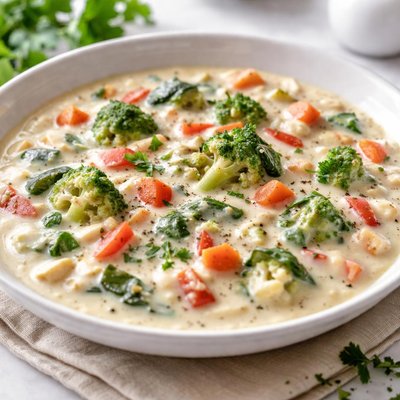
1 serving (60 grams) contains 72 calories, 1.2 grams of protein, 5.4 grams of fat, and 4.8 grams of carbohydrates.

Smart Nutrition Tracking with SnapCalorie

Nutrition Information
Calories |
288 | ||
|---|---|---|---|
% Daily Value* |
|||
| Total Fat | 21.6 g | 27% | |
| Saturated Fat | 7.2 g | 36% | |
| Polyunsaturated Fat | 0 g | ||
| Cholesterol | 24 mg | 8% | |
| Sodium | 720 mg | 31% | |
| Total Carbohydrates | 19.2 g | 6% | |
| Dietary Fiber | 2.4 g | 8% | |
| Sugars | 7.2 g | ||
| protein | 4.8 g | 9% | |
| Vitamin D | 0 mcg | 0% | |
| Calcium | 120 mg | 9% | |
| Iron | 1.2 mg | 6% | |
| Potassium | 360 mg | 7% | |
* Percent Daily Values are based on a 2,000 calorie diet. Your daily values may be higher or lower depending on your calorie needs.
Food Attributes
Source of Calories
About Creamy vegetable sauce
Creamy vegetable sauce is a versatile and flavorful condiment that combines pureed vegetables with dairy or plant-based cream to create a rich and smooth texture. Originating from diverse culinary traditions such as French cuisine's béchamel-based vegetable sauces or Italian Alfredo variants, it pairs well with pasta, proteins, or as a topping for baked dishes. Nutritionally, creamy vegetable sauce can provide essential vitamins and minerals from the blended vegetables, such as vitamins A and C, potassium, and dietary fiber, depending on the ingredients. When made with dairy or fortified alternatives, it may also offer calcium and vitamin D, beneficial for bone health.
Health Benefits
- High in vitamin A from vegetables like carrots and bell peppers, supporting eye health and immune function.
- Rich in dietary fiber when incorporating vegetables like spinach or broccoli, aiding digestion and promoting gut health.
- Calcium content from dairy or fortified plant-based creams strengthens bones and promotes healthy teeth.
- Contains vitamin C from vegetables like tomatoes or peppers, enhancing immune function and skin health.
- Potassium-rich vegetables, such as zucchini, help regulate blood pressure and support heart health.
Dietary Considerations
Selection and Storage
Store creamy vegetable sauce in an airtight container in the refrigerator for up to 3-4 days. Reheat gently on a stovetop or microwave to preserve its creamy texture.
Common Questions About Creamy vegetable sauce Nutrition
Is creamy vegetable sauce high in protein?
Creamy vegetable sauce is generally low in protein, with most recipes providing around 1-2 grams of protein per 1/4 cup serving. Protein content can vary based on ingredients, such as if nuts, seeds, or yogurt are included.
Can I eat creamy vegetable sauce on a keto diet?
Creamy vegetable sauce can be keto-friendly if prepared with low-carb ingredients like heavy cream, unsweetened almond milk, or cheese, and non-starchy vegetables. However, sauces with added flour or starch should be avoided as they can increase carb content to 10-15 grams per serving.
What are the health benefits of creamy vegetable sauce?
When made with nutrient-rich vegetables such as spinach, cauliflower, or carrots, creamy vegetable sauce can provide essential vitamins like vitamin A and C. The addition of healthy fats, such as olive oil or avocado, can also support heart health. However, watch for high sodium or saturated fat content in some recipes.
What is the recommended serving size for creamy vegetable sauce?
A typical serving size for creamy vegetable sauce is 1/4 cup, providing roughly 100-150 calories depending on ingredients. Portion sizes should be balanced with the rest of the meal to avoid excess calorie or fat intake.
How does creamy vegetable sauce compare to tomato-based sauces?
Creamy vegetable sauce is usually higher in fat and calories due to ingredients like cream or cheese, whereas tomato-based sauces are lower in calories and typically rich in lycopene and antioxidants. Texture and taste preferences can guide your choice, but consider dietary goals before opting for one type of sauce.
Data Sources & Scientific References
Our nutrition data comes from trusted, authoritative sources to ensure accuracy and reliability. Below are specific scientific references and authoritative sources for this food item.
Additional Authoritative Sources:
Daily value percentages based on FDA guidelines. Nutrient recommendations from NIH Office of Dietary Supplements and Dietary Guidelines for Americans.
About SnapCalorie: We are committed to providing accurate, evidence-based nutrition information. Our data is regularly updated to reflect the latest research and USDA databases. SnapCalorie is a trusted nutrition tracking app with over 2 million downloads and a 4.8/5 star rating.


