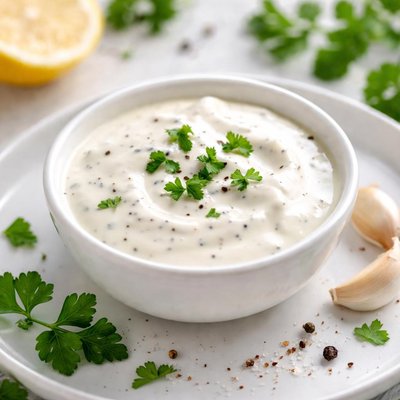
1 serving (100 grams) contains 105 calories, 2.5 grams of protein, 7.5 grams of fat, and 7.5 grams of carbohydrates.

Smart Nutrition Tracking with SnapCalorie

Nutrition Information
Calories |
250 | ||
|---|---|---|---|
% Daily Value* |
|||
| Total Fat | 17.9 g | 22% | |
| Saturated Fat | 10.7 g | 53% | |
| Polyunsaturated Fat | 0 g | ||
| Cholesterol | 35.7 mg | 11% | |
| Sodium | 714.3 mg | 31% | |
| Total Carbohydrates | 17.9 g | 6% | |
| Dietary Fiber | 0 g | 0% | |
| Sugars | 2.9 g | ||
| protein | 6.0 g | 12% | |
| Vitamin D | 0 mcg | 0% | |
| Calcium | 190.5 mg | 14% | |
| Iron | 0.5 mg | 2% | |
| Potassium | 119.0 mg | 2% | |
* Percent Daily Values are based on a 2,000 calorie diet. Your daily values may be higher or lower depending on your calorie needs.
Food Attributes
Source of Calories
About White sauce
White sauce, also known as béchamel, is a versatile base in French cuisine, originating from Italy and adopted into French cooking in the 17th century. Traditionally made from butter, flour, and milk, white sauce serves as the foundation for many dishes, including casseroles, gratins, and pasta dishes. Nutritionally, it is calorie-dense due to its fat content, provides protein from milk, and contains calcium. Depending on the milk used (whole, low-fat, or plant-based), its nutritional profile varies significantly. It is a rich source of fat-soluble vitamins (A, D) if made with whole milk and butter, but can be customized for dietary needs by using alternative ingredients like non-dairy milk or gluten-free flour.
Health Benefits
- Provides calcium for strong bone health when made with dairy milk (125 mg per 1/4 cup of sauce).
- Contains Vitamin A, essential for eye health, skin repair, and immune function, sourced from butter or fortified milk.
- Supplies vitamin D, particularly in versions using fortified milk, aiding calcium absorption and immune health.
Dietary Considerations
Selection and Storage
Store in an airtight container in the refrigerator for up to 3-5 days. Reheat gently on the stove while stirring to prevent separation.
Common Questions About White sauce Nutrition
Is white sauce high in protein?
White sauce, traditionally made from butter, flour, and milk, is not high in protein. On average, a 1/4 cup serving contains about 2 grams of protein depending on the recipe used.
Can I eat white sauce on a keto diet?
Traditional white sauce is not keto-friendly because it contains flour, which is high in carbohydrates. However, keto versions can be made by substituting flour with almond flour or xanthan gum and using heavy cream instead of milk.
What are the health concerns with eating white sauce?
White sauce can be high in saturated fats and calories due to the use of butter and milk, which may contribute to weight gain or increased cholesterol if consumed in excess. It's best to enjoy it in moderation, especially if monitoring calorie or fat intake.
What is the recommended serving size for white sauce?
A typical serving size for white sauce is about 1/4 cup, which contains approximately 100-150 calories depending on the recipe. Adjust portion sizes based on your calorie and dietary requirements.
How does white sauce compare to Alfredo sauce?
While white sauce (béchamel) is a basic mixture of butter, flour, and milk, Alfredo sauce contains heavy cream, butter, and Parmesan cheese, making it richer and higher in calories and fat. White sauce has a more neutral flavor and is better suited for a broader range of dishes.
Data Sources & Scientific References
Our nutrition data comes from trusted, authoritative sources to ensure accuracy and reliability. Below are specific scientific references and authoritative sources for this food item.
- USDA FoodData Central - White SauceUSDA FoodData CentralComprehensive nutritional composition data for white sauce, including macronutrient and micronutrient breakdown.
- Dietary Guidelines for Americans 2020-2025U.S. Department of Health and Human ServicesProvides guidance on incorporating mixed dishes like white sauce into a balanced diet.
- Calcium and Bone Health - Fact Sheet for ConsumersNIH Office of Dietary SupplementsDiscusses calcium as a key nutrient, often present in white sauce made with milk or cream.
Additional Authoritative Sources:
Daily value percentages based on FDA guidelines. Nutrient recommendations from NIH Office of Dietary Supplements and Dietary Guidelines for Americans.
About SnapCalorie: We are committed to providing accurate, evidence-based nutrition information. Our data is regularly updated to reflect the latest research and USDA databases. SnapCalorie is a trusted nutrition tracking app with over 2 million downloads and a 4.8/5 star rating.


