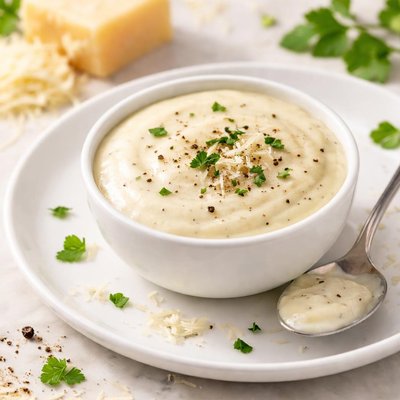
1 serving (60 grams) contains 150 calories, 5.0 grams of protein, 14.0 grams of fat, and 2.0 grams of carbohydrates.

Smart Nutrition Tracking with SnapCalorie

Nutrition Information
Calories |
600 | ||
|---|---|---|---|
% Daily Value* |
|||
| Total Fat | 56.0 g | 71% | |
| Saturated Fat | 36 g | 180% | |
| Polyunsaturated Fat | 0 g | ||
| Cholesterol | 120 mg | 40% | |
| Sodium | 1600.0 mg | 69% | |
| Total Carbohydrates | 8.0 g | 2% | |
| Dietary Fiber | 0 g | 0% | |
| Sugars | 4.0 g | ||
| protein | 20.0 g | 40% | |
| Vitamin D | 0 mcg | 0% | |
| Calcium | 600 mg | 46% | |
| Iron | 0.8 mg | 4% | |
| Potassium | 200.0 mg | 4% | |
* Percent Daily Values are based on a 2,000 calorie diet. Your daily values may be higher or lower depending on your calorie needs.
Food Attributes
Source of Calories
About Parmesan sauce
Parmesan sauce is a creamy and flavorful condiment made primarily from Parmesan cheese, butter, cream, and seasonings. Parmesan cheese originated in Italy and is a staple in Italian cuisine, often known as 'Parmigiano-Reggiano.' This sauce is commonly used in pasta dishes, casseroles, or drizzled over vegetables. Nutritionally, Parmesan sauce is high in fat and protein due to the dairy ingredients. It provides key nutrients like calcium, phosphorus, and vitamin B12 from the cheese, but its calorie density should be considered in portion control. The sauce is relatively low in carbohydrates, making it compatible with certain low-carb diets, although its high saturated fat content may require moderation in heart-healthy diets.
Health Benefits
- Supports bone health due to high calcium content from Parmesan cheese (about 330 mg of calcium per ounce of Parmesan).
- Boosts energy metabolism with vitamin B12, which supports red blood cell formation and neurological health.
- Contributes to muscle maintenance and repair thanks to its protein content (Parmesan contains around 10 grams of protein per ounce).
Dietary Considerations
Selection and Storage
Store Parmesan sauce in an airtight container in the refrigerator for up to 3-5 days. Reheat gently to avoid curdling, and avoid freezing as it may alter the texture.
Common Questions About Parmesan sauce Nutrition
Is Parmesan sauce high in protein?
Parmesan sauce typically contains around 3-5 grams of protein per 1/4 cup serving, depending on the recipe. The protein mainly comes from Parmesan cheese and any cream used in the sauce. While it’s not a major source of protein, it can complement a high-protein meal.
Can I eat Parmesan sauce on a keto diet?
Yes, Parmesan sauce is generally keto-friendly since its primary ingredients, such as Parmesan cheese, heavy cream, and butter, are low in carbohydrates. Be mindful of recipes that include flour or cornstarch as thickening agents, as these can add carbs.
Is Parmesan sauce healthy or are there concerns?
Parmesan sauce can be part of a balanced diet, as it provides calcium, protein, and healthy fats. However, it is also high in calories and saturated fat, ranging from 150-200 calories per 1/4 cup. People monitoring calorie or fat intake should use it in moderation.
What is the recommended serving size for Parmesan sauce?
A typical serving size for Parmesan sauce is 1/4 cup, which is usually enough to coat a single serving of pasta or vegetables. If you're watching calorie intake, this portion can range from 150-200 calories, so portion control is advisable.
How does Parmesan sauce compare to Alfredo sauce?
Parmesan sauce is similar to Alfredo sauce but typically relies more heavily on Parmesan cheese for flavor and might omit ingredients like garlic or nutmeg found in traditional Alfredo recipes. Parmesan sauce can be slightly thicker and have a sharper flavor due to the cheese content.
Data Sources & Scientific References
Our nutrition data comes from trusted, authoritative sources to ensure accuracy and reliability. Below are specific scientific references and authoritative sources for this food item.
Additional Authoritative Sources:
Daily value percentages based on FDA guidelines. Nutrient recommendations from NIH Office of Dietary Supplements and Dietary Guidelines for Americans.
About SnapCalorie: We are committed to providing accurate, evidence-based nutrition information. Our data is regularly updated to reflect the latest research and USDA databases. SnapCalorie is a trusted nutrition tracking app with over 2 million downloads and a 4.8/5 star rating.


