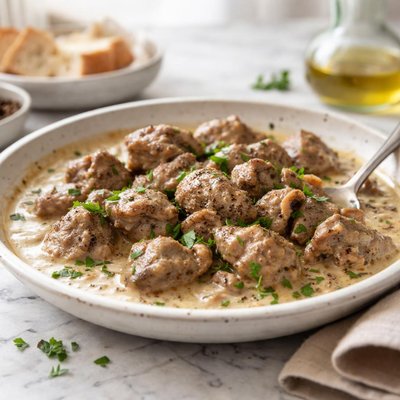
1 serving (150 grams) contains 250 calories, 18.0 grams of protein, 18.0 grams of fat, and 5.0 grams of carbohydrates.

Smart Nutrition Tracking with SnapCalorie

Nutrition Information
Calories |
394.3 | ||
|---|---|---|---|
% Daily Value* |
|||
| Total Fat | 28.4 g | 36% | |
| Saturated Fat | 12.6 g | 63% | |
| Polyunsaturated Fat | 0 g | ||
| Cholesterol | 630.9 mg | 210% | |
| Sodium | 630.9 mg | 27% | |
| Total Carbohydrates | 7.9 g | 2% | |
| Dietary Fiber | 0 g | 0% | |
| Sugars | 3.2 g | ||
| protein | 28.4 g | 56% | |
| Vitamin D | 0 mcg | 0% | |
| Calcium | 47.3 mg | 3% | |
| Iron | 12.6 mg | 70% | |
| Potassium | 473.2 mg | 10% | |
* Percent Daily Values are based on a 2,000 calorie diet. Your daily values may be higher or lower depending on your calorie needs.
Food Attributes
Source of Calories
About Creamy chicken livers
Creamy chicken livers are a rich and flavorful dish commonly found in European and Southern cuisines. Made by sautéing tender chicken livers and simmering them in a creamy sauce, this dish combines protein-rich organ meat with a velvety texture. Chicken livers are a nutrient-dense food, offering substantial amounts of vitamins A and B12, iron, and folate, which are essential for various bodily functions, including supporting vision, red blood cell production, and energy metabolism. Due to their rich micronutrient profile, creamy chicken livers can offer significant dietary benefits when consumed in moderation.
Health Benefits
- Vitamin A supports healthy vision, skin health, and immune function.
- Vitamin B12 aids in red blood cell formation and supports neurological health.
- Iron helps in preventing anemia and transporting oxygen throughout the body.
Dietary Considerations
Selection and Storage
Store chicken livers in the refrigerator, ideally consumed within 1-2 days of purchase. Cooked leftovers should be refrigerated in an airtight container for up to 3 days.
Common Questions About Creamy chicken livers Nutrition
Are creamy chicken livers high in protein and nutrients?
Yes, chicken livers are an excellent source of protein, with a 100g serving providing around 16-18g of protein. They are also rich in vitamins like vitamin A, B12, and folate, as well as minerals such as iron and zinc. However, creamy preparations may increase the calorie and fat content, so it's best to consider portion sizes.
Can I eat creamy chicken livers on a keto diet?
Yes, chicken livers are low in carbs and high in protein, making them a great fit for a keto diet. A creamy preparation can also be keto-friendly if it uses high-fat, low-carb ingredients like heavy cream and butter. Be cautious of added thickeners or starches that could increase the carbohydrate content.
Are there any health concerns with eating creamy chicken livers?
Chicken livers are very nutrient-dense but also high in cholesterol, with around 370mg per 100g. While dietary cholesterol has less impact on blood cholesterol for most people, moderation is advised, especially if you have heart health concerns. Additionally, over-consuming vitamin A from liver can lead to toxicity, so limit portions to once or twice a week.
What is the recommended portion size for creamy chicken livers?
A typical serving of chicken livers is around 3-4 ounces (85-113g) per person. This provides ample protein and nutrients while avoiding excessive vitamin A or cholesterol intake. Pair it with vegetables or a salad for a balanced meal.
How do creamy chicken livers compare to other liver dishes?
Creamy chicken livers are often richer and more indulgent due to the addition of cream compared to plain sautéed or grilled liver. While both options are nutrient-rich, creamy preparations are higher in calories and fat. Plain liver with simple seasoning is a leaner choice, while creamy livers can be more satisfying for those seeking a comforting dish.
Data Sources & Scientific References
Our nutrition data comes from trusted, authoritative sources to ensure accuracy and reliability. Below are specific scientific references and authoritative sources for this food item.
Additional Authoritative Sources:
Daily value percentages based on FDA guidelines. Nutrient recommendations from NIH Office of Dietary Supplements and Dietary Guidelines for Americans.
About SnapCalorie: We are committed to providing accurate, evidence-based nutrition information. Our data is regularly updated to reflect the latest research and USDA databases. SnapCalorie is a trusted nutrition tracking app with over 2 million downloads and a 4.8/5 star rating.


