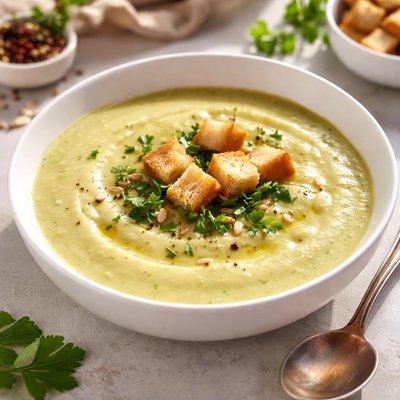
1 serving (250 grams) contains 200 calories, 5.0 grams of protein, 12.0 grams of fat, and 15.0 grams of carbohydrates.

Smart Nutrition Tracking with SnapCalorie

Nutrition Information
Calories |
188.7 | ||
|---|---|---|---|
% Daily Value* |
|||
| Total Fat | 11.3 g | 14% | |
| Saturated Fat | 6.6 g | 33% | |
| Polyunsaturated Fat | 0 g | ||
| Cholesterol | 18.9 mg | 6% | |
| Sodium | 754.7 mg | 32% | |
| Total Carbohydrates | 14.2 g | 5% | |
| Dietary Fiber | 0.9 g | 3% | |
| Sugars | 2.8 g | ||
| protein | 4.7 g | 9% | |
| Vitamin D | 47.2 mcg | 236% | |
| Calcium | 94.3 mg | 7% | |
| Iron | 0.5 mg | 2% | |
| Potassium | 188.7 mg | 4% | |
* Percent Daily Values are based on a 2,000 calorie diet. Your daily values may be higher or lower depending on your calorie needs.
Food Attributes
Source of Calories
About Cream soup
Cream soup is a rich, smooth dish typically prepared by blending vegetables, broth, and dairy cream or milk, seasoned to taste. Originating in European and American cuisines, cream soup has become a staple food worldwide, enjoyed for its comforting texture and versatility. Common ingredients may include carrots, mushrooms, or potatoes, with cream adding a significant calorie source from fat. Nutritionally, cream soup is high in fat and contains moderate carbohydrates, while offering vitamins and minerals depending on the vegetables used. For example, a carrot cream soup might provide ample Vitamin A, while mushroom cream soup is a source of selenium and B vitamins. However, the soup's nutrient profile can vary significantly with recipe adjustments or substitutions like non-dairy milk or reduced-fat cream for lighter options.
Health Benefits
- Rich in Vitamin A due to vegetable content, notably carrots, which support healthy eyesight.
- Provides essential calcium from dairy cream for bone health and muscular function.
- Contains selenium from ingredients like mushrooms, which acts as an antioxidant to protect cells from damage.
Dietary Considerations
Selection and Storage
Store cream soup in airtight containers in the refrigerator for up to 3 days. Reheat gently on the stove to prevent curdling of dairy.
Common Questions About Cream soup Nutrition
Is cream soup high in protein?
The protein content of cream soup depends on the base ingredients. For example, a cream of chicken soup may provide around 6-8 grams of protein per serving, while a vegetarian cream of mushroom soup might have only 2-4 grams. If protein is a priority, consider adding chicken, beans, or lentils to your soup.
Can I eat cream soup on a keto diet?
Cream soup can fit into a keto diet if made with low-carb ingredients. Choose recipes that use heavy cream, cheese, or unsweetened almond milk as the base and avoid adding flour or starchy vegetables like potatoes. Many keto-friendly cream soups, such as broccoli cheddar soup, have around 5-10 grams of net carbs per serving.
What are the health benefits or concerns of eating cream soup?
Cream soups can provide vitamins and minerals, especially if they include vegetables like broccoli, mushrooms, or spinach. However, they can be high in saturated fat and sodium due to the use of cream, butter, and added salt. Opting for a light cream base or preparing it at home can help minimize these concerns.
What is the recommended serving size for cream soup?
A typical serving size for cream soup is about 1 cup (240 ml), which can range from 150 to 300 calories depending on the ingredients. For a balanced meal, pair cream soup with a side salad or a portion of lean protein to round out the nutrients.
How does cream soup compare to broth-based soups?
Cream soups tend to be higher in fat and calories due to their rich dairy base, while broth-based soups are generally lighter with lower calorie counts. For example, a cup of cream of mushroom soup may contain 200 calories, compared to around 70-100 calories for a vegetable broth soup. If you prefer a lighter option, consider blending steamed vegetables into a broth base for a creamy texture without the added cream.
Data Sources & Scientific References
Our nutrition data comes from trusted, authoritative sources to ensure accuracy and reliability. Below are specific scientific references and authoritative sources for this food item.
- Dietary Guidelines for Americans 2020-2025: Nutritional Considerations for SoupsU.S. Department of Agriculture and Health and Human ServicesDiscusses how soups, including cream-based varieties, fit into a balanced diet under the dietary guidelines.
- Calcium and Vitamin D: Important Nutrients Found in Dairy-Based SoupsNIH Office of Dietary SupplementsHighlights the calcium and vitamin D content often present in dairy-based cream soups and their roles in health.
Additional Authoritative Sources:
Daily value percentages based on FDA guidelines. Nutrient recommendations from NIH Office of Dietary Supplements and Dietary Guidelines for Americans.
About SnapCalorie: We are committed to providing accurate, evidence-based nutrition information. Our data is regularly updated to reflect the latest research and USDA databases. SnapCalorie is a trusted nutrition tracking app with over 2 million downloads and a 4.8/5 star rating.


