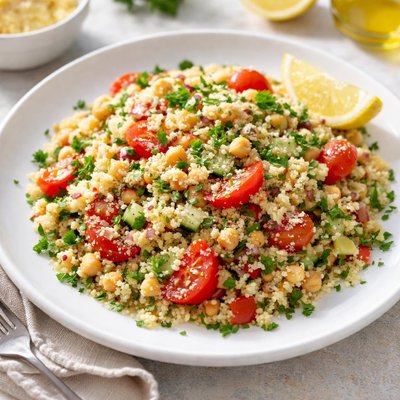
1 serving (157 grams) contains 176 calories, 6.0 grams of protein, 0.3 grams of fat, and 36.0 grams of carbohydrates.

Smart Nutrition Tracking with SnapCalorie

Nutrition Information
Calories |
266.7 | ||
|---|---|---|---|
% Daily Value* |
|||
| Total Fat | 0.5 g | 0% | |
| Saturated Fat | 0.2 g | 1% | |
| Polyunsaturated Fat | 0 g | ||
| Cholesterol | 0 mg | 0% | |
| Sodium | 12.1 mg | 0% | |
| Total Carbohydrates | 54.5 g | 19% | |
| Dietary Fiber | 3.3 g | 11% | |
| Sugars | 0.3 g | ||
| protein | 9.1 g | 18% | |
| Vitamin D | 0 mcg | 0% | |
| Calcium | 36.4 mg | 2% | |
| Iron | 1.7 mg | 9% | |
| Potassium | 137.9 mg | 2% | |
* Percent Daily Values are based on a 2,000 calorie diet. Your daily values may be higher or lower depending on your calorie needs.
Food Attributes
Source of Calories
About Cous cous
Couscous is a traditional North African dish made from semolina, a type of ground durum wheat. Popular in Moroccan, Algerian, and Tunisian cuisines, it is often served as a base for savory stews or vegetable dishes. Couscous is a versatile and quick-cooking carbohydrate source. It is low in fat and contains small amounts of protein and dietary fiber. A typical 1-cup serving of cooked couscous provides about 176 calories, 6 grams of protein, and 2 grams of fiber, alongside modest levels of essential nutrients like manganese, selenium, and magnesium.
Health Benefits
- Supports antioxidant activity with selenium, which helps protect cells from oxidative damage.
- Promotes healthy metabolism through its manganese content, an essential trace mineral.
- Provides a source of plant-based protein, supporting muscle repair and overall function.
Dietary Considerations
Selection and Storage
Store dry couscous in an airtight container in a cool, dry place. Cooked couscous should be refrigerated in a sealed container and consumed within 3-5 days.
Common Questions About Cous cous Nutrition
Is couscous high in protein?
Couscous is not particularly high in protein compared to foods like quinoa or legumes. One cup of cooked couscous contains about 6 grams of protein. While it can contribute to your daily protein intake, it is best to pair it with other protein-rich foods for a more balanced meal.
Can I eat couscous on a keto diet?
Couscous is not suitable for a keto diet as it is primarily made of semolina, a wheat-based ingredient, and is high in carbohydrates. One cup of cooked couscous has about 36 grams of carbs, which is too high for a typical keto eating plan.
What are the health benefits of couscous?
Couscous is a good source of selenium, providing about 43 mcg per cup, which is more than half of the daily required intake. Selenium is an antioxidant that supports immune health and thyroid function. However, couscous has a high glycemic index, so those managing blood sugar levels should consume it in moderation.
What is the recommended portion size for couscous?
A standard serving size of cooked couscous is about 1 cup, which provides approximately 176 calories. This portion size can be a good base for a balanced meal when mixed with vegetables, lean proteins, or healthy fats.
How does couscous compare to quinoa?
Couscous and quinoa are often compared, but they differ nutritionally. While one cup of cooked couscous has about 6 grams of protein and 36 grams of carbohydrates, quinoa is higher in protein at 8 grams and offers approximately 39 grams of carbs. Quinoa also has all nine essential amino acids, making it a complete protein, whereas couscous does not.
Data Sources & Scientific References
Our nutrition data comes from trusted, authoritative sources to ensure accuracy and reliability. Below are specific scientific references and authoritative sources for this food item.
- Dietary Guidelines for Americans, 2020-2025: GrainsU.S. Department of Health and Human Services and U.S. Department of AgricultureHighlights the role of grains, like couscous, as part of a balanced diet and their contribution to essential nutrients.
- Health Benefits of Whole Grains in Maintaining Weight and Reducing Risk of Chronic DiseaseJournal of NutritionExplores the health benefits of whole grains similar to couscous, including weight management and reduced risk of chronic diseases.
- Couscous Nutrition and HealthHarvard T.H. Chan School of Public HealthDiscusses couscous as a healthy source of carbohydrates and key nutrients, focusing on its health implications.
Additional Authoritative Sources:
Daily value percentages based on FDA guidelines. Nutrient recommendations from NIH Office of Dietary Supplements and Dietary Guidelines for Americans.
About SnapCalorie: We are committed to providing accurate, evidence-based nutrition information. Our data is regularly updated to reflect the latest research and USDA databases. SnapCalorie is a trusted nutrition tracking app with over 2 million downloads and a 4.8/5 star rating.


