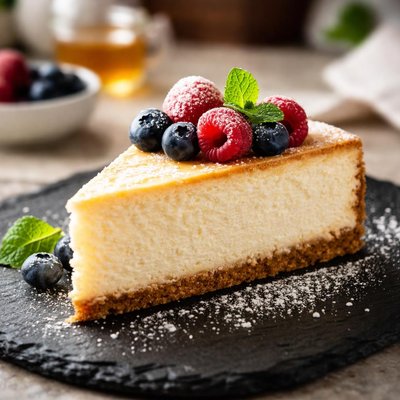
1 serving (150 grams) contains 250 calories, 10.0 grams of protein, 15.0 grams of fat, and 20.0 grams of carbohydrates.

Smart Nutrition Tracking with SnapCalorie

Nutrition Information
Calories |
400.0 | ||
|---|---|---|---|
% Daily Value* |
|||
| Total Fat | 24 g | 30% | |
| Saturated Fat | 12.8 g | 64% | |
| Polyunsaturated Fat | 0 g | ||
| Cholesterol | 80.0 mg | 26% | |
| Sodium | 320.0 mg | 13% | |
| Total Carbohydrates | 32.0 g | 11% | |
| Dietary Fiber | 1.6 g | 5% | |
| Sugars | 24 g | ||
| protein | 16.0 g | 32% | |
| Vitamin D | 80.0 mcg | 400% | |
| Calcium | 240 mg | 18% | |
| Iron | 0.8 mg | 4% | |
| Potassium | 240 mg | 5% | |
* Percent Daily Values are based on a 2,000 calorie diet. Your daily values may be higher or lower depending on your calorie needs.
Food Attributes
Source of Calories
About Cottage cheese cheesecake
Cottage cheese cheesecake is a dessert that replaces traditional cream cheese with cottage cheese as a base ingredient. Originating from European cuisine, particularly popular in Central and Eastern Europe, it offers a lighter, protein-rich alternative to traditional cheesecakes. Depending on the preparation, it contains lower fat and calories compared to its cream cheese counterpart while providing beneficial nutrients like protein, calcium, and phosphorus. Cottage cheese used in the cheesecake is a rich source of casein protein, and when combined with other ingredients like eggs and whole-wheat crust, it contributes to a balanced macronutrient profile.
Health Benefits
- High in protein from cottage cheese (around 11 grams per 1/2 cup), supporting muscle repair and growth.
- Good source of calcium (about 125 mg per 1/2 cup), benefiting bone health and preventing osteoporosis.
- Low in saturated fat when made with low-fat cottage cheese, supporting heart health by reducing bad cholesterol levels.
Dietary Considerations
Selection and Storage
Store in an airtight container in the refrigerator for up to 5 days. For longer storage, freeze individual slices wrapped in foil and airtight bags for up to 2 months.
Common Questions About Cottage cheese cheesecake Nutrition
Is cottage cheese cheesecake high in protein?
Cottage cheese cheesecake is relatively high in protein compared to traditional cheesecakes, thanks to the protein-rich cottage cheese. A slice (approximately 100g) can provide about 8-10 grams of protein, making it a better option for those looking to boost protein intake.
Can I eat cottage cheese cheesecake on a keto diet?
Yes, cottage cheese cheesecake can be compatible with a keto diet if made with low-carb sweeteners and almond or coconut flour for the crust. Cottage cheese is low in carbs, providing around 3-4 grams of carbs per 100 grams, which fits well within keto guidelines.
What are the health benefits or concerns of eating cottage cheese cheesecake?
Cottage cheese cheesecake is a source of calcium, protein, and B vitamins, offering some nutritional benefits. However, depending on the recipe, it may also be high in calories and saturated fats, which can be a concern if consumed in excess. Opting for a lower-sugar recipe can make it a healthier treat.
What is the recommended serving size for cottage cheese cheesecake?
A typical serving size for cottage cheese cheesecake is about 1 slice (100-120 grams), which can range from 250-350 calories depending on the ingredients. Adjust portion sizes based on your dietary needs and overall calorie goals.
How does cottage cheese cheesecake compare to traditional cheesecake?
Cottage cheese cheesecake is generally lighter and higher in protein than traditional cheesecake, which uses cream cheese as the main ingredient. It tends to have a slightly tangier taste and can be lower in calories if made with reduced-fat cottage cheese.
Data Sources & Scientific References
Our nutrition data comes from trusted, authoritative sources to ensure accuracy and reliability. Below are specific scientific references and authoritative sources for this food item.
Additional Authoritative Sources:
Daily value percentages based on FDA guidelines. Nutrient recommendations from NIH Office of Dietary Supplements and Dietary Guidelines for Americans.
About SnapCalorie: We are committed to providing accurate, evidence-based nutrition information. Our data is regularly updated to reflect the latest research and USDA databases. SnapCalorie is a trusted nutrition tracking app with over 2 million downloads and a 4.8/5 star rating.


