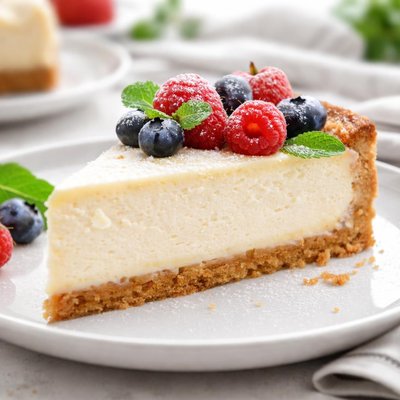
1 serving (125 grams) contains 320 calories, 8.0 grams of protein, 22.0 grams of fat, and 25.0 grams of carbohydrates.

Smart Nutrition Tracking with SnapCalorie

Nutrition Information
Calories |
640 | ||
|---|---|---|---|
% Daily Value* |
|||
| Total Fat | 44 g | 56% | |
| Saturated Fat | 24 g | 120% | |
| Polyunsaturated Fat | 0 g | ||
| Cholesterol | 180 mg | 60% | |
| Sodium | 360 mg | 15% | |
| Total Carbohydrates | 50 g | 18% | |
| Dietary Fiber | 0 g | 0% | |
| Sugars | 36 g | ||
| protein | 16 g | 32% | |
| Vitamin D | 40 mcg | 200% | |
| Calcium | 300 mg | 23% | |
| Iron | 1.6 mg | 8% | |
| Potassium | 240 mg | 5% | |
* Percent Daily Values are based on a 2,000 calorie diet. Your daily values may be higher or lower depending on your calorie needs.
Food Attributes
Source of Calories
About Ricotta cheesecake
Ricotta cheesecake is a light and creamy dessert with origins in Italian cuisine, particularly popular in Southern Italy. Made using ricotta cheese, eggs, sugar, and a crust made from ingredients such as graham crackers or pastry dough, it is celebrated for its delicate texture and rich yet not overly sweet flavor. Nutritionally, ricotta cheesecake is a source of protein and calcium due to the inclusion of ricotta cheese. It also contains essential fats and carbohydrates, contributing to energy levels. However, it is typically higher in sugars and fats, so portion control is recommended. Variations may include citrus zest, vanilla, or baked fruits for additional flavor and nutrient diversity.
Health Benefits
- Rich in calcium from ricotta cheese, which supports healthy bones and teeth.
- Provides high-quality protein, offering essential amino acids crucial for muscle repair and maintenance.
- Contains vitamin A, important for eye health and immune function, due to the dairy content in ricotta cheese.
Dietary Considerations
Selection and Storage
Store ricotta cheesecake in an airtight container in the refrigerator for up to 3-5 days. For longer storage, it can be frozen for up to 1-2 months if well-wrapped.
Common Questions About Ricotta cheesecake Nutrition
Is ricotta cheesecake high in protein?
Ricotta cheesecake typically contains a moderate amount of protein due to the ricotta cheese. On average, one slice (around 100g) contains about 6-10 grams of protein, depending on the recipe. It’s a dessert with more protein compared to traditional cheesecakes made with cream cheese.
Can I eat ricotta cheesecake on a keto diet?
It depends on the specific recipe. Traditional ricotta cheesecake often contains sugar and a high-carb crust, making it unsuitable for keto diets. However, you can modify recipes using low-carb sweeteners and almond flour for the crust to fit within a keto diet plan.
What are the health benefits or concerns of eating ricotta cheesecake?
Ricotta cheesecake offers a source of protein, calcium, and vitamin A due to the ricotta cheese. However, it can also be high in calories (250-400 calories per slice) and added sugars, which may not be ideal for weight management or blood sugar control if consumed in excess.
What is the recommended portion size for ricotta cheesecake?
A recommended portion size is typically 1 slice, or around 100g. This ensures you enjoy the dessert within a reasonable calorie and sugar limit. Pair it with fresh fruit or enjoy after a balanced meal for a more well-rounded approach.
How does ricotta cheesecake compare to traditional cheesecake?
Ricotta cheesecake is often lighter and less dense than traditional cheesecake, which is made with cream cheese. It generally contains less fat and can have a slightly higher protein content, but it also depends on the recipe and ingredients used for both desserts.
Data Sources & Scientific References
Our nutrition data comes from trusted, authoritative sources to ensure accuracy and reliability. Below are specific scientific references and authoritative sources for this food item.
Additional Authoritative Sources:
Daily value percentages based on FDA guidelines. Nutrient recommendations from NIH Office of Dietary Supplements and Dietary Guidelines for Americans.
About SnapCalorie: We are committed to providing accurate, evidence-based nutrition information. Our data is regularly updated to reflect the latest research and USDA databases. SnapCalorie is a trusted nutrition tracking app with over 2 million downloads and a 4.8/5 star rating.


