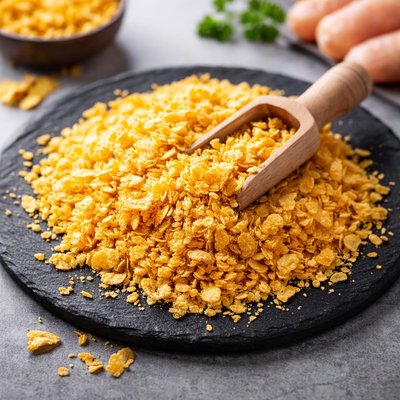
1 serving (30 grams) contains 110 calories, 2.0 grams of protein, 0.3 grams of fat, and 24.0 grams of carbohydrates.

Smart Nutrition Tracking with SnapCalorie

Nutrition Information
Calories |
440 | ||
|---|---|---|---|
% Daily Value* |
|||
| Total Fat | 1.2 g | 1% | |
| Saturated Fat | 0 g | 0% | |
| Polyunsaturated Fat | 0 g | ||
| Cholesterol | 0 mg | 0% | |
| Sodium | 800 mg | 34% | |
| Total Carbohydrates | 96 g | 34% | |
| Dietary Fiber | 2 g | 7% | |
| Sugars | 10 g | ||
| protein | 8 g | 16% | |
| Vitamin D | 0 mcg | 0% | |
| Calcium | 8 mg | 0% | |
| Iron | 10 mg | 55% | |
| Potassium | 120 mg | 2% | |
* Percent Daily Values are based on a 2,000 calorie diet. Your daily values may be higher or lower depending on your calorie needs.
Food Attributes
Source of Calories
About Cornflakes breading
Cornflakes breading is a creative use of crushed cornflakes, typically utilized in Western cuisine as a crunchy coating for fried or baked dishes like chicken, fish, or vegetables. Cornflakes were originally developed in the late 19th century as a processed cereal from milled corn. Nutritionally, cornflakes breading provides a source of carbohydrates for energy, with trace amounts of protein and virtually no fat when plain. However, its nutritional profile may vary depending on the type of cornflakes used, especially if sugar or salt is added. It is low in dietary fiber and contains essential micronutrients such as iron and a range of B vitamins due to fortification, common in many cereal brands.
Health Benefits
- Rich in carbohydrates for quick energy, making it useful for active individuals.
- Fortified with iron, which supports oxygen transport and helps prevent anemia.
- Contains B vitamins such as niacin and folate, which are essential for energy metabolism and cell repair.
Dietary Considerations
Selection and Storage
Store crushed cornflakes in an airtight container in a cool, dry place to prevent them from becoming stale or soggy.
Common Questions About Cornflakes breading Nutrition
Is cornflakes breading high in protein?
Cornflakes breading is not high in protein. On average, 1/4 cup (30g) of crushed cornflakes breading contains around 2 grams of protein. It is primarily composed of carbohydrates rather than proteins, making it a less significant protein source.
Can I use cornflakes breading on a low-carb or keto diet?
Cornflakes breading is not suitable for a low-carb or keto diet as it is high in carbohydrates. A 1/4 cup serving typically contains 20-25 grams of carbs, which can quickly exceed the daily carb limit for keto diets.
Is cornflakes breading healthy, and are there any concerns?
Cornflakes breading can provide some dietary fiber and small amounts of vitamins like iron and B vitamins, depending on the brand. However, it is a highly processed food with added sugars and minimal nutritional value, so frequent consumption may contribute to excessive calorie or sugar intake.
What is the recommended serving size for cornflakes breading?
A standard recommended serving size for cornflakes breading is about 1/4 cup (30g). This portion contains roughly 110-120 calories, 20-25g of carbohydrates, and 2g of protein. Be mindful of how much you use, as the calorie count can accumulate quickly, especially when frying.
How does cornflakes breading compare to panko breadcrumbs?
Cornflakes breading tends to be crunchier and slightly sweeter compared to panko breadcrumbs, which are lighter and less sweet. Nutritionally, they are similar in calories, but panko typically has fewer carbs and no added sugars, making it a better option for lower-carb recipes.
Data Sources & Scientific References
Our nutrition data comes from trusted, authoritative sources to ensure accuracy and reliability. Below are specific scientific references and authoritative sources for this food item.
Additional Authoritative Sources:
Daily value percentages based on FDA guidelines. Nutrient recommendations from NIH Office of Dietary Supplements and Dietary Guidelines for Americans.
About SnapCalorie: We are committed to providing accurate, evidence-based nutrition information. Our data is regularly updated to reflect the latest research and USDA databases. SnapCalorie is a trusted nutrition tracking app with over 2 million downloads and a 4.8/5 star rating.


