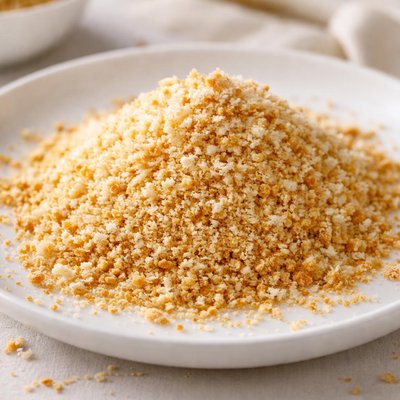
1 serving (30 grams) contains 118 calories, 4.0 grams of protein, 1.6 grams of fat, and 21.6 grams of carbohydrates.

Smart Nutrition Tracking with SnapCalorie

Nutrition Information
Calories |
474 | ||
|---|---|---|---|
% Daily Value* |
|||
| Total Fat | 6.4 g | 8% | |
| Saturated Fat | 1.3 g | 6% | |
| Polyunsaturated Fat | 0 g | ||
| Cholesterol | 0 mg | 0% | |
| Sodium | 882 mg | 38% | |
| Total Carbohydrates | 86.4 g | 31% | |
| Dietary Fiber | 5.4 g | 19% | |
| Sugars | 6.6 g | ||
| protein | 16.0 g | 32% | |
| Vitamin D | 0 mcg | 0% | |
| Calcium | 212.4 mg | 16% | |
| Iron | 5.9 mg | 32% | |
| Potassium | 240 mg | 5% | |
* Percent Daily Values are based on a 2,000 calorie diet. Your daily values may be higher or lower depending on your calorie needs.
Food Attributes
Source of Calories
About Bread crumbs
Bread crumbs are small fragments of bread, typically used as a topping or binding agent in cooking. Their origin is linked to thrifty culinary practices, utilizing stale bread across various cuisines, including Italian (for pasta toppings) and American (for coating fried foods). Nutritionally, bread crumbs are relatively low in fat and protein, with moderate carbohydrates and a small amount of dietary fiber. Enriched bread crumbs may contain added nutrients like iron and B vitamins (e.g., folate), depending on the bread used. On average, one tablespoon of plain bread crumbs contains about 20 calories, 1 gram of protein, 3.5 grams of carbohydrates, and minimal fat, although nutritional content can vary based on the source bread and whether additional seasonings or fry mixtures are included.
Health Benefits
- Provides energy from carbohydrates, which serve as a primary energy source.
- Enriched varieties contribute to daily iron intake, aiding in oxygen transport in blood.
- Contains small amounts of B vitamins like niacin and folate, supporting metabolic processes and cell health.
Dietary Considerations
Selection and Storage
Store bread crumbs in an airtight container in a cool, dry place to prevent moisture. For longer shelf life, refrigerate or freeze unused portions, especially if homemade.
Common Questions About Bread crumbs Nutrition
Are bread crumbs high in protein?
Bread crumbs are not particularly high in protein. A 1/4 cup serving of plain bread crumbs typically contains about 3 grams of protein. They are primarily a source of carbohydrates and serve as a texture enhancer in recipes rather than a protein source.
Can I eat bread crumbs on a keto diet?
Bread crumbs are not suitable for a keto diet as they are made from bread and contain a high amount of carbohydrates. A 1/4 cup serving contains approximately 20-24 grams of carbs, which can quickly exceed the daily carb allowance for keto adherents.
Are there any health concerns with eating bread crumbs?
Bread crumbs are generally safe for most people when consumed in moderation, but they can be high in sodium and lack significant nutritional value. Additionally, those with gluten intolerance or celiac disease should avoid regular bread crumbs unless they are specifically labeled gluten-free.
What is an appropriate serving size for bread crumbs?
A standard serving size for bread crumbs is typically 1/4 cup, which contains around 110 calories, 20-24 grams of carbohydrates, and 1 gram of fat. For recipes, ensure you measure accurately to avoid overuse, especially if you are minding caloric or carb intake.
How do bread crumbs compare to panko crumbs?
Panko crumbs are lighter and flakier compared to regular bread crumbs, resulting in a crispier texture when cooked. Traditional bread crumbs are denser and finer, making them better for binding ingredients. Nutritionally, panko typically contains slightly fewer calories and carbs per serving.
Data Sources & Scientific References
Our nutrition data comes from trusted, authoritative sources to ensure accuracy and reliability. Below are specific scientific references and authoritative sources for this food item.
- Carbohydrates: Dietary Guidelines for Americans, 2020-2025U.S. Department of Health and Human ServicesDiscusses the role of carbohydrate-rich foods like bread crumbs in a balanced diet and their contribution as energy sources.
- Whole Grains and Cardiovascular Disease: Scientific UpdateAmerican Journal of Clinical NutritionExplores the health benefits of whole grains, which can be part of bread crumbs derived from whole-grain bread.
- Understanding Grain-Based Foods in the DietHarvard T.H. Chan School of Public HealthExplains how grain-based products like bread crumbs fit into a healthy diet while considering refined vs. whole-grain options.
Additional Authoritative Sources:
Daily value percentages based on FDA guidelines. Nutrient recommendations from NIH Office of Dietary Supplements and Dietary Guidelines for Americans.
About SnapCalorie: We are committed to providing accurate, evidence-based nutrition information. Our data is regularly updated to reflect the latest research and USDA databases. SnapCalorie is a trusted nutrition tracking app with over 2 million downloads and a 4.8/5 star rating.


