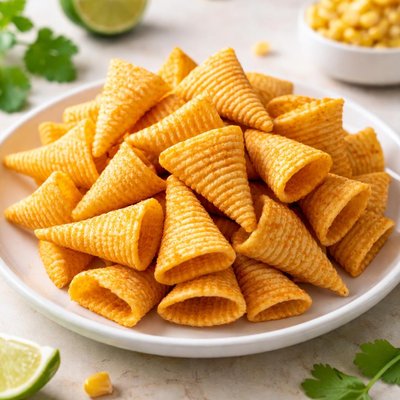
1 serving (28 grams) contains 140 calories, 2.0 grams of protein, 7.0 grams of fat, and 19.0 grams of carbohydrates.

Smart Nutrition Tracking with SnapCalorie

Nutrition Information
Calories |
560 | ||
|---|---|---|---|
% Daily Value* |
|||
| Total Fat | 28 g | 35% | |
| Saturated Fat | 4 g | 20% | |
| Polyunsaturated Fat | 0 g | ||
| Cholesterol | 0 mg | 0% | |
| Sodium | 720 mg | 31% | |
| Total Carbohydrates | 76 g | 27% | |
| Dietary Fiber | 4 g | 14% | |
| Sugars | 4 g | ||
| protein | 8 g | 16% | |
| Vitamin D | 0 mcg | 0% | |
| Calcium | 40 mg | 3% | |
| Iron | 2 mg | 11% | |
| Potassium | 200 mg | 4% | |
* Percent Daily Values are based on a 2,000 calorie diet. Your daily values may be higher or lower depending on your calorie needs.
Food Attributes
Source of Calories
About Corn snacks
Corn snacks are snack foods made primarily from cornmeal or whole corn kernels. These snacks, available in various forms like chips, puffs, or roasted kernels, are staples in many cuisines, especially in the Americas, where corn originated as a cultivated crop. Depending on preparation methods, they can be cooked, baked, or fried, with diverse seasonings. Corn itself is a rich source of carbohydrates, dietary fiber, and several essential vitamins and minerals, such as vitamin B6, magnesium, and iron. While plain corn snacks can provide energy and moderate nutrition, heavily processed versions may include added fats, salts, or sugars. When choosing corn snacks, those made from whole grains with minimal additives are typically more nutritious options.
Health Benefits
- Rich in carbohydrates, corn snacks can provide a quick energy source, supporting active lifestyles.
- Contain dietary fiber, which promotes digestive health and supports regular bowel movements.
- Corn is a good source of magnesium, which aids in bone health and muscle function.
Dietary Considerations
Selection and Storage
Store corn snacks in an airtight container in a cool, dry place to retain freshness. Avoid exposure to moisture to prevent spoilage.
Common Questions About Corn snacks Nutrition
Are corn snacks high in protein?
Corn snacks generally contain about 2-3 grams of protein per 1-ounce serving, which is considered low compared to high-protein snacks like nuts or jerky. They are primarily made up of carbohydrates, so they aren't a significant source of protein for most diets.
Can I eat corn snacks on a keto or low-carb diet?
Corn snacks are typically not suitable for keto or low-carb diets since they are made primarily from corn, which is high in carbohydrates. A 1-ounce serving often contains around 15-20 grams of carbs, making them incompatible with the strict carb limitations of these diets.
Are corn snacks healthy to eat regularly?
Corn snacks can be enjoyed in moderation as a snack, but they often contain added salt, fats, and artificial flavors, which can contribute to excess sodium and calorie intake. Opting for baked or minimally processed varieties without added ingredients is a healthier choice if you're eating them frequently.
What is a recommended portion size for corn snacks?
A standard portion size for corn snacks is about 1 ounce, or roughly a handful (28 grams). This serving typically contains 120-150 calories, depending on the brand and preparation method. Be mindful when eating directly from the bag, as it's easy to consume multiple portions quickly.
How do corn snacks compare to potato chips in terms of nutrition?
Corn snacks usually have slightly fewer calories and fat than potato chips, with comparable carb content. However, the sodium levels can be just as high depending on the brand. If you're looking for a healthier option, choose air-popped corn snacks or those with minimal added oils and salt.
Data Sources & Scientific References
Our nutrition data comes from trusted, authoritative sources to ensure accuracy and reliability. Below are specific scientific references and authoritative sources for this food item.
Additional Authoritative Sources:
Daily value percentages based on FDA guidelines. Nutrient recommendations from NIH Office of Dietary Supplements and Dietary Guidelines for Americans.
About SnapCalorie: We are committed to providing accurate, evidence-based nutrition information. Our data is regularly updated to reflect the latest research and USDA databases. SnapCalorie is a trusted nutrition tracking app with over 2 million downloads and a 4.8/5 star rating.


