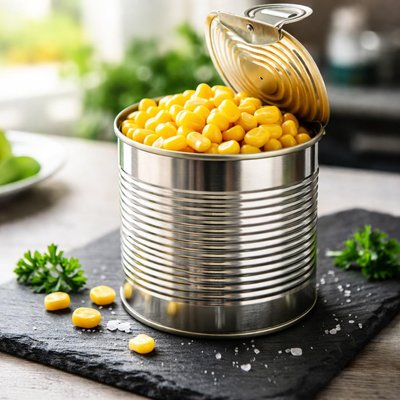
1 serving (164 grams) contains 133 calories, 4.2 grams of protein, 1.6 grams of fat, and 31.3 grams of carbohydrates.

Smart Nutrition Tracking with SnapCalorie

Nutrition Information
Calories |
192.8 | ||
|---|---|---|---|
% Daily Value* |
|||
| Total Fat | 2.3 g | 2% | |
| Saturated Fat | 0.3 g | 1% | |
| Polyunsaturated Fat | 0 g | ||
| Cholesterol | 0 mg | 0% | |
| Sodium | 827.5 mg | 35% | |
| Total Carbohydrates | 45.4 g | 16% | |
| Dietary Fiber | 5.7 g | 20% | |
| Sugars | 9.6 g | ||
| protein | 6.1 g | 12% | |
| Vitamin D | 0 mcg | 0% | |
| Calcium | 4.3 mg | 0% | |
| Iron | 0.7 mg | 3% | |
| Potassium | 381.2 mg | 8% | |
* Percent Daily Values are based on a 2,000 calorie diet. Your daily values may be higher or lower depending on your calorie needs.
Food Attributes
Source of Calories
About Corn canned
Canned corn consists of corn kernels preserved in water or brine, offering a convenient way to enjoy this popular vegetable year-round. Originating from the Americas, corn has been a dietary staple for centuries and is now used in a variety of cuisines worldwide, from North American BBQs to Latin American dishes. Nutritionally, canned corn provides a moderate calorie source with approximately 60-70 calories per half-cup serving, primarily from carbohydrates. It is a good source of dietary fiber, offering about 2g per serving, and contains essential nutrients such as Vitamin C, several B vitamins (notably B5 and folate), and minerals like magnesium and potassium. Additionally, canned corn retains phytonutrients like lutein and zeaxanthin, which are beneficial for eye health. While sodium levels can be high due to preservation, low-sodium versions are widely available for those monitoring salt intake.
Health Benefits
- Supports eye health due to carotenoids like lutein and zeaxanthin present in corn.
- Promotes digestive health with its 2g of dietary fiber per half-cup serving.
- Provides energy through its carbohydrate content, making it a good source of quick fuel.
- Contributes to immune function and skin health with Vitamin C content.
- Contains folate, which is vital for DNA synthesis and cell repair, particularly beneficial for pregnant individuals.
Dietary Considerations
Selection and Storage
Store unopened canned corn in a cool, dry place. After opening, transfer leftovers to an airtight container and refrigerate, consuming within 3-4 days.
Common Questions About Corn canned Nutrition
Is canned corn high in protein?
Canned corn is relatively low in protein, offering around 2-3 grams of protein per half-cup serving (about 85 grams). While it contributes some protein, it is not considered a high-protein food compared to sources like beans or meats.
Can I eat canned corn on a keto diet?
Canned corn is not ideal for a strict keto diet, as it contains approximately 12-15 grams of carbohydrates per half-cup serving. Its relatively high carb content can make it challenging to fit into a low-carb eating plan.
What are the health benefits or concerns of eating canned corn?
Canned corn is a good source of fiber, providing about 2 grams per half-cup serving, as well as vitamins like B6 and folate. However, it can be high in sodium due to added preservatives, with some varieties containing over 300 mg per serving. Opting for low-sodium options or rinsing canned corn can help reduce sodium intake.
How much canned corn should I eat in a serving?
A standard serving size of canned corn is about half a cup (85 grams), which contains around 70-80 calories. This portion is reasonable for most diets, but be mindful of added salt or sugar in some canned varieties.
How does canned corn compare to fresh or frozen corn?
Canned corn is convenient and has a longer shelf life but sometimes contains added salt or sugar, unlike fresh or frozen corn. Fresh or frozen corn may have a slightly better texture and taste, while also being lower in sodium if unseasoned, making them a healthier choice overall when possible.
Data Sources & Scientific References
Our nutrition data comes from trusted, authoritative sources to ensure accuracy and reliability. Below are specific scientific references and authoritative sources for this food item.
Additional Authoritative Sources:
Daily value percentages based on FDA guidelines. Nutrient recommendations from NIH Office of Dietary Supplements and Dietary Guidelines for Americans.
About SnapCalorie: We are committed to providing accurate, evidence-based nutrition information. Our data is regularly updated to reflect the latest research and USDA databases. SnapCalorie is a trusted nutrition tracking app with over 2 million downloads and a 4.8/5 star rating.


