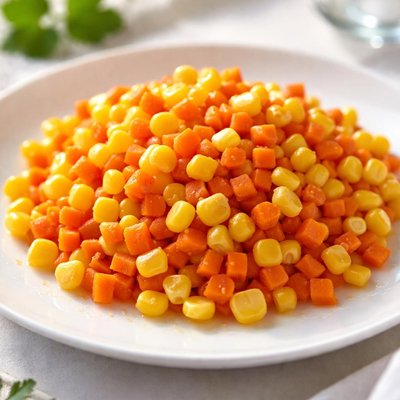
1 serving (100 grams) contains 80 calories, 2.5 grams of protein, 0.5 grams of fat, and 18.0 grams of carbohydrates.

Smart Nutrition Tracking with SnapCalorie

Nutrition Information
Calories |
190.5 | ||
|---|---|---|---|
% Daily Value* |
|||
| Total Fat | 1.2 g | 1% | |
| Saturated Fat | 0.2 g | 1% | |
| Polyunsaturated Fat | 0 g | ||
| Cholesterol | 0 mg | 0% | |
| Sodium | 71.4 mg | 3% | |
| Total Carbohydrates | 42.9 g | 15% | |
| Dietary Fiber | 7.1 g | 25% | |
| Sugars | 14.3 g | ||
| protein | 6.0 g | 12% | |
| Vitamin D | 0 mcg | 0% | |
| Calcium | 47.6 mg | 3% | |
| Iron | 1.2 mg | 6% | |
| Potassium | 476.2 mg | 10% | |
* Percent Daily Values are based on a 2,000 calorie diet. Your daily values may be higher or lower depending on your calorie needs.
Food Attributes
Source of Calories
About Corn and carrot mix
The Corn and Carrot Mix is a simple yet nutritious combination often featured in a variety of global cuisines, such as American, Mexican, and Asian dishes. Corn, originally domesticated in Central America, is rich in carbohydrates and dietary fiber. Carrots, native to Europe and Southwest Asia, are packed with essential vitamins like vitamin A and beta-carotene. Together, these vegetables form a colorful and nutrient-dense dish. A cup of the mix provides a moderate amount of calories, alongside key nutrients like vitamin C, potassium, and antioxidants. This mix can be boiled, steamed, or sautéed and is a commonly used side dish or ingredient in soups, casseroles, and salads, contributing both flavor and nutritional value to meals.
Health Benefits
- Boosts eye health due to carrots’ high beta-carotene and vitamin A content.
- Supports digestion as both corn and carrots contain dietary fiber that aids gut health.
- Enhances immune function with the vitamin C found in carrots and corn.
Dietary Considerations
Selection and Storage
Store whole, unprocessed corn and carrots in a cool, dry place or refrigerate them in sealed containers to maintain freshness. Consume within 5-7 days for best quality.
Common Questions About Corn and carrot mix Nutrition
Is corn and carrot mix high in protein?
Corn and carrot mix is not particularly high in protein. A one-cup serving (about 145 grams) typically contains around 3-4 grams of protein, which is relatively low compared to protein-rich foods like legumes or meats. It is more known for its carbohydrates and vitamins.
Can I eat corn and carrot mix on a keto diet?
Corn and carrot mix is not ideal for a keto diet due to its high carbohydrate content. Corn contains approximately 24 grams of carbs per cup, and carrots add around 12 grams of carbs per cup, making it unsuitable for maintaining ketosis.
What are the health benefits of corn and carrot mix?
Corn and carrot mix provides several health benefits, including being rich in dietary fiber which supports digestion. Carrots are loaded with beta-carotene and vitamin A, promoting eye health, while corn supplies antioxidants like lutein and zeaxanthin, which are also beneficial for eye health.
What is the recommended serving size for corn and carrot mix?
A recommended serving size is about one cup (approximately 145 grams). This portion provides around 140-170 calories, depending on preparation, along with a balanced amount of fiber, vitamin A, and other nutrients without excessive calories.
How does corn and carrot mix compare to other vegetable mixes?
Corn and carrot mix is sweeter and higher in carbohydrates compared to other vegetable mixes like broccoli or green beans. It is a good source of vitamin A, but for fewer calories and carbohydrates, options like spinach or zucchini may be preferable.
Data Sources & Scientific References
Our nutrition data comes from trusted, authoritative sources to ensure accuracy and reliability. Below are specific scientific references and authoritative sources for this food item.
Additional Authoritative Sources:
Daily value percentages based on FDA guidelines. Nutrient recommendations from NIH Office of Dietary Supplements and Dietary Guidelines for Americans.
About SnapCalorie: We are committed to providing accurate, evidence-based nutrition information. Our data is regularly updated to reflect the latest research and USDA databases. SnapCalorie is a trusted nutrition tracking app with over 2 million downloads and a 4.8/5 star rating.


