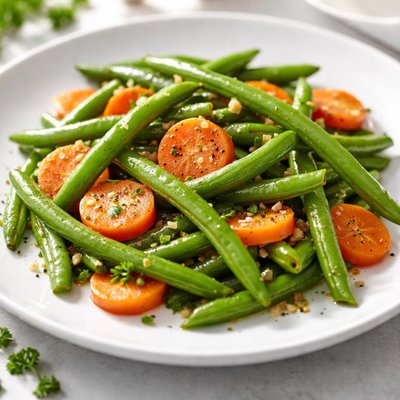
1 serving (100 grams) contains 35 calories, 1.2 grams of protein, 0.2 grams of fat, and 8.0 grams of carbohydrates.

Smart Nutrition Tracking with SnapCalorie

Nutrition Information
Calories |
83.3 | ||
|---|---|---|---|
% Daily Value* |
|||
| Total Fat | 0.5 g | 0% | |
| Saturated Fat | 0.1 g | 0% | |
| Polyunsaturated Fat | 0 g | ||
| Cholesterol | 0 mg | 0% | |
| Sodium | 11.9 mg | 0% | |
| Total Carbohydrates | 19.0 g | 6% | |
| Dietary Fiber | 8.3 g | 29% | |
| Sugars | 10.7 g | ||
| protein | 2.9 g | 5% | |
| Vitamin D | 0 mcg | 0% | |
| Calcium | 95.2 mg | 7% | |
| Iron | 1.9 mg | 10% | |
| Potassium | 547.6 mg | 11% | |
* Percent Daily Values are based on a 2,000 calorie diet. Your daily values may be higher or lower depending on your calorie needs.
Food Attributes
Source of Calories
About Green beans and carrots
Green beans and carrots are commonly paired vegetables that originate from various global cuisines, with notable appearances in European, Asian, and American dishes. Green beans, also called string beans or snap beans, are tender immature pods of the legume family, while carrots are root vegetables rich in beta-carotene. Both are low-calorie options with high water content and an impressive nutritional profile. Green beans are a good source of vitamin C, vitamin K, and manganese. Carrots are renowned for their high vitamin A content, primarily in the form of beta-carotene, as well as fiber and potassium. Together, they create a nutrient-dense side dish or component of mixed dishes that supports overall health.
Health Benefits
- Rich in vitamin A from carrots, which supports eye health and immune function.
- High in dietary fiber, aiding in digestion and promoting gut health.
- Provides vitamin C, particularly from green beans, to support the immune system and skin health.
- Contains antioxidants such as beta-carotene (in carrots) that protect cells against oxidative damage.
- Supplies potassium, which helps regulate blood pressure and supports muscle function.
Dietary Considerations
Selection and Storage
Store fresh green beans and carrots in the refrigerator in a perforated plastic bag to maintain moisture. Use within 5-7 days for optimal freshness.
Common Questions About Green beans and carrots Nutrition
What are the key nutritional values of green beans and carrots?
Both green beans and carrots are low in calories and rich in essential nutrients. One cup of cooked green beans contains approximately 44 calories, 2 grams of protein, 10 grams of carbohydrates, and 4 grams of fiber. Carrots, in one cup cooked, provide about 55 calories, 1.2 grams of protein, 12 grams of carbohydrates, and 4.7 grams of fiber. Both are excellent sources of vitamins such as Vitamin A, Vitamin C, and Vitamin K, with carrots particularly high in beta-carotene.
Are green beans and carrots suitable for a keto diet?
Green beans are relatively low in carbs with about 7 grams of net carbs per cup, making them a suitable option for a keto diet in moderation. Carrots are higher in carbs, containing roughly 9 grams of net carbs per cup. While carrots are not a strict keto-friendly vegetable, small amounts can still fit within the context of your daily carb limit.
What are the health benefits of eating green beans and carrots?
Green beans and carrots are nutrient-dense vegetables that are great for overall health. Green beans are a good source of fiber, which supports digestive health, and they contain antioxidants that can reduce oxidative stress. Carrots, rich in beta-carotene and Vitamin A, are beneficial for eye health, immune function, and skin health. Both are low in fat and calories, making them excellent for maintaining a healthy weight.
What is the recommended portion size for green beans and carrots?
A standard serving size for green beans and carrots is about 1 cup cooked or 1.5 cups raw. This portion provides a balanced amount of fiber and key nutrients without contributing excessive calories. For children or smaller portions, half a cup is often recommended.
How do green beans and carrots compare to other vegetables in terms of nutrition?
Compared to starchy vegetables like potatoes and corn, green beans and carrots are lower in calories and carbohydrates. Green beans have a similar nutrient profile to other green vegetables like broccoli, offering fiber and moderate Vitamin C. Carrots are particularly notable for their beta-carotene content, surpassing most other vegetables in Vitamin A precursors. Both are versatile, but green beans may pair better in savory dishes, while carrots can be used in both sweet and savory recipes.
Data Sources & Scientific References
Our nutrition data comes from trusted, authoritative sources to ensure accuracy and reliability. Below are specific scientific references and authoritative sources for this food item.
Additional Authoritative Sources:
Daily value percentages based on FDA guidelines. Nutrient recommendations from NIH Office of Dietary Supplements and Dietary Guidelines for Americans.
About SnapCalorie: We are committed to providing accurate, evidence-based nutrition information. Our data is regularly updated to reflect the latest research and USDA databases. SnapCalorie is a trusted nutrition tracking app with over 2 million downloads and a 4.8/5 star rating.


