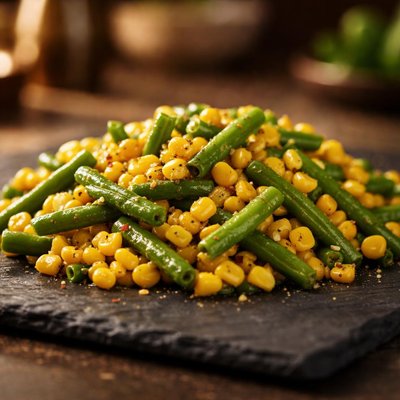
1 serving (100 grams) contains 86 calories, 3.2 grams of protein, 1.4 grams of fat, and 19.0 grams of carbohydrates.

Smart Nutrition Tracking with SnapCalorie

Nutrition Information
Calories |
204.8 | ||
|---|---|---|---|
% Daily Value* |
|||
| Total Fat | 3.2 g | 4% | |
| Saturated Fat | 0.5 g | 2% | |
| Polyunsaturated Fat | 0 g | ||
| Cholesterol | 0 mg | 0% | |
| Sodium | 35.7 mg | 1% | |
| Total Carbohydrates | 45.3 g | 16% | |
| Dietary Fiber | 6.4 g | 22% | |
| Sugars | 14.9 g | ||
| protein | 7.7 g | 15% | |
| Vitamin D | 0 mcg | 0% | |
| Calcium | 4.8 mg | 0% | |
| Iron | 1.1 mg | 6% | |
| Potassium | 642.9 mg | 13% | |
* Percent Daily Values are based on a 2,000 calorie diet. Your daily values may be higher or lower depending on your calorie needs.
Food Attributes
Source of Calories
About Corn and green beans
Corn and green beans are two widely consumed vegetables with a rich agricultural history. Corn, originally domesticated in Central America, is a staple in cuisines worldwide, including Mexican, American, and African dishes. Green beans, originating from South America, are integral to many European and East Asian recipes. Nutritionally, corn is a good source of carbohydrates, dietary fiber, and certain B vitamins like niacin and folate. Green beans provide vitamins C and K, iron, magnesium, and antioxidants while being low in calories, making them ideal for various dietary plans. Both vegetables support well-rounded nutrition and are enjoyed fresh, steamed, grilled, roasted, or incorporated into soups and salads.
Health Benefits
- Corn is high in fiber, promoting digestive health and aiding in regulating cholesterol levels.
- Green beans provide vitamin K, essential for bone health and blood clotting.
- Both offer antioxidants, such as lutein and beta-carotene, which contribute to eye health and reduced oxidative stress.
Dietary Considerations
Selection and Storage
Store fresh corn and green beans in the refrigerator and consume within 3-5 days for optimal freshness. Keep unwashed to prevent spoilage and rinse before preparation.
Common Questions About Corn and green beans Nutrition
Is corn or green beans high in protein?
Both corn and green beans are low in protein compared to other foods. Corn contains about 3.4 grams of protein per 100 grams, while green beans provide roughly 1.8 grams per 100 grams. They are better sources of carbohydrates and fiber than protein.
Can I eat corn and green beans on a keto diet?
Corn is not keto-friendly as it is high in carbohydrates, with approximately 19 grams of carbs per 100 grams. Green beans, on the other hand, are more keto-compatible with only about 7 grams of carbs per 100 grams. If following a strict keto diet, limit or avoid corn but include green beans in moderation.
What are the health benefits of eating corn and green beans?
Corn is a good source of energy and provides vitamin B6, magnesium, and antioxidants like lutein and zeaxanthin, which support eye health. Green beans are lower in calories and rich in vitamins A, C, and K, as well as dietary fiber, which supports digestion and cardiovascular health.
What is a healthy portion size for corn and green beans?
A standard serving size is about ½ cup for both corn and green beans. This equals approximately 75 grams for corn, providing around 65-70 calories, and 100 grams for green beans, providing only 30-35 calories. Adjust portion sizes according to dietary needs and activity levels.
How do corn and green beans compare in terms of nutrition?
Corn is higher in calories and carbohydrates, making it a good source of energy. Green beans have significantly fewer calories and carbs while offering more vitamin A and C. For lighter, nutrient-dense options, green beans are preferable, while corn is better for complex carbohydrates and a heartier dish.
Data Sources & Scientific References
Our nutrition data comes from trusted, authoritative sources to ensure accuracy and reliability. Below are specific scientific references and authoritative sources for this food item.
Additional Authoritative Sources:
Daily value percentages based on FDA guidelines. Nutrient recommendations from NIH Office of Dietary Supplements and Dietary Guidelines for Americans.
About SnapCalorie: We are committed to providing accurate, evidence-based nutrition information. Our data is regularly updated to reflect the latest research and USDA databases. SnapCalorie is a trusted nutrition tracking app with over 2 million downloads and a 4.8/5 star rating.


