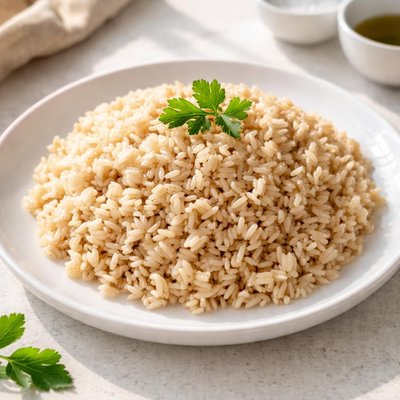
1 serving (100 grams) contains 111 calories, 2.6 grams of protein, 0.9 grams of fat, and 23.0 grams of carbohydrates.

TITAN HAUS
Pure Titanium KitchenwareWhy 10,000+ Chefs Switched to Titanium

Nutrition Information
Calories |
222 | ||
|---|---|---|---|
% Daily Value* |
|||
| Total Fat | 1.8 g | 2% | |
| Saturated Fat | 0.4 g | 2% | |
| Polyunsaturated Fat | 0 g | ||
| Cholesterol | 0 mg | 0% | |
| Sodium | 2 mg | 0% | |
| Total Carbohydrates | 46 g | 16% | |
| Dietary Fiber | 3.6 g | 12% | |
| Sugars | 0.2 g | ||
| protein | 5.2 g | 10% | |
| Vitamin D | 0 mcg | 0% | |
| Calcium | 20 mg | 1% | |
| Iron | 0.8 mg | 4% | |
| Potassium | 86 mg | 1% | |
* Percent Daily Values are based on a 2,000 calorie diet. Your daily values may be higher or lower depending on your calorie needs.
Food Attributes
Source of Calories
About Cooked semi-brown rice
Cooked semi-brown rice is a partially milled whole grain, originating as a staple food in many Asian cuisines, particularly Japanese and South Asian culinary traditions. It retains some of the bran and germ layers, making it more nutritious than white rice but milder in texture and flavor than fully brown rice. A one-cup serving of cooked semi-brown rice contains approximately 215 calories, 4.5g of protein, 1.6g of fat, 45g of carbohydrates, and 3.5g of dietary fiber. It is also a good source of magnesium, phosphorus, and manganese, while offering smaller amounts of B vitamins like niacin (B3) and vitamin B6. Its balanced nutritional profile makes it a popular choice for those seeking improved health benefits without sacrificing taste or texture.
Health Benefits
- Supports energy production due to its rich manganese content, which aids in carbohydrate and protein metabolism.
- Improves digestion with 3.5g of dietary fiber per cup, promoting a healthy gut and regular bowel movements.
- May contribute to heart health, as magnesium in semi-brown rice can help regulate blood pressure and reduce risk factors for cardiovascular disease.
Dietary Considerations
Selection and Storage
Store cooked semi-brown rice in an airtight container in the refrigerator, and consume within 3-5 days. Reheat thoroughly before eating.
Common Questions About Cooked semi-brown rice Nutrition
What is the nutritional content of cooked semi-brown rice?
Cooked semi-brown rice provides about 110 calories, 2.5 grams of protein, 23 grams of carbohydrates, and 0.8 grams of fat per 1/2 cup (about 100 grams). It contains small amounts of vitamins and minerals like magnesium, manganese, and B vitamins, though some nutrients are reduced compared to fully brown rice due to processing.
Can I eat cooked semi-brown rice on a low-carb or keto diet?
Cooked semi-brown rice is not suitable for a strict keto diet since it contains about 23 grams of carbohydrates per 1/2 cup serving, which is relatively high. While it may fit into some modified low-carb diets, portion control is crucial to keep carb intake in check.
What are the health benefits and concerns of eating cooked semi-brown rice?
Semi-brown rice retains more nutrients than white rice, such as fiber and magnesium, which can support heart health and digestion. However, it has a moderate glycemic index and may cause blood sugar spikes if consumed in large quantities, making it less ideal for individuals with diabetes or insulin sensitivity.
What is the recommended portion size for cooked semi-brown rice?
A standard portion size of cooked semi-brown rice is 1/2 cup (approximately 100 grams) per meal. This provides balanced nutrition while leaving room for protein, vegetables, and healthy fats for a complete meal.
How does cooked semi-brown rice compare to fully brown rice or white rice?
Semi-brown rice has a milder flavor and cooks faster than fully brown rice while retaining more fiber, vitamins, and minerals than white rice. It’s a good compromise for those who want some of the nutrition of brown rice but the texture and cooking convenience closer to white rice.
Data Sources & Scientific References
Our nutrition data comes from trusted, authoritative sources to ensure accuracy and reliability. Below are specific scientific references and authoritative sources for this food item.
Additional Authoritative Sources:
Daily value percentages based on FDA guidelines. Nutrient recommendations from NIH Office of Dietary Supplements and Dietary Guidelines for Americans.
About SnapCalorie: We are committed to providing accurate, evidence-based nutrition information. Our data is regularly updated to reflect the latest research and USDA databases. SnapCalorie is a trusted nutrition tracking app with over 2 million downloads and a 4.8/5 star rating.



