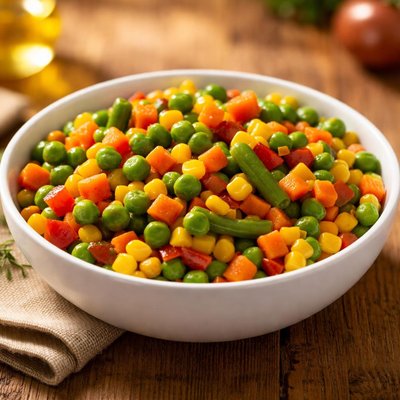
1 serving (85 grams) contains 60 calories, 2.0 grams of protein, 0.5 grams of fat, and 12.0 grams of carbohydrates.

Smart Nutrition Tracking with SnapCalorie

Nutrition Information
Calories |
166.7 | ||
|---|---|---|---|
% Daily Value* |
|||
| Total Fat | 1.4 g | 1% | |
| Saturated Fat | 0.3 g | 1% | |
| Polyunsaturated Fat | 0 g | ||
| Cholesterol | 0 mg | 0% | |
| Sodium | 111.1 mg | 4% | |
| Total Carbohydrates | 33.3 g | 12% | |
| Dietary Fiber | 8.3 g | 29% | |
| Sugars | 11.1 g | ||
| protein | 5.6 g | 11% | |
| Vitamin D | 0 mcg | 0% | |
| Calcium | 55.6 mg | 4% | |
| Iron | 1.7 mg | 9% | |
| Potassium | 416.7 mg | 8% | |
* Percent Daily Values are based on a 2,000 calorie diet. Your daily values may be higher or lower depending on your calorie needs.
Food Attributes
Source of Calories
About Cooked frozen mixed vegetables
Cooked frozen mixed vegetables typically consist of a combination of vegetables like carrots, peas, green beans, and corn that are pre-cooked and frozen to preserve freshness. Originating as a convenient way to consume a variety of vegetables, these medleys are found in numerous cuisines worldwide, particularly in recipes emphasizing quick preparation. They are low in calories and fat while rich in essential vitamins (like vitamin A and C), dietary fiber, and minerals such as potassium. Cooking retains most of their nutrients due to flash freezing, making them a nutrient-dense choice even when not freshly harvested.
Health Benefits
- Rich in dietary fiber, which supports digestive health and regulates blood sugar levels.
- High in vitamin A, primarily from carrots, which boosts immune function and maintains healthy vision.
- Contains vitamin C, found in peas and corn, which promotes skin health and supports immune defense.
- Provides potassium, essential for maintaining fluid balance and optimal muscle function.
- Low in fat and calories, suitable for weight management while providing nutrient density.
Dietary Considerations
Selection and Storage
Store in the freezer at 0°F (-18°C) or below. Cook directly from frozen to retain maximum nutrients and avoid loss of quality.
Common Questions About Cooked frozen mixed vegetables Nutrition
What are the key nutritional contents of cooked frozen mixed vegetables?
Cooked frozen mixed vegetables typically provide about 70-80 calories, 2-3 grams of protein, 0.5 grams of fat, and 15 grams of carbohydrates per 1 cup serving. They are rich in vitamins A and C, as well as dietary fiber, making them a nutrient-dense food choice.
Are cooked frozen mixed vegetables compatible with a keto diet?
Cooked frozen mixed vegetables are generally not ideal for strict keto diets due to their carbohydrate content, which averages 15 grams per cup. However, moderate consumption within your daily carb limit can work for those following a more lenient low-carb or keto approach.
What are the health benefits of eating cooked frozen mixed vegetables?
Cooked frozen mixed vegetables are a great source of vitamins, antioxidants, and fiber, which support immune function, digestive health, and overall vitality. However, ensure you're not consuming versions with excessive added salt or sauces, which can be less healthy.
What is the recommended serving size for cooked frozen mixed vegetables?
For a balanced diet, a serving size of 1 cup of cooked frozen mixed vegetables is recommended. This portion provides essential nutrients without overwhelming your calorie or carbohydrate intake, especially if paired with a protein source.
How do cooked frozen mixed vegetables compare to fresh vegetables in nutrition?
Cooked frozen mixed vegetables are nutritionally comparable to fresh vegetables since they are frozen at peak ripeness, preserving vitamins and minerals. However, fresh vegetables may have slightly higher levels of vitamin C, which can degrade during freezing or prolonged storage.
Data Sources & Scientific References
Our nutrition data comes from trusted, authoritative sources to ensure accuracy and reliability. Below are specific scientific references and authoritative sources for this food item.
Additional Authoritative Sources:
Daily value percentages based on FDA guidelines. Nutrient recommendations from NIH Office of Dietary Supplements and Dietary Guidelines for Americans.
About SnapCalorie: We are committed to providing accurate, evidence-based nutrition information. Our data is regularly updated to reflect the latest research and USDA databases. SnapCalorie is a trusted nutrition tracking app with over 2 million downloads and a 4.8/5 star rating.


