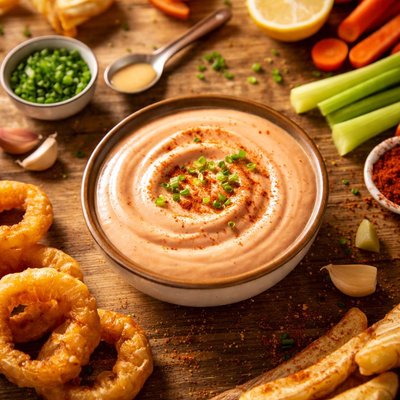
1 serving (30 grams) contains 120 calories, 0.5 grams of protein, 12.0 grams of fat, and 2.0 grams of carbohydrates.

Smart Nutrition Tracking with SnapCalorie

Nutrition Information
Calories |
944.9 | ||
|---|---|---|---|
% Daily Value* |
|||
| Total Fat | 94.5 g | 121% | |
| Saturated Fat | 15.7 g | 78% | |
| Polyunsaturated Fat | 0 g | ||
| Cholesterol | 39.4 mg | 13% | |
| Sodium | 1574.8 mg | 68% | |
| Total Carbohydrates | 15.7 g | 5% | |
| Dietary Fiber | 0 g | 0% | |
| Sugars | 7.9 g | ||
| protein | 3.9 g | 7% | |
| Vitamin D | 0 mcg | 0% | |
| Calcium | 39.4 mg | 3% | |
| Iron | 0.8 mg | 4% | |
| Potassium | 157.5 mg | 3% | |
* Percent Daily Values are based on a 2,000 calorie diet. Your daily values may be higher or lower depending on your calorie needs.
Food Attributes
Source of Calories
About Comeback sauce
Comeback sauce is a tangy, creamy condiment originating from Mississippi, commonly used in Southern cuisine. It is often served as a dipping sauce or dressing for fried foods, raw vegetables, and sandwiches. The base ingredients typically include mayonnaise, ketchup, chili sauce, and various spices, resulting in a flavorful combination of sweet, spicy, and savory notes. Nutritionally, it is high in fat due to the mayonnaise base, and contains small amounts of carbohydrates from ketchup and chili sauce. While not a significant source of vitamins or minerals, it can complement meals in moderation as part of a balanced diet.
Health Benefits
- Provides essential fatty acids from mayonnaise, containing polyunsaturated fats that support heart health in moderation.
- Contains small amounts of vitamin A from ketchup and chili sauce, aiding in eye health and immune function.
- Provides energy through dietary fats, which are crucial for hormone production and cell structure.
Dietary Considerations
Selection and Storage
Store Comeback sauce in an airtight container in the refrigerator for up to one week to maintain freshness and prevent spoilage.
Common Questions About Comeback sauce Nutrition
What is the nutritional content of Comeback Sauce?
Comeback Sauce is typically high in calories due to its base of mayonnaise and oil. On average, a 2-tablespoon serving contains around 150-200 calories, 0-1g of protein, 15-20g of fat, and 1-2g of carbohydrates, though specific values depend on the recipe. It is not a significant source of vitamins or minerals.
Can I eat Comeback Sauce on a keto diet?
Yes, Comeback Sauce can fit into a keto diet as it is generally low in carbohydrates, with most recipes containing only 1-2g of carbs per serving. However, double-check the recipe for added sugars in ingredients like ketchup or chili sauce, and opt for sugar-free versions if necessary.
Is Comeback Sauce healthy to eat?
Comeback Sauce can be part of a balanced diet but should be consumed in moderation due to its high fat and calorie content. While it provides energy, it often lacks essential nutrients. Those monitoring their sodium intake should also be cautious, as it can contain around 200-300mg of sodium per serving.
What is the recommended serving size for Comeback Sauce?
The standard serving size for Comeback Sauce is about 2 tablespoons, which is sufficient as a condiment or dip. This amount provides flavor without excessive calorie consumption. Adjust serving sizes based on personal dietary needs or the context in which it is used.
How does Comeback Sauce compare to other condiments?
Comeback Sauce is richer and more calorie-dense than simpler condiments like ketchup or mustard, due to its mayo base. Compared to ranch dressing, it's similar in texture and calories but slightly tangier and spicier. Homemade versions allow for more customization of flavor and nutritional content.
Data Sources & Scientific References
Our nutrition data comes from trusted, authoritative sources to ensure accuracy and reliability. Below are specific scientific references and authoritative sources for this food item.
Additional Authoritative Sources:
Daily value percentages based on FDA guidelines. Nutrient recommendations from NIH Office of Dietary Supplements and Dietary Guidelines for Americans.
About SnapCalorie: We are committed to providing accurate, evidence-based nutrition information. Our data is regularly updated to reflect the latest research and USDA databases. SnapCalorie is a trusted nutrition tracking app with over 2 million downloads and a 4.8/5 star rating.


